Tuesday, May 15, 2012

Romeo and Juliet vs. The Living Dead

Romeo and Juliet vs. The Living Dead. Dir. Ryan Denmark. Perf. Hannah Kauffmann, Jason Witter, and Mark Chavez. 2009. DVD. Third Star Films, n.d.

While we're on the subject of zombie Shakespeare (and while I'm in between stacks of essays to grade), we can talk about Romeo and Juliet vs. The Living Dead. I got a copy at the beginning of the semester, thinking it might be useful or humorous as supplementary material in my Shakespeare and Film class. And its opening was promising. However, I'm not a fan of zombie films, and I'm afraid this one became tedious rather quickly.

For those of you who might be zomficionados, here's the opening, followed by what amounts to the balcony scene. It will give you a sense of the film, which mixes lines from Shakespeare's play with Shakespeareized lingo (e.g., "Come brush thy teeth"). Note: The clip contains some comic bloody moments (which is different than saying it contains some bloody comic moments).


Links: The Film at IMDB.

Click below to purchase the film from amazon.com
(and to support Bardfilm as you do so).

The Quality of Mercy in The Office

"Free Family Portrait Studio." By Greg Daniels and B. J. Novak. Perf. Rainn Wilson, John Krasinski, Jenna Fischer, and Catherine Tate. Dir. B. J. Novak. The Office. Season 8, episode 24. NBC. 10 May 2012. Hulu.com.

Two people mentioned that the latest episode of The Office contains a Shakespeare reference. That seemed like enough to require tracking it down.

I haven't watched the entire episode, but the context I've picked up is that the boss dearly desires to fire the character played by Catherine Tate—but she pulls what he calls "The Bard Card," using Shakespeare to elicit sympathy for her and to create a sense of superiority in him.

Note: I returned to this reference much later in this blog's history.


Links: The Episode at IMDB.

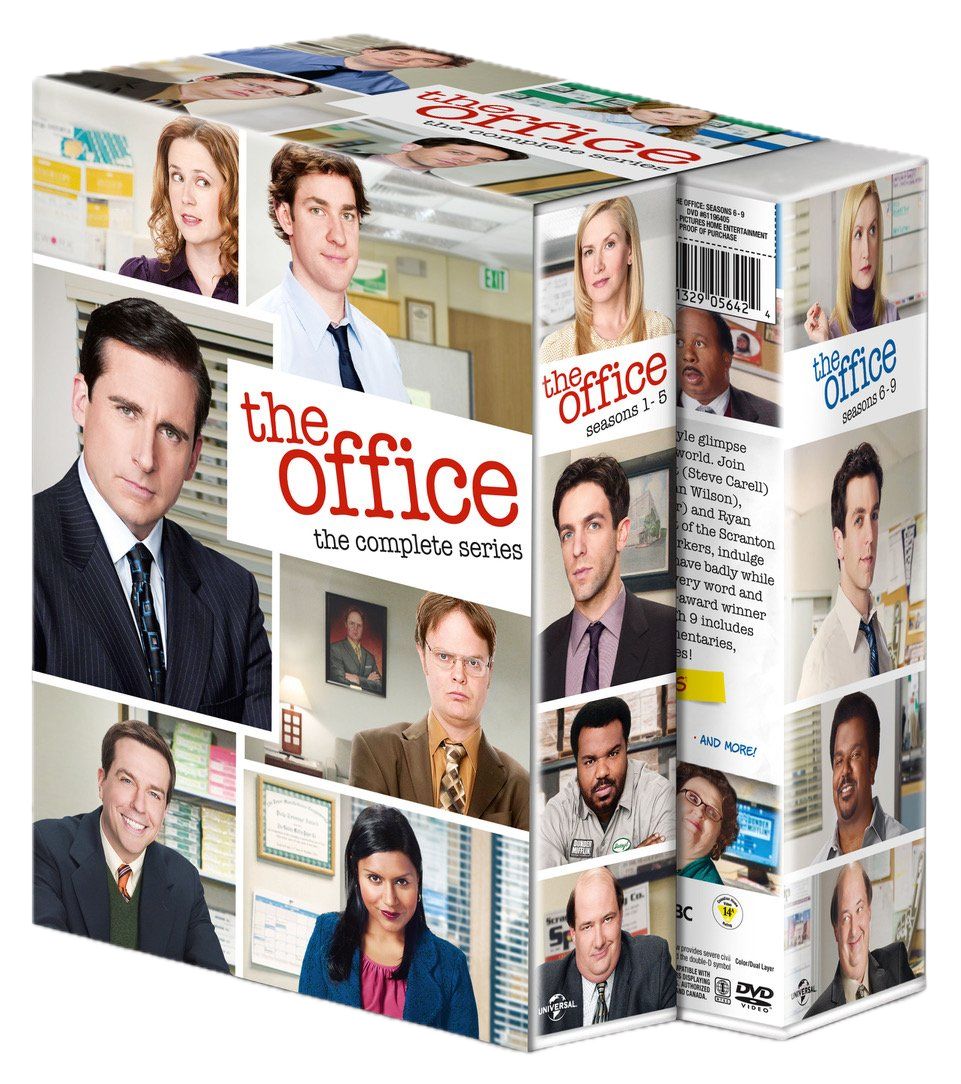
Click below to purchase the entire series of the American Office from amazon.com
(and to support Bardfilm as you do so).

Monday, May 14, 2012

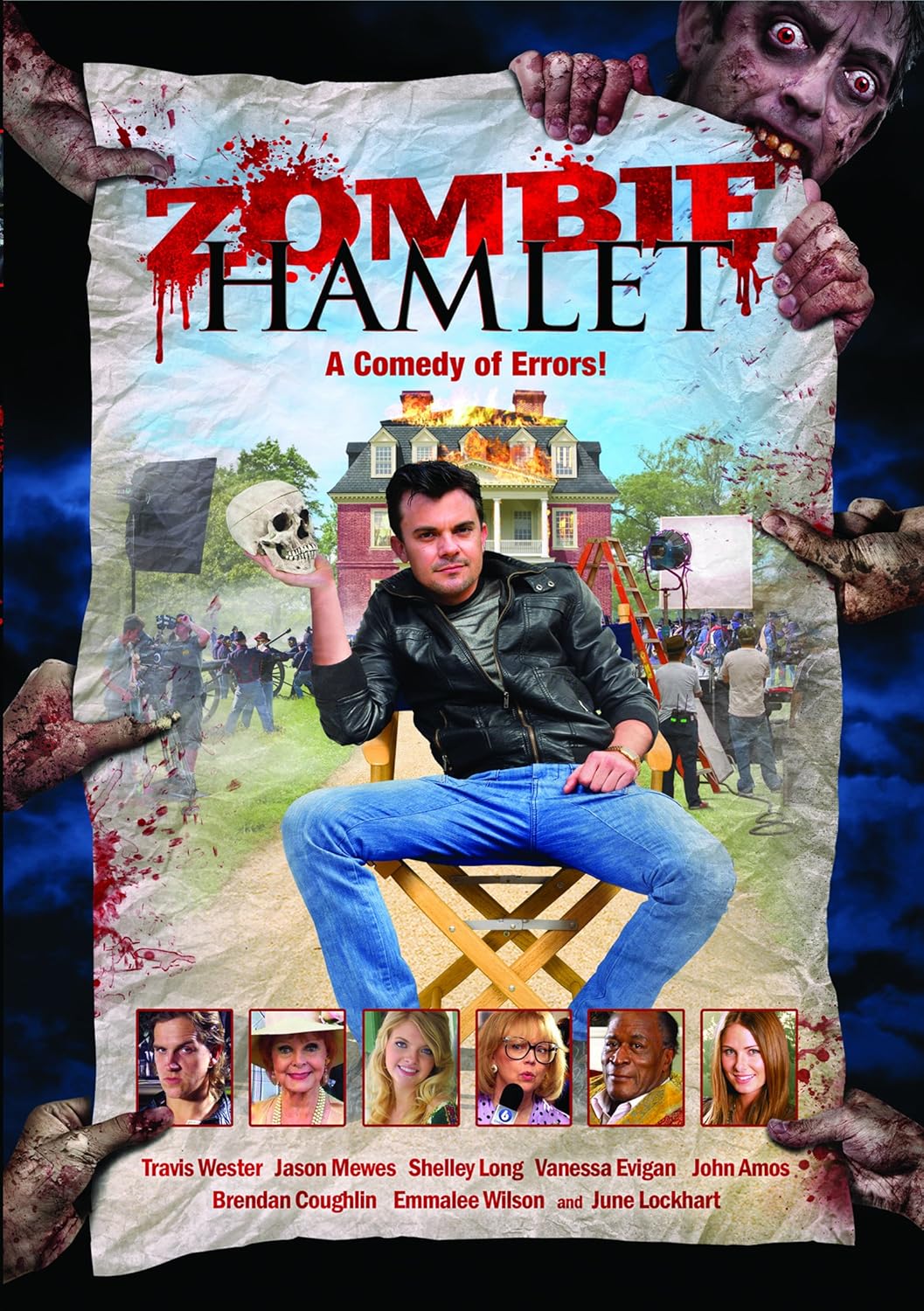
And then there is Zombie Hamlet

Zombie Hamlet. Dir. John Murlowski. Perf. John Amos, A.J. Buckley, and K.C. Clyde. 2012. Zombie Hamlett. Not Yet Released.

We have had Rosencrantz and Guildenstern are Undead (for which, q.v.). We even have Romeo and Juliet vs. The Living Dead (review—or at least scattered commentary—forthcoming). And this morning I learned of Zombie Hamlet.

Every year, one or two students in my Shakespeare and Film class pitch a Zombie Shakespeare idea. Usually there's also a Civil War Shakespeare in there. This soon-to-be-released film combines the two under the glorious tag line "To not to be or to not not to be."

And here's the trailer:


Note: I returned to this film later in this blog's history.

Links: The Film at IMDB. Official Movie Trailer.

Click below to purchase the film from amazon.com
(and to support Bardfilm as you do so).

Thursday, May 10, 2012

Shakespearean Connections in The Invention of Hugo Cabret

Selznick, Brian. The Invention of Hugo Cabret. New York: Scholastic Press, 2007.

Hugo. Dir. Martin Scorsese. Perf. Asa Butterfield, Chloë Grace Moretz, and Christopher Lee. 2011. DVD. Paramount Studios , 2012.

I have been wanting to write on this book since it came out, but I never seem to have time to sit down and write about it—except when I'm giving an exam. I don't think it's fair to grade other exams while students are taking an exam of their own (all that red ink tends to make them nauseous), but I can write without bothering them too much.

I've read the book The Invention of Hugo Cabret, and I've seen the film Hugo based on it, and they're both marvelous—but the book is much better than the film. Hugo is directed by Martin Scorsese. Like all Scorsese films, it's beautiful. Also like all Scorsese films, it's about a third too long. Some judicious editing would genuinely help the film—even though its acting, its cinematography, and its mis en scene are all quite marvelous.

Those of you who have read the book or seen the film are wondering where the Shakespeare is to be found. And that's why I'm here. The film's plot revolves around the re-discovery of one of the early makers of silent film: George Méliès. One of his most famous films—both before the writing of the book and the producing of the film and even more certainly now—is Le Voyage dans la Lune (A Trip to the Moon). But Méliès also directed a number of Shakespeare films—most unfortunately, none of his Shakespeare films is extant.

However, we do have some detailed descriptions of some of Méliès' Shakespeare films, and the marvelous work Shakespeare on Silent Film by Robert Hamilton Ball provides some of them. For example, Gaston Méliès (George Méliès' brother) wrote this self-promotional description of George Méliès' Hamlet (1907), which had a complete run time of ten minutes:
The melancholy disposition of the young prince is demonstrated to good advantage in the grave-yard scene where the diggers are interrupted in their weird pastime of joshing among the tombstones by the appearance of Hamlet and his friend. After questioning them he picks up one of the skulls about a newly-dug grave, and is told that it is the skull of a certain Yorick who was known to Hamlet in his natural life. Hamlet slowly takes up the skull, and his manner strongly indicates, "Alas, poor York, I knew him well!" The following scenes combine to show the high state of dementia of the young prince's mentality. He is seen in his room where he is continually annoyed and excited by apparitions which taunt him in their weirdness and add bitterness to his troubled brain. He attempts to grasp them but in vain, and he falls to brooding. Now is shown the scene in which he meets the ghost of his father and is told to take vengeance on the reigning monarch, his uncle; but not content with this, Hamlet's fates tantalize him further by sending into his presence the ghost of his departed sweetheart, Ophelia. He attempts to embrace her as she throws flowers to him from a garland on her brow, but his efforts are futile; and when he sees the apparition fall to the ground, he, too swoons away, and is thus found by several courtiers. He is raving mad and storms about in a manner entirely unintelligible to them; but they calm him gradually. The last scene shows the duel before the King, when Hamlet returns from the fool's errand upon which his royal uncle had sent him in order to get rid of him. The word is passed, and the well-known story of the duel before the King takes place in pictures which show the Prince's antagonist as he falls after a fierce combat. Now the episode of the poisoned drink, which the King has prepared for Hamlet, is depicted; his villainous mother takes the drink instead, and falls lifeless. Hamlet is now desperate, and bidding the courtiers to stand aside, he ends the life of his wicked uncle with one thrust of his sword, and then turns the weapon on himself; before dying he tells the secret of his terrible enmity toward the King, then sinks to the ground. Lying upon his shield, he is carried off on the shoulders of the courtiers. (Ball 34-35)
To see all that in the inimitable style of Méliès would be beyond the dreams of avarice! And to get all that into ten minutes of screen time would be incomparable. Perhaps Scorsese could learn something from Méliès about streamlining a film.

Brian Selznek's book combines drawings from Méliès' films with contemporary photographs of Méliès, giving his book something of the flavor of the material with which he's working:


I wish I could provide Méliès' Hamlet, but, at present, we can only hope that it will be re-discovered some day. I can provide a link to one of my favorite Méliès films—with it, your imaginations may be able to re-create something like Méliès' Hamlet in your mind.

Here, then, is L'Homme Orchestra (that title could be translated, essentially, as "One-Man Band")—a film from 1900:


Works Cited

Ball, Robert Hamilton. Shakespeare on Silent Film: A Strange Eventful History. New York: Theater Arts Books, 1968.

Links: The Film at IMDB.

Click below to purchase the book and then the film
(in that order, please—no exceptions)
from amazon.com
(and to support Bardfilm as you do so).


You may also wish to purchase Shakespeare on Silent Film. If you do, you can start that process by clicking on the link below:
Wednesday, May 9, 2012

The Grimaldi Shakespeare

Schoch, Richard. “The Grimaldi Shakespeare.” Shakespeare Bulletin 30.1 (2012): 1-19.
I knew about John Payne Collier and the extensive forgeries he committed. I've written a tangential post on the forgeries of William-Henry Ireland (for which, q.v.). I've read Samuel Schoenbaum's mind-bending Shakespeare's Lives, but somehow I missed learning about the 1853 forgery-cum-parody (or parody-cum-forgery) called The Grimaldi Shakespeare.

Fortunately, Richard Schoch, in the most recent Shakespeare Bulletin, has written a tremendous analysis of the piece, bringing it rightfully into the limelight.

Collier had, in 1852, purported to find a Second Folio with extensive notations by "Thos. Perkins"—a man writing in the 1650s who had some connection to the English theatre before its closure in 1642. The book, which came to be known as The Perkins Folio, was faked by Collier himself.

In 1853, before Collier's forgery was firmly debunked, someone put together a parody. It claims to be a partial folio "annotated in 1816 by the great Regency theatrical clown Joey Grimaldi" (Schoch 5). The parody itself is brilliant. Here's a passage that clarifies a supposed textual conundrum in Richard III:
There is a passage in Richard III. which has hitherto been received as the genuine reading. The 'First Gent.' says to Gloucester when he stops the funeral cortege of Henry VI.
'My lord, stand back, and let the coffin pass.'
A few moments consideration will show that this cannot be a correctly expressed line. Coffins are denied volition, and he must have used other words to make his meaning clear—such as 'let the bearers pass'—but we are fortunately saved all conjecture, by the true reading appearing in our Grimaldi folio of 1816, by which it appears the entire line as it generally stands is a printer's error. The line of type has dropped out in moving the form (no uncommon occurrence in a printing office) and the ignorant mechanic in trying to repair his fault has made it what it is. This is what it should be:
'My lord, stand back and let the parson cough.'
This new reading fortunately requires no defensive arguments when we remember that the clergyman had been walking bareheaded and slowly through the streets of London; and that common politeness required the 'First Gent.' to save Gloucester, also a gentleman, from an unguarded approximation to his explosive lungs.
The parody is delightful, and Schoch's examination of it is equally so.
Links: The official website for Shakespeare Bulletin.

Tuesday, May 8, 2012

King Lear in Mr. Magorium's Wonder Emporium

Mr. Magorium's Wonder Emporium. Dir. Zach Helm. Perf. Natalie Portman, Dustin Hoffman, and Jason Bateman. 2007. DVD. Twentieth Century Fox, 2008.

Several years ago, two of my students mentioned that there was a reference to King Lear in what was then a recent film. I finally got around to watching the film this year, and I'm just getting around to posting on it.

The recent news of Maurice Sendak's death brought the film to mind. In Mr. Magorium's Wonder Emporium, Mr. Magorium's time to die has come. Despite the objections raised by Molly Mahoney, his friend, compatriot, and employee, Mr. Magorium calmly explains that his story is drawing to an end, and he uses the stage direction Shakespeare uses at the end of King Lear's life to contemplate and to explain his own departure:


The speech is moving—even as the Shakespearean in me is wondering whether Mr. Magorium is referring to Q1 of King Lear from 1608 or Q2, published in 1619, or the First Folio of 1623, the words' effect is not lost.

Since you're wondering, the stage direction in question comes from 1623. In the quartos, Lear isn't given a dying stage direction.


Links: The Film at IMDB.

Click below to purchase the film from amazon.com
(and to support Bardfilm as you do so).

Monday, May 7, 2012

Songs from As You Like It Set to Folk Tunes

Shakespeare, William. "Under the Greenwood Tree." As You Like It. The Riverside Shakespeare. 2nd ed. Gen. ed. G. Blakemore Evans. Boston: Houghton Mifflin, 1997. 413. Tune: "Go In and Out the Window." American Folk Tune.
Shakespeare, William. "Blow, Blow, Thou Winter Wind." As You Like It. The Riverside Shakespeare. 2nd ed. Gen. ed. G. Blakemore Evans. Boston: Houghton Mifflin, 1997. 416. Tune: "Loch Lomand." Scottish Folk Tune.


A year ago, I directed a group of grade school children in a production of Much Ado About Nothing. The year before that, I was called upon to direct a production of A Midsummer Night's Dream for the same grade school. This year, they asked me to try for the hat trick: they've asked me to direct As You Like It for them.

I told you that to tell you this. Two years ago, I needed a tune for the lullaby the fairies sing to Titania (for which, q.v.). Last year, I found a little-known hymn that fit as a tune for "Sigh No More, Ladies" (for which, q.v.). This year, the production calls for two songs, and folk melodies seemed to be in order. Consequently, I set "Under the Greenwood Tree" to "Go In and Out the Window" and "Blow, Blow, Thou Winter Wind" to "Loch Lomand." With a little bit of tweaking and a loose dotted rhythm, they work quite well.

I'm offering up these to anyone who may end up in my position—searching for public domain tunes for Shakespearean lyrics. My apologies for the voice—it's not so wide as a church door nor as deep as Adele’s, but ’tis enough—’twill serve.

Below, you'll find two videos with the lyrics and the music (the production values are low, being ruled by practicality and speed rather than by pure aesthetics); you'll then find a score for each song below that (click on each image to enlarge it). Finally, you'll find the lyrics, which are very slightly modified from Shakespeare's. Enjoy!


“Under the Greenwood Tree”

“Blow, Blow, Thou Winter Wind”
Under the Greenwood Tree

Under the greenwood tree
Who loves to lie with me,
And turn his merry note
Unto the sweet bird’s throat,
Come hither, O, come hither,
Here shall he see no enemy
But winter and rough weather.
Who doth ambition shun
And loves to live i’ the sun,
Seeking the food he eats
And pleased with what he gets,
Come hither, O, come hither,
Here shall he see no enemy
But winter and rough weather.

Blow, Blow, Thou Winter Wind

Blow, blow, thou winter wind.
Thou art not so unkind
As man’s ingratitude;
Thy tooth is not so keen,
Because thou art not seen,
Although thy breath be rude.
Heigh-ho, sing, heigh-ho,
Heigh-ho, sing, heigh-ho
Unto the green holly:
Most friendship is feigning, most loving mere folly:
Then heigh-ho, sing high-ho for the holly!

Freeze, freeze, thou bitter sky,
That dost not bite so nigh
As benefits forgot:
Though thou the waters warp,
Thy sting is not so sharp
As friend remember’d not.
Heigh-ho, sing, heigh-ho,
Heigh-ho, sing, heigh-ho
Unto the green holly:
Most friendship is feigning, most loving mere folly:
Then heigh-ho, sing high-ho for the holly!

Friday, May 4, 2012

May the Fourth Be With You: Chewbacca's Quotations from Hamlet

Star Wars: The Empire Strikes Back. Dir. George Lucas. Perf. Mark Hamill, Harrison Ford, Carrie Fisher, Billy Dee Williams, Anthony Daniels, David Prowse, Peter Mayhew, and Kenny Baker. Trans. Bardfilm. DVD. Twentieth Century Fox, 2006.

Having just completed my coursework for Wookie One-O-One: The Language, the Culture, and Dispelling the "Walking Carpet" Stereotype, I revisited the Star Wars series, and I was astonished to learn that Chewbacca, the most prominent Wookie in the series, is continually muttering quotations from Hamlet! I'm surprised that no one has written about this before, but there are far more Klingon speakers than Wookie (officially, "Shyriiwook") speakers in our galaxy.

The prime example of Chewbacca quoting from Hamlet occurs when he discovers the dissembled C-3PO:


There are many more examples than I have time to catalogue at present. Perhaps you all could return to this blog on May the Fourth of next year for another sample.

Links: The Film at IMDB.

Click below to purchase Episodes IV to VI from amazon.com
(and to support Bardfilm as you do so).


Bonus image for those who have scrolled down this far:


Later in the film, Chewbacca bears "Yorick" (C-3PO) on his back in exchange for the many times—I know not how oft—C-3PO had borne him on his back.

Friday, April 20, 2012

Contrasting Uses of Shakespeare in Advertising

"The Six Ages of Man." Google +. Advertisement.

"Guess What You Have in Common with Shakespeare." The Christopher Group. Advertisement.

The use of Shakespeare in Advertising is an enormous subset of Shakespeare and Film. At Bardfilm, I can do little more than provide some notable examples.

The first is from Google+. It annotates Jaques' "Seven Ages of Man" speech with images of a Google+ user, and it's actually quite moving. We start with an infant—appropriately named "William"—and we mix images of him and his father for each of the ages:


Careful viewers will note that there are only Six Ages of Man in this version of the speech. The Seventh Age, in the text, presents this image:
. . . . . . . . . . . . . . . . . . . . . Last scene of all,
That ends this strange eventful history,
Is second childishness and mere oblivion,
Sans teeth, sans eyes, sans taste, sans everything. (II.vii.163-66)
Since "sans everything" can be extended to "sans internet access"—and since that isn't the image Google+ wants to provide at the end of its advertisement—it is excised.

All in all, the ad is very good. It's highly polished, it's moving, it's thoughtful, and it's beautifully narrated.

The following advertisement has the inestimable benefit of being memorable—but not in the same way as the Google+ ad:

Partial Transcript:

Guess what you have in common with Shakespeare. Taxes! Sir William Shakespeare could work his way around a sonnet, but he never got his taxes right. Be lender nor borrower be—just don't be late on your taxes . . . . So if you'd rather catch the plague than do your own taxes, it's time to call the Christopher Group.
It's really quite memorable—but perhaps not for the right reasons. William Shakespeare is given a posthumous knighthood, making him "Sir William," which is not disrespectful. And there's some evidence that Shakespeare moved locations in order to avoid paying taxes, which, from a certain point of view, fits under the category of not getting his taxes right. And Shakespeare did know what he was doing with sonnets.

But I'm nonplussed (please note the accounting-related pun) by the misquotation. The quasi-allusion to money matters has a bizarre, esoteric feel to it. And the image we're given right after that sentence is, I think, meant to represent those who dislike doing their taxes—but it unfortunately has the ambiguity of seeming to represent the Christopher Group itself!

The Christopher Group? Or the Christopher Group's clients?

I thought putting these two ads side by side would be revealing—as revealing as discussing Hotspur as a foil to Hal.

Links: The Christopher Group's Home Page. Google +.

Thursday, April 19, 2012

Makibefo: Shakespeare in Madagascar

Makibefo. Dir. Alexander Abela. Perf. Martin Zia, Neoliny Dety, and Gilbert Laumord. 1999. DVD. Philipp Hinz | Scoville Film, 2008.
In the "Shakespeare and Hollyworld" group at the recent Shakespeare Association of American Convention, I learned of the existence of a derivative version of Macbeth filmed in Madagascar with actors from the area. I immediately asked our library to purchase a copy (it's on the expensive side). Today I got an e-mail which transported me into something like a spy novel:
Makibefo is here.
I dashed out immediately and grabbed it. I've only watched the first three minutes, but I'm entranced. Here's the beautiful, magisterial opening:

Transcript (drawn from the subtitles, including their punctuation):

In a land washed by the ocean a tribe of people lived in sight of sands and crashing waves. Their king was a noble king, who gave his people peace and harmony. And amongst his subjects many were good and true. But none more so than Makibefo. Indeed, it was the king who entrusted Makibefo to capture a fugitive and to bring him back to the village.

On the way, Makibefo, in the company of a trusted friend, met a witch doctor, who told him that though the king was merciful he was also weak. He prophesied that a time would come, as surely as the tides, when peace and harmony would no longer sweeten the lives of the people. The witch doctor looked deep into the eyes of Makibefo and saw that the gods had singled him out as a future leader. He inscribed solemnly the ancient symbol of the favoured one on his head band.

The king indeed was merciful and pardoned the fugitive. But his son had no mercy and killed him instantly. The witch doctor proved to be the teller of truths and Makibefo began to believe that he was a man destined for greatness.

His wife too had understood the ancient symbol. Her husband had been blessed by the gods. She exalts him to overthrow the king. Makibefo recognized the truth in his wife's words. But he knew too that once he had committed the ultimate treachery there would be no turning back. The blood that they would wash from their hands would not so easily be washed from their souls.

This is a tale of damnation.
I find it hard to count the number of levels on which the opening to this film is extraordinary. The ending line seems to allude to the opening of Lawrence Olivier's Hamlet. This actor's delivery is stunning. Changing the Three Weird Sisters—marginalized figures in the text—to a single Witch Doctor—possibly a more central, more respected figure—is intriguing. And the connection of the idea of fate to the tides in this ocean-washed setting is magnificent.

The film looks fascinating. Now I just need to find the time to give it the attention it deserves, which is no easy task at this point in the semester.

Note: In 2004, the director made a second film—Souli, a derivative of Othello, also filmed in Madagascar—though it doesn't seem to have been commercially released yet.

Links: The Film at IMDB.

Click to purchase the film (or to have your library purchase the film)

Wednesday, April 18, 2012

Another Shakespearean FoxTrot Comic

Amend, Bill. “Why does Shakespeare . . . ?” Say Hello to Cactus Flats. Kansas City: Andrews McMeel Publishing, 1993. 105.

People often ask me this question:
How long have you been a fan of Bill Amend's FoxTrot?
"Since the day I was born," I invariably reply.

People usually then ask a number of other questions, the most frequent of which is the following:
"Are you just providing some filler text so that the images in your blog post don't overlap?"
"Yes," I reply. "Oh, yes."

And then I provide a Shakespeare-Related FoxTrot comic for the enjoyment of all! In this one, Paige works on her Hamlet essay. Click on the image below to enlarge it.


Links: The Official Web Page for FoxTrot.

Click below to purchase the book from amazon.com
(and to support Bardfilm as you do so).

Friday, April 6, 2012

The Shakespeare Association of America in Boston Presents . . .

H4. Dir. Dwain A. Perry and Paul Quinn. Perf. Harry Lennix, Angus Macfadyen, Amad Jackson, Heavy D, and Jeryl Prescott. Not Perf. Michael Dorn. Triumvirate Pictures, 2012.
Thanks to a generous grant from Northwestern College, I am currently attending the Shakespeare Association of America's Annual Convention in beautiful downtown Boston. And it's wonderful. I was able to meet Shakespeare Geek in person, which was a delight, and the brains of everyone at the convention are already being filled with magnificent addresses from profoundly-brilliant Shakespeare Scholars.

I've only attended the convention on one other occasion, but they always manage to arrange interesting film screenings. This year, they are threefold: H4, Playing Pericles, and Still Dreaming.

Right now, I'm most interested in mentioning H4, primarily because it stars Michael Dorn (of Star Trek fame) as King Henry IV (N.B.: See update below), and writing about it now gives me the opportunity of being the first person to use the phrase "Henry the Worf, Part One" in print.
Photo Credit: Harry Lennix as Aaron in Julie Taymor's Titus. Photo by Clear Blue Sky Productions, 1999.
Update: We learned last night that, despite the excellence of the pun above, Michael Dorn will not be playing Henry IV in the finished version of the film. Scheduling conflicts prevent him from being available for the reshoots. But Harry Lennix, who played Aaron (and played him brilliantly) in Julie Taymor's Titus, will take over the role.

Update to the update: The film HV has been released on DVD. See the link below to purchase it!

I'm looking forward to the other films as well. I wrote about Still Dreaming some time ago (for which, q.v.), and I'm glad to see that it appears to be nearing its official release, giving Shakespeare fans of all ages something to think, talk, and write about.
Links: H4 at IMDB.

Click below to purchase the film from amazon.com
(and to support Bardfilm as you do so).

Sunday, April 1, 2012

Johnny Cash Sings the Plot of Macbeth

Cash, Johnny [?]. "Dunsinane Prison Blues." Previously unreleased. 1 April 2012.
While engaged in research at the Huntington Library, I found some circumstantial evidence of Johnny Cash's deep devotion to the works of William Shakespeare.

At the Folger Shakespeare Library, I was able to track down, in a box of Johnny Cash's Shakespeareana, a copy of Macbeth with lyrics scrawled on the back flyleaf. They seemed to be in Cash's handwriting, and they seemed to fit the tune "Folsom Prison Blues," but I could not confirm that. I also found the photograph above—a shot of Johnny Cash surprised in the act of reading Macbeth. He was so startled at the photographer's audacity that he dropped the book just before the photographer snapped the picture.

I was beginning to think that I would need to wait until the Johnny Cash Museum in Nashville opens to find hard evidence connecting Johnny Cash with Shakespeare, but, in a box I brought back from the Folger Shakespeare Library, I found an eight millimeter film containing a recording and a primitive music video of the song. I'm convinced that it is the Man in Black himself playing and singing, but I'm putting a question mark next to his name out of deference to scholars who think the evidence is still too circumstantial.

This morning, I finally managed to secure worldwide distribution rights to the video. Here, then, is Johnny Cash (?) singing the plot of Macbeth to the tune of "Folsom Prison Blues":


If you're having difficulty making out the lyrics, you can follow along with the transcription below.
Dunsinane Prison Blues
I see those trees a-comin’.
They’re rollin’ up the hill.
And you might say, “Lay off, Macbeth”—
But I never will.
’Cause I’m stuck right here in Dunsinane,
Feeling so forlorn.
But I needn’t not fear no one
Who was from woman born.

The witches tried to tell me
That I should wish for more:
I shouldn’t just be satisfied
To be Thane of Cawdor.
So I stabbed a King in Scotland
Just to seize his throne.
Then I ordered all my subjects
To see me crowned at Scone.

So I threw myself a banquet:
I was a charming host.
I only have one question:
Who invited Banquo’s ghost?
It wasn’t like Thanksgiving—
I behaved like a dunce.
Stand not upon the order of your going—
Just go at once.

Methought I heard a voice cry,
“Macbeth shall sleep no more.”
When Lady Macbeth’s sleepwalking,
She just can’t help but snore,
But when I went to see the witches,
They were far too subtle—
Just kept stirring up that cauldron
And saying “Bubble, bubble.”

If I owned Birnam forest—
If that stand of trees was mine—
I’d take them to the witches
And accuse them all of lyin’.
Far from
Dunsinane castle—
That’s where I want to be.
But those trees just keep on moving,
And that’s what tortures me.

Lay on, Macduff!
From my research, I am fairly certain that there are other Shakespeare-related Johnny Cash songs out there. For example, I found these notes hastily scribbled in the margin of Johnny Cash's copy of Henry V:
I cried "O, for a burning Muse of Fire."
I wrote high, high words, but the muse wrote higher.
And it burns, burns, burns, the Muse of Fire.
The Muse of Fire.
We can only hope that a recording of that number comes to light soon.
Links: One year ago today at Bardfilm. Two years ago today at Bardfilm.
In case the embedded video above fails at some point, here's an alternate connection to the same file:


Friday, March 30, 2012

Book Note: Undiscovered Country

Enger, Lin. Undiscovered Country. New York: Little, Brown, and Company, 2008.

I've reserved this book for the finale of our series of Book Notes on Literature Inspired by Shakespeare.

Lin Enger's Undiscovered Country transposes the plot of Hamlet to northern Minnesota. It is exquisite. The basic plot structure is present, but Enger has made copious alterations and additions to it—all of them fascinating and significant—and he has played with the characters to a considerable degree as well. Jesse Matson, the Hamlet analogue, has a brother much younger than he is, for example. And, in this telling of the plot, the rumor about the father's death isn't that a serpent stung him: it's that he committed suicide.

The novel is extremely compelling. I found myself completely lost in the story, only occasionally pulling myself out to contemplate its relation to Hamlet. I will need to read it again—and then re-read it—for both pleasure and for study. In fact, I'm thinking of adding it to the syllabus of a course I'm proposing for the spring (the course will be called "Literature Inspired by Shakespeare"). I imagine it provoking considerable discussion.

One passage I enjoyed particularly has the same kind of self-reflexivity of Hamlet itself. In it, Jesse explains to his friend Charlie—who is mostly a Horatio analogue, and who has also (some time earlier) lost a father due to an apparent suicide—that he saw his father's ghost (click on the image to enlarge it):


Undiscovered Country, pages 59-60.

I found it delightful to have this meta-narrative at work in the plot. A paragraph later, Jesse ponders the relationship between his earlier frustration with Hamlet's inaction and his own situation, deepening our appreciation of both:


Undiscovered Country, page 60.

The rest of the novel is filled with similar depth, as well as passages of lyric beauty and emotional complexity. There are also pleasing ambiguities scattered throughout. The possibility of an affair between the Gertrude analogue and the Claudius analogue is raised, explained away, raised again, and finally settled (though I won't tell you in what direction).

My recommendation about Undiscovered Country can be summed up in three words: "Read it now."


Click below to purchase the book from amazon.com
(and to support Bardfilm as you do so).

Thursday, March 29, 2012

Book Note: Wyrd Sisters

Prachett, Terry. Wyrd Sisters. London: Corgi, 2005.

In terms of enjoyable Shakespeare-related lunacy, you can do no better than Terry Prachett's Wyrd Sisters. I only learned of Prachett recently: a colleague who knew that I was teaching a course called Literature of Humor recommended him. After the first paragraph, I became quite angry—angry that no one had told me about him before! After the second paragraph, I said, "This author is doing to fantasy literature what Douglas Adams did to science fiction." After the third paragraph, I was rejoicing at the treasure trove of books by Prachett that lay before me.

This volume, which fits in Prachett's Discworld series (see the Wikipedia entry on the subject for more information), provides a humorous take on the Weïrd Sisters, as well as bits and pieces of other Shakespeare plays. It even includes a band of traveling players who contemplate their profession in very enjoyable prose.

Although I was completely ignorant of it, a large slice of the world has reveled in this book for over twenty years. It has been scripted as a play (by Stephen Briggs) and even (in 1997) released as a television mini-series in Britain.

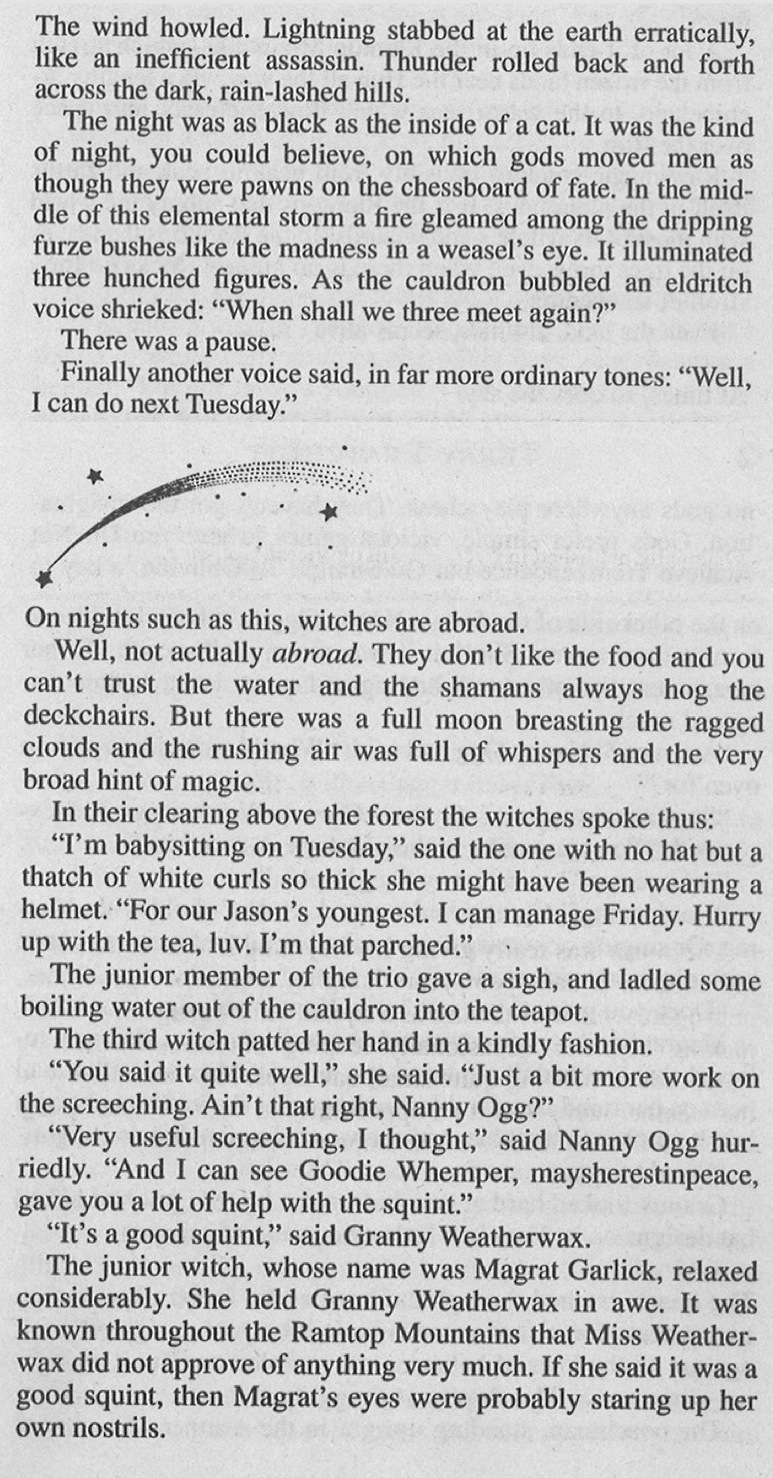
Here's a selection of the opening chapter (click on the image to enlarge it to the level of legibility):


The novel is wacky and ludicrous by turns—and thoroughly enjoyable. Give it a try!

Links: The TV Mini-series at IMDB.

Click below to purchase the book from amazon.com
(and to support Bardfilm as you do so).

Bardfilm is normally written as one word, though it can also be found under a search for "Bard Film Blog." Bardfilm is a Shakespeare blog (admittedly, one of many Shakespeare blogs), and it is dedicated to commentary on films (Shakespeare movies, The Shakespeare Movie, Shakespeare on television, Shakespeare at the cinema), plays, and other matter related to Shakespeare (allusions to Shakespeare in pop culture, quotes from Shakespeare in popular culture, quotations that come from Shakespeare, et cetera).

Unless otherwise indicated, quotations from Shakespeare's works are from the following edition:
Shakespeare, William. The Riverside Shakespeare. 2nd ed. Gen. ed. G. Blakemore Evans. Boston: Houghton Mifflin, 1997.
All material original to this blog is copyrighted: Copyright 2008-2039 (and into perpetuity thereafter) by Keith Jones.

The very instant that I saw you did / My heart fly to your service; there resides, / To make me slave to it; and, for your sake, / Am I this patient [b]log-man.

—The Tempest