Friday, May 24, 2013

Minor but Persistent Shakespeare Use in Warm Bodies: A Novel

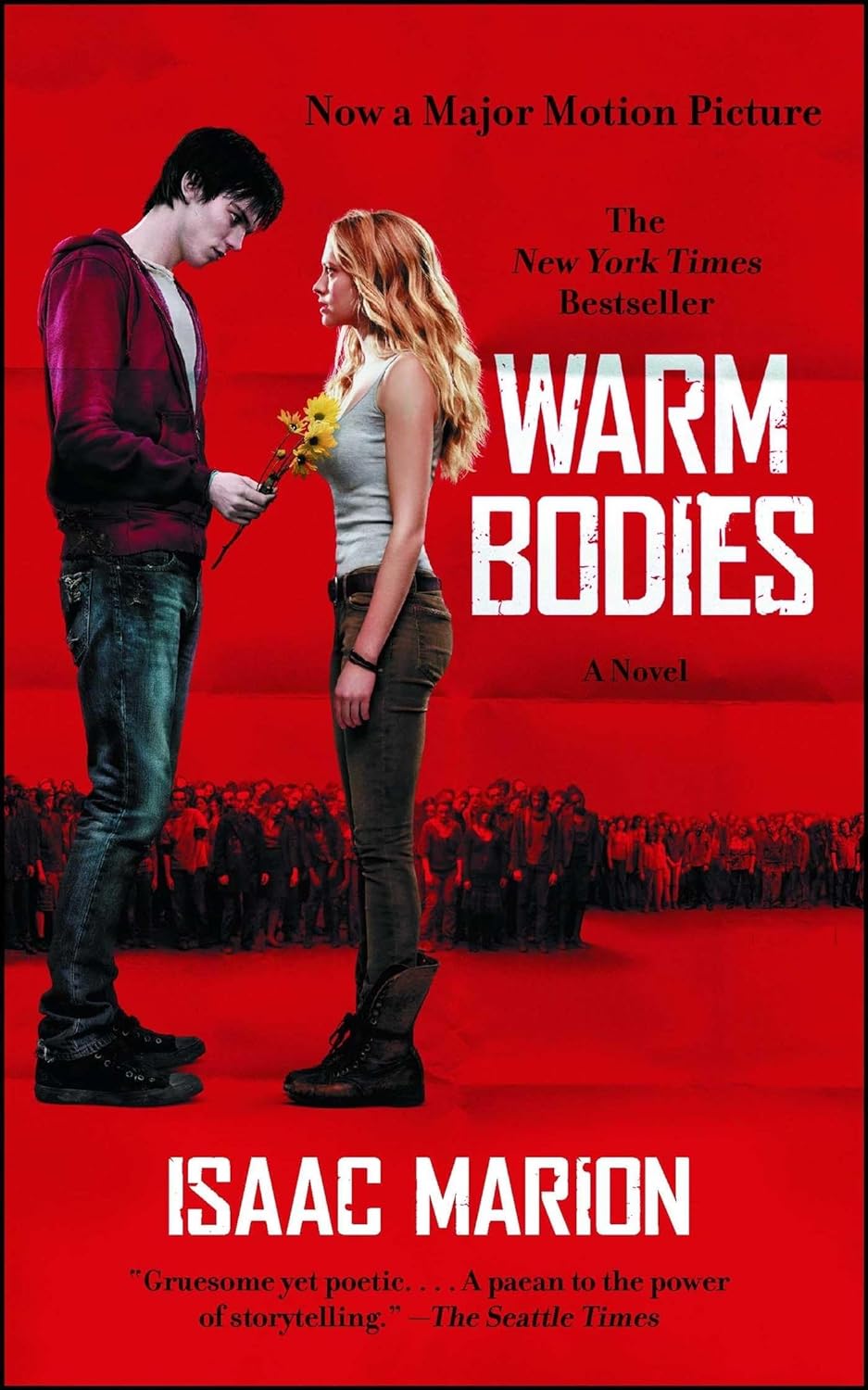
Marion, Isaac. Warm Bodies: A Novel. New York: Atria Books, 2011.

Zombie stories are anathema to me. I do not understand the recent acceleration in the production of Zombie-related books, games, and films. Sure, I watched the trailer for Zombie Hamlet (for which, q.v.), and I even watched Romeo and Juliet vs. The Living Dead in its entirety (for which, q.v.), but I just am not on the same zombie page as the Zombophiles seem to be.

Yet the recent release of the film Warm Bodies led to huge number of Zombinorata—largely college students—urging me to see it and to think about its connections to Romeo and Juliet.  "The Zombie protagonist's name is 'R,'" they would cry, "and his beloved—who is not a zombie—is named Julie."  Then, as if to clinch the argument, they would add, "There's even a balcony scene."

I haven't yet seen the film (I will have to, of course, once the DVD is released), but I've been shambling, zombie-like, through the novel on which the film is based, and I've finally finished it.

I don't like it. I don't like the rules of the zombie universe or the details of brain eating. I don't like the creepy horror elements.

But this is a great book. If you are into zombie narratives, this book will knock you sideways. The prose is strong and interesting and the characters are intriguing.

And, yes, the novel has its balcony scene. I've scanned in an image of the relevant pages (click on the image below to enlarge it), and there's very clearly a direct connection to Romeo and Juliet's balcony scene.  Note: The selection below contains some obscenities.

Pages 126-27.

The equivalent of Juliet's speech has its own kind of charm:
I miss R! I know that's crazy, but is it really that crazy? Just because he's . . . whatever he is? I mean, isn't "zombie" just a silly name we came up with for a state of being we don't understand? What's in a name, right? (127)
If you're liking the zombie trend—if you are, as @JohnDranski might say, a "Zombudsman"—try the book. If, like me, you're over-saturated with zombies, thank me for reading it so you didn't have to!

Click below to purchase the book from amazon.com
(and to support Bardfilm as you do so).
Tuesday, May 14, 2013

Bottom the Weaver's Guest Appearance in Royal Pains

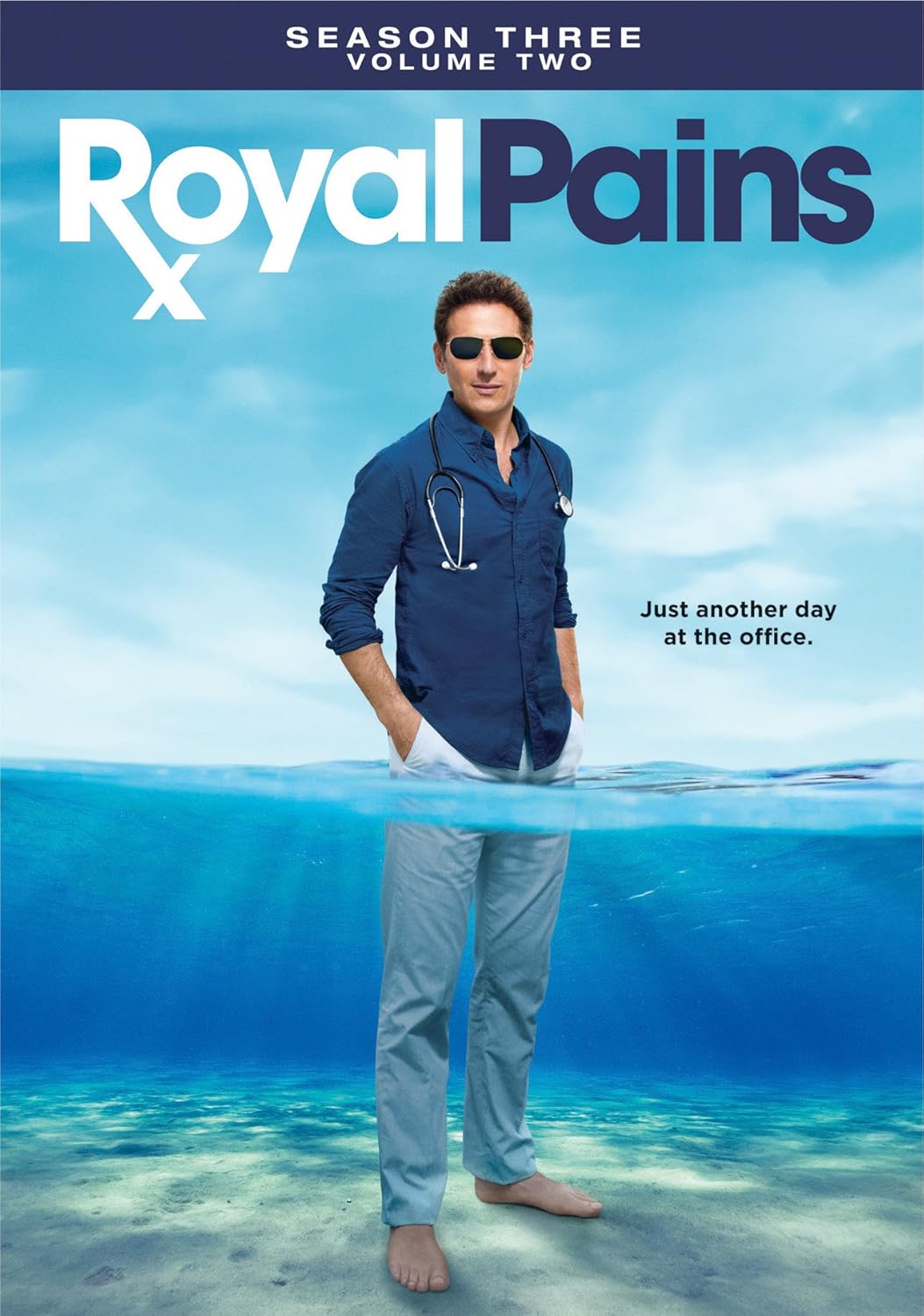
“Bottom’s Up.” By Carol Flint & Simran Baidwan. Perf. Jake Weber, Mark Feuerstein, Paulo Costanzo, Jill Flint, Reshma Shetty, Brooke D'Orsay, and Campbell Scott. Dir. Tricia Brock. Royal Pains. Season 3, episode 14. USA Network.  8 February 2012.  DVD.  Paramount, 2008.

Certainly, the Pyramus and Thisbe scene in A Midsummer Night's Dream is meant to be terrible. But is it meant to be this terrible?

To be fair, the actor playing the actor playing Bottom (the repetition is necessary and intentional there) plays Bottom's role with great gusto. But everything else that frames that performance is just Soap Opera Awful (SOA). Take a gander and you'll understand:


Links: The Show's Episode List at IMDB.

Click below to purchase 
the Season Three, Part Two DVD 
from amazon.com
(and to support Bardfilm as you do so).

Monday, May 13, 2013

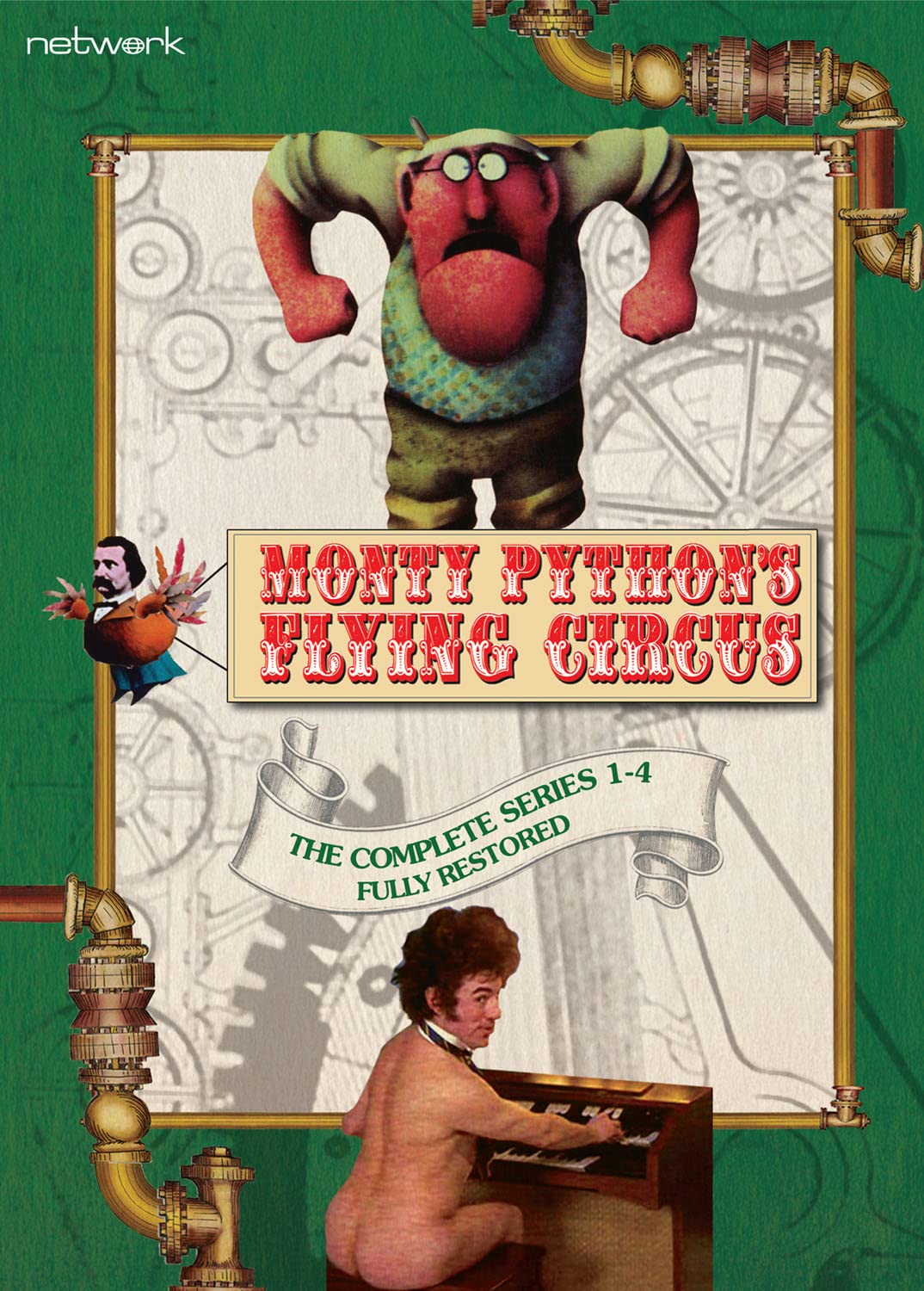
Hamlet in Monty Python’s Flying Circus

“Hamlet.” By Monty Python et al. Perf. Terry Gilliam, John Cleese, Graham Chapman, Terry Jones, Michael Palin, Connie Booth, and Eric Idle. Monty Python’s Flying Circus. Season 4, episode 4. BBC. 21 November 1974. DVD. New Video, 1999.

I've commented before on the notion that the British Comedy Troupe Monty Python has a relative scarcity of Shakespeare-related material. Of course, there is the Underwater Measure for Measure sketch—and the sketch that includes something of Shakespeare's biography—and, naturally, the optional Shakespearean subtitles to Monty Python and the Holy Grail (more can be found here)—and the one about the Overactors Hospital—and, finally, Julius Caesar on an Aldis Lamp. But there's not much beyond that.

When I wrote on those points of convergence between the comedy troupe and Shakespeare, I knew about the episode entitled “Hamlet”—but I didn't like it very much. It descends into crudity and obscenity far too often and far too quickly.

Still, I felt Bardfilm was letting its public down by not noting the episode. In the clip below, I've expurgated the naughty bits, leaving in three key points: Hamlet on the psychiatrist's couch, two ladies suddenly and inexplicably quoting from Hamlet, and the end of the episode, with its Shakespeare-related credits. Enjoy, Bardfilm's public!


Links: The Episode at IMDB.

Click below to purchase 
all the Monty Python’s Flying Circus there ever was 
from amazon.com
(and to support Bardfilm as you do so).

Friday, May 10, 2013

Shakespearean Advertisements

The Bard on Madison Avenue. A Few Selected Advertisements. Various Years. Various Sources. Various Products.

Bardfilm has addressed Shakespeare in advertising just a few times: Contrasting powerful and weak ads, pondering how the power of the St. Crispin's Day speech was harnessed to sell a computer gaming console, and imagining a Pepsodent ad connected to the Guthrie Theatre's production of Two Gentlemen of Verona.

But there's more!  Much more!

A student in my Modern Shakespearean Fiction class presented us with a few cell phone ads that use Romeo and Juliet to sell their products. One of those is listed below; I happened to track down a commercial for diapers and a commercial for a dating service that do the same.


What do you think of these uses of Shakespeare's Romeo and Juliet? Please add your voice to the comments below!

More Snogging than Shakespeare: A Midsummer Tights Dream

Rennison, Louise. A Midsummer Tights Dream. New York: HarperTeen, 2012.

In the name of awareness more than anything else, I'm mentioning this book for older young adults with a mere modicum of Shakespeare.

Louise Rennison has written a ton of books—and, once again, I'm not in the target audience for any of them.

This one has to do with an girl who is becoming a woman, Irish Dance, A Midsummer Night's Dream, and the art of snogging.

But it's mostly about snogging: when, how, why, with whom, and how often.

As I made my way through the book, I kept hoping that those themes, which are present in Shakespeare's play, would be caught up by our narrator—but they are only sporadically present.

This book continues the story begun by the author's 2010 novel Withering Tights.

Click below to purchase the book from amazon.com
(and to support Bardfilm as you do so).


Thursday, May 9, 2013

Avi's Take on Romeo and Juliet

Avi. Romeo and Juliet: Together (And Alive!) at Last. New York: Scholastic Paperbacks, 2012.

Avi has written children's books in just about every category that exists. This is his take on a Shakespeare play.

The plot of this very basic chapter book is a mirror plot. In order to get two shy students who like each other to talk to each other, a third student decides to stage a production of Romeo and Juliet.

Hijinks ensue.

I have mixed feelings about this book. The characters are fairly interesting and vivacious, and the book has something of a Shakespeare idea motivating it. But it's also flawed. It's set among eighth graders, but the reading level is nearer the second grade level; that involves a discrepancy between the characters and their experiences and the lack of a mature language to express or describe it.

The use of Shakespeare is puzzling. Let me give you an example or two.

From page 93.

From page 113.

I get that—I understand where the humor of that comes from.  Saying "Parting is such sweet and sour that tomorrow I shall say good night till it be sorry" is pretty funny.  And so are "Lemon table day" and "I lack a day"—but I don't know that second-grade readers will find those terribly amusing unless they know where the words have gone wrong. And the book doesn't help along those lines. If it provided the correct versions of the Shakespeare quotes at some earlier point, it would work fairly well; as it is, it falls fairly flat.

Click below to purchase the book from amazon.com
(and to support Bardfilm as you do so).
Wednesday, May 8, 2013

Lisa Klein's Shakespeare-Related Young Adult Novels

Klein, Lisa. Lady Macbeth's Daughter. New York: Bloomsbury, 2009.  

———. Ophelia. New York: Bloomsbury, 2007.

I feel that I am more in the target audience for these two novels than for Tempestuous or Exposure; these books aren't as clearly focused on the modern American high school crowd. That said, I also didn't feel any sort of connection to these two works.

Both books are generally romanticized retellings of a Shakespeare play's plot, but they are, I'm sorry to say, on the banal, blasé, and boring side. They lack the fire, the passion, and the interest of Rebecca Reisert's Third Witch (for which, q.v.) or her Ophelia's Revenge (for which, q. this particular v.).

The main interest is in how they deviate from the plots of their respective plays. Without giving away too much, Lady Macbeth's Daughter invents a daughter for Macbeth and Lady Macbeth—only Macbeth (à la Leontes) orders the child killed. The Ophelia of Ophelia survives the events at the end of Hamlet (that information is revealed in a letter to her from Horatio that opens the novel, so that's not too much of a spoiler).

In all that, though, the things I long for in a work of this sort—a deep and interesting interpretation of the characters that makes me eager to return to Shakespeare's plays to see what sort of difference the interpretation makes—is, alas missing.

Click below to purchase the books from amazon.com
(and to support Bardfilm as you do so).


Tuesday, May 7, 2013

A Quick Note on Tempestuous and Exposure

Askew, Kim, and Amy Helmes. Exposure. Avon: Merit Press, 2013.

———. Tempestuous. Avon: Merit Press, 2012.


These are two books in a new series called "Twisted Lit." They could best be described as derivative versions of The Tempest (Tempestuous) and Macbeth (Exposure).

My overarching note about them is that I am not their target audience. I found them fairly insipid and immature—but I am not their target audience.

The target audience is the American high school student (and I hope it doesn't come as a shock to you that I'm not part of that audience). I don't know if the target audience is imagined to have familiarity with the Shakespeare plays—but (1) the books deviate from the plots substantially enough that they don't serve to familiarize readers with the Shakespeare plays and (2) it certainly helps to have a grasp of The Tempest and Macbeth to sort out the relationships and some of the plot elements of these books. Both books have their fair share of high school cliques, high school gossip, high school hijinks, and high school romance.

Tempestuous deals very loosely with points of The Tempest.  A number of high schoolers are trapped in a mall during a snowstorm; chaos and reconciliation ensue.

Exposure, by far the more interesting of the two, follows Macbeth more neatly. It's set in Alaska with a protagonist who is a photographer; the word "exposure" takes on the double sense of being exposed to the elements and developing a photograph—a double exposure, as it were.

I know some people in the target audience who think that Exposure is very good (though those same people find Tempestuous to be confusing and bland). I'd love to hear from others who have read these to see if I'm missing something important or if I'm just no longer in the target audience!

Parents should note that there's a fair amount of profanity, promiscuity, and pushing alcohol over the tonsils in these books.

Click below to purchase the books from amazon.com
(and to support Bardfilm as you do so).
 

Tuesday, April 23, 2013

Top Ten Shakespeare Films Streaming on Netflix

The Top Ten Shakespeare Films Currently Streaming on Netflix, Augmented with a List of the Five Most Unusual Shakespeare Films Available; Together with The Four Worst Shakespeare-Related Films One Can Stream Therewith.

Note: Netflix's ever-changing catalogue has made it impossible to keep this list updated. My apologies for that. Consider this a snapshot of what Shakespeare once was available on Netflix—and what might return to it one day. 

Celebrate Shakespeare’s birthday by watching some of the best, some of the rarest, and some of the worst Shakespeare films ever made!

Netflix has recently been allowing some truly marvelous—and some unbelievably rare—material to stream from its movie-laden servers.

Below please find three lists of the amazing, the astonishing, and the terrifying.

Top Ten Shakespeare Films Currently Available for Streaming on Netflix:

10. Deliver us from Eva


This is an interesting derivative version of Taming of the Shrew. Read a post by Bardfilm on it.

9. Macbeth

I have not yet seen this film in its entirety.  Patrick Stewart stars as Macbeth in this very bloody modernized version of the play. Those who have seen it—once they stop twitching—say that it's really very good.

8. The Tempest 

I hate to admit it, but I haven't yet found the time to watch this filmed version of a stage play. Christopher Plummer stars as Prospero. What am I waiting for? Well, I suppose I'm waiting for the grading to be done, but that needn't stop you from watching it!

7. Hamlet

I really enjoy this Hamlet. Set in New York City in the early 2000s, the film traces the turmoil surrounding the Denmark Corporation. Its postmodern use of images to restructure the narrative is intriguing. And it has Ethan Hawke and Julia Stiles. Click here for a post by Bardfilm on the film.

6. Love's Labour's Lost

I don't care what anyone says, I still think this clunky, bizarre, not-terribly-well-performed Branagh film is a lot of fun. As an added bonus, we get Cole Porter songs and synchronized swimmers! What's not to love? Click here for a post by Bardfilm on the film.

5. Coriolanus


Ralph Finnes' film had far too limited a theatrical release. But the world can make up for it now by streaming it ad infinitum or at least ad terminum from Netflix. It's another very bloody film. If it gets to be too much, switch to Love's Labour's Lost for a few minutes of light relief.

4. Shakespeare in Love


This is the film that snatched the Academy Award away from Anonymous (to hear the Oxfordians tell it). In reality, this film deserves even greater honors that it has received—though you should take it with a historical grain or two of salt. Click here for a post by Bardfilm on the film.

3. King Lear


Ian McKellen's King Lear is unspeakably deep, and the supporting cast helps make the jewel of his performance shine all the brighter. Click here for a post by Bardfilm on the film.

2. Rosencrantz and Guildenstern Are Dead


Although this film could have been edited more fully—it's about thirty minutes too long—I still enjoy it every time I watch it. Tom Stoppard's play about what Rosencrantz and Guildenstern are like when they exit from Shakespeare's play into their own world has here become an extremely well-acted, astonishingly interesting film. All college students should read this play and watch this film while in college (and I try my best to make that happen); everyone else should also read it and see it! Click here for a post by Bardfilm on the film.

1. Slings & Arrows


I'm thrilled that this Canadian show is so readily-available. It's one of my very favorite Shakespeare-related productions. Watch the first two episodes, and you'll be hooked. The story is about actors at a famous Canadian Shakespeare festival, their intriguing lives, and the Shakespeare they enact! Click here for a post by Bardfilm on the film.

Five Most Unusual Shakespeare Films Currently Available for Streaming on Netflix:

5. Otello

I suppose I have to admit that this production isn't all that unusual, but it is wonderful—and I was a bit surprised to find it available on Netflix. I still remember the first time I heard this opera. I was in college, and I happened to find an LP in the free bin at Vintage Vinyl. Those first notes—so full of energy—knocked me sideways.

4. Siberian Lady Macbeth

This is also operatic, but in a different sense. It's an odd, dark, black and white film, set in Russia and directed by a Polish director. If you like Kurosawa, you'll like this.

3. Machete

I cannot believe that Netflix has this. For several years, I've searched for a DVD of Machete—to absolutely no avail. Yet here it is, streaming live on Netflix. I have not yet seen it, but it is an Othello-related film filmed in Puerto Rico in 1959.

2. Royal Deceit

I've seen this—but it was years ago! It's a Hamlet film that is primarily based not on Hamlet itself but on the source material for Hamlet. I remember it being fairly violent and having scenes that you wouldn't want to watch with your grandmother sitting on the couch next to you.

1. Measure For Measure

I had high hopes for this film because Measure for Measure is one of Shakespeare's most underrated plays. This film version of the play isn't fabulous, but it does help get the play into the public eye. The production takes Shakespeare's Vienna and puts it in the British military. I wish they had provided a better sense of the purposes for making that switch, but it's still a highly-watchable film. The only DVD available is in Region 2 format—North American watchers, rejoice! You can stream it from Netflix instead! Click here for a post by Bardfilm on the film.


Four Worst Shakespeare Films Currently Available for Streaming on Netflix:

4. Rome & Jewel

Oh, but this is bad. It's Romeo and Juliet as terrible MTV music video—complete with terrible music. It's so bad I watched it and then was so embarrassed to have watched it that I never wrote a review of it.

3. Private Romeo

I haven't seen this, but I've seen the trailers—they were enough to convince me that I did not want to see it. It looks very contrived and very poorly acted.
 

2. The Comedy of Terrors

I haven't yet seen this, either, and perhaps I'm doing it an injustice in putting it in this category. But I've seen the cast list, and it doesn't appear to have even one Dromio. Still, I will try this—I gather that one of the characters recites some lines from Macbeth.

1. The Tempest 

Derek Jarman's Tempest gave me more nightmares than The Comedy of Terrors is likely to. I know that a lot of film buffs and Shakespeare scholars speak highly of this, but it's poorly lit, the lines are mostly mumbled, and that makes the film on the incomprehensible side. Try the Christopher Plummer film listed above instead.

Links: The Home Page of Netflix.

Click below to purchase the films from amazon.com
(and to support Bardfilm as you do so).

Click on the titles listed in the post above to watch the films on Netflix
(from which Bardfilm receives nothing but kudos).


Tuesday, April 16, 2013

How to Cook Shakespeare

Dalby, Andrew, and Maureen Dalby. The Shakespeare Cookbook. London: British Museum Press, 2012.

Yes, I've graded enough essays to allow myself the treat of another blog post. If you're a teacher, make sure you've graded the requisite number of essays to allow yourself the treat of reading this post.

The title of this book might mislead some into thinking that it offers different receipts on how to cook Shakespeare, but don't be alarmed—it contains recipes used in Shakespeare's day.

It also contains interesting images and commentary on the dishes, geared toward a popular audience and heavily weighted toward Shakespeare.  The chapter with beef dishes, for example, is headed with a quote from Twelfth Night: "I am a great eater of beef" (Sir Andrew Aguecheek, I.iii.85).

Below, you'll find one of the recipes from the book: Roast rib of beef with pepper and vinegar sauce (66-67). I decided not to include the receipt for "Farts of Portingale" (54-55), thinking that readers might be more inclined actually to make this one.


Click below to purchase the book from amazon.com
(and to support Bardfilm as you do so).

Monday, April 15, 2013

Micro-Post on So Long, Shakespeare

Brown, Tom. So Long, Shakespeare. N.p.: N.p., 2012.

I'm at the stage of grading where I have to bribe myself with a reward after finishing a certain number of essays. The reward, today, is composing a brief post on something Shakespeare-related.

The author of So Long, Shakespeare kindly sent me a copy, and I finished reading it a little while ago; I enjoyed it.

The novel's plot was interesting—it kept me reading to see what happens next—even though there are several points that are contrived. If you accept those, you're on your way to enjoying the book.

The story is on the science fiction side. You need to accept that the DNA of famous people has been gathered in a kind of DNA library. Then you need to accept that, in this world, it's possible to distill the creativity gene from a given set of DNA, turn in into pill form, and transfer that creativity to the person who swallows the pill. Then you need to accept that a mathematical formula can be developed that will, with an astonishingly high level of accuracy, determine the authorship of a given work.  You also need to imagine a new series of Star Wars films—and the attempt to earn an Academy Award for the last in a new series of six films (none of which has received an Oscar).

If those sound like building blocks for an authorship controversy plot, you're right—but that's where I need to stop my comments to avoid spoilers. I will say that the author plays around in pretty interesting ways with the question, having his characters distill the creativity gene from William Shakespeare, the Earl of Oxford, Francis Bacon, Queen Elizabeth I, Christopher Marlowe, and others.

If you buy into this world, I think you'll enjoy the novel.

Back to the next set of essays!

Click below to purchase the book from amazon.com
(and to support Bardfilm as you do so).

Thursday, April 11, 2013

The Dagger Speech in Makibefo

Makibefo. Dir. Alexander Abela. Perf. Martin Zia, Neoliny Dety, and Gilbert Laumord. 1999. DVD. Philipp Hinz | Scoville Film, 2008.

Makibefo is a derivative version of Macbeth filmed in Madagascar with actors from the area (for my initial post on the film, q.v.).

I'm preparing to teach Macbeth in my Shakespeare and Film class, and I'm also addressing various derivative versions of the play (films, novels, and poems) in my Modern Shakespearean Fiction class, and I returned to Makibefo to illustrate the possibilities of global Shakespeares.

I wanted to know how the film portrayed the dagger speech. The answer? In amazing, intriguing, thought-provoking ways. Writing any more would provide spoilers; watch the following clip.


Links: The Film at IMDB.


Click to purchase the film (or to have your library purchase the film)

Monday, April 8, 2013

Two Tiny Allusions to Shakespeare in Rango

Rango. Dir. Gore Verbinski. Perf. Johnny Depp, Isla Fisher, and Timothy Olyphant. 2011. DVD. Paramount Pictures, 2011. 

I'd like to return to the blog's roots for the next few posts.

Bardfilm started as a microblog, offering short but informative posts about matters Shakespearean.

Briefly, then, the film Rango has two allusions to Shakespeare. In the first, one of the characters in our protagonist's active imagination is given the name Malvolio.  In the second, our protagonist advises a youngster to "Stay in school, eat your veggies, burn everything but Shakespeare."

Note: Thanks to @BardNews for pointing out that "Burn everything but Shakespeare" comes from the play The Skin of Our Teeth by Thorton Wilder. This article from SF Weekly says that the play 
mentions Shakespeare exactly three times. Mrs. Antrobus misquotes him; the housemaid Sabina remarks, "Ugh. Shakespeare"; and in Act 1, famously, Mr. Antrobus telegrams advice to his family on how to keep warm as the ice age closes in: "Burn everything except Shakespeare."
Here's a clip with both references:


Links: The Film at IMDB.

Click below to purchase the film from amazon.com
(and to support Bardfilm as you do so).

Monday, April 1, 2013

Danish Paradise

“Danish Paradise.” With apologies to Coolio. And to “Weird Al” Yankovic. Reel-to-reel. Undated.

A discovery like this one isn't an everyday occurrence; I am immensely pleased to have made it.

Some time ago, “Weird Al” Yankovic recorded “Amish Paradise,” a parody of Coolio's “Gangsta’s Paradise.” Some controversy followed, but I think it was mostly cleared up when it became clear that parodying the song does not amount to mocking the very serious plight of many inner-city African-Americans.

When I was at the Huntington Library in California, a reel-to-reel audio tape fell into my briefcase. It appears to contain an early parody of either “Gangsta’s Paradise” or “Amish Paradise”—or some combination of the two. The voice sounds less like “Weird Al” Yankovic and more like a young, Velvet Underground-era Lou Reed, but it is still clearly not Coolio.

The song tells bits and pieces of the plot of Hamlet as if Hamlet himself were singing. The lyrics are provided below the video clip, which takes its images from Laurence Olivier's 1948 film version of Hamlet. Below that, you will find an alternate video clip—just in case the one below disappears—as well as embedded videos of the songs this song seems to parody.  Enjoy!

Danish Paradise

You wanna tell me what this play is about?

As I walk on the battlements of Elsinore,
I take a look at my skull and set the table on a roar.
’Cause I been antic dispositioning so long that
Even Ophelia thinks that my mind has gone.
But I ain’t never stabbed her dad if he didn’t deserve it.
Hiding back behind an arras? You know that’s unheard of.
You better watch where you’re putting that poisoned cup
Or you and your new wife might drink some up.
I really hate to be, but I got to be.
You can see my solid flesh in my soliloquy, fool.
I’m the kind of Dane the traveling players want to be like
On the stage every night
Reciting lines in the spotlight.

We been spending most our lives
Living in this Danish Paradise.
My father’s ghost is nice
Visiting this Danish Paradise.
Where are old Yorick’s gibes?
Not in this Danish Paradise.
One stab wound should suffice
Killing in this Danish Paradise.

Look at the situation—Ghost got me thinking—
I can't have a normal wife: I was raised in the court.
So I got to get Ophelia to a nunnery.
Too much behind-the-arras watching got me crazy, see?
I'm a Wittenberg fool with vengeance on my mind,
Got my sword in my hand and a mote in my eye.
I’m a melancholy Dane full of sadness,
And Horatio is down, so don’t arouse my madness, fool.

Death ain't nothing but a heartbeat away—
He’s praying now. Do it pat, or shall I wait?
I’m in Act III now, but will I live to see Act IV?
The way things are going, I don't know.

Tell me, is to be or not to be
The question you should ask of me?

I’ll take the ghost’s advice,
Vengeful in this Danish Paradise.
After I test it twice,
Thinking in this Danish Paradise.
This play should trap some mice,
Acting in this Danish Paradise.
My speeches aren’t concise,
Talking in this Danish Paradise.

Rosencrantz and Guildie—Guildenstern and Rosie—
Ophelia’s by the river, gathering her posies.
Laertes, back from Paris, looking for some fencing.
What’s going on here with Osrick? The ending is commencing.
They say I got a speech, but nobody’s here to hear me.
If everybody’s dead, they might just disappear me.
I guess they can't, Horatio.
I guess I’m dead—that’s why I know the rest is silence, fool.

I’ve seen my last sunrise,
Dying in this Danish Paradise.
Horatio’s alive,
Speaking in this Danish Paradise.
He never, never lies,
Reporting in this Danish Paradise.
Please buy some merchandise
When you leave this Danish Paradise.

Tell me, is to be or not to be
The question you should ask of me?
Tell me, is to be or not to be
The question you should ask of me?
In case you need to refresh your memory about the lyrics of either “Amish Paradise” or “Gangsta’s Paradise,” I've embedded the videos for those songs below.


“Gangsta’s Paradise”


  “Amish Paradise”


“Danish Paradise” (Alternate Video Clip)

Links: One year ago today at Bardfilm. Two years ago today at Bardfilm. Three years ago today at Bardfilm.
Bardfilm is normally written as one word, though it can also be found under a search for "Bard Film Blog." Bardfilm is a Shakespeare blog (admittedly, one of many Shakespeare blogs), and it is dedicated to commentary on films (Shakespeare movies, The Shakespeare Movie, Shakespeare on television, Shakespeare at the cinema), plays, and other matter related to Shakespeare (allusions to Shakespeare in pop culture, quotes from Shakespeare in popular culture, quotations that come from Shakespeare, et cetera).

Unless otherwise indicated, quotations from Shakespeare's works are from the following edition:
Shakespeare, William. The Riverside Shakespeare. 2nd ed. Gen. ed. G. Blakemore Evans. Boston: Houghton Mifflin, 1997.
All material original to this blog is copyrighted: Copyright 2008-2039 (and into perpetuity thereafter) by Keith Jones.

The very instant that I saw you did / My heart fly to your service; there resides, / To make me slave to it; and, for your sake, / Am I this patient [b]log-man.

—The Tempest