Wednesday, March 30, 2022

Let's Barley-Break!

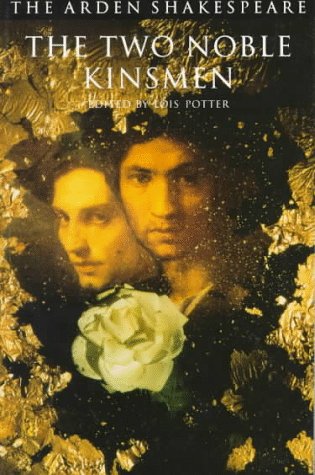
Fletcher, John, and William Shakespeare. The Two Noble Kinsmen. Ed. Lois Potter. Walton-on-Thames: Thomas Nelson and Sons, 1997.  

Midleton, Thomas, and William Rowley. The Changeling. Ed. Joost Daalder. A & C Black: London, 1990.
Sidney, Sir Philip. The Countess of Pembroke's Arcadia. Ed. Maurice Evans. New York: Penguin, 1977.

The cultural artifact of barley-break doesn't come up very often—particularly as I'm not habitually reading The Two Noble Kinsmen or The Changeling. I'm not even sure if we should say "Let's barley-break" or "Let's play barley-break." But back in my graduate school days, study of things like barley-break, bear baiting, face painting, seeling doves, and processions was all the rage.

I did more work with bear-baiting and seeling doves than with barley-brake, but I did enough to make the diagram above and to work with a section of Sir Philip Sidney's Arcadia (the so-called New Arcadia, a.k.a. The Countess of Pembroke's Arcadia) that features the game.

What is barley-break, then (I hear you cry)? You say it's a game, and you invite us to play it . . . but how do we play?

Well, let's start with what the OED says:


There you go, then. It's pretty much like Prisoner's Bars.

Not enough, eh? Well, let's see what the Oxford Reference has to say:


I trust that helps. In case it doesn't, here's what Christia Hole says in her English Sports and Pastimes (Freeport: Books for Libraries Press, 1968):

Barley-Break, or Last Couple in Hell, is supposed to have acquired the first name because it was played among the barley stacks in the farm-yard. A piece of ground was divided into three parts, the middle portion being called Hell. In this a man and a woman stood, hand in hand, and tried to catch the other players as they advanced, also in couples, from the outer sections. Those who were caught had to take their stand in Hell, and the object of the game was to avoid being the last couple left in that undesirable locality.  (36)

I suppose it's something like Red Rover but, when played by adults, having the additional frisson of couples (who may start in love groupings) changing partners.

The longest literary account of a round of the game is Sir Philip Sidney's. The section (from a generic subset of the larger work called the eclogues) is entitled "Lamon's Tale," and you can find the whole thing here. The key element is that the couples who are not in the area called "hell" do not have to hold hands while they try to cross to the other side of the field. On that point, Hole is either mistaken or misleading.

The game makes its way in a minor section of The Two Noble Kinsmen. The jailer's daughter, who has gone insane (cf. Ophelia), rambles on while a doctor listens (cf. Lady Macbeth). Here's part of what she says: "Faith, I'll tell you, sometime we go to barley-break, we of the blessed. Alas, 'tis a sore life they have it's' other place—such burning, frying, boiling, hissing, howling, chattering, cursing: oh, they have shrewd measure; take heed!" (IV.iii.30-34). The image below gives a fuller context (as well as the Arden edition's note on barley-break—which also misleadingly assumes that all the couples had to hold hands during each round of the game):


Finally, barley-break makes its way into The Changeling, a play filled with murder and scheming and adultery. You can read a full synopsis of the play here, but the key elements involved here are the changing of couples and the line from De Flores that connects the game of barley-break with the events of the play:  ". . . the while I coupled with your mate / At barley-break. Now we are left in hell" (V.iii.162-63). The image below gives you the context (and the footnotes that the New Mermaids edition provides):


When the weather gets warmer, let's gather to have a round or two of barley-break. After all, it need not actually end in insanity or murder, and it sounds like a fun way to exercise away a spring afternoon. 

Click below to purchase the books from amazon.com
(and to support Bardfilm as you do so).


Tuesday, March 29, 2022

Book Note: Ozymandias and Other Stories

Palmer, Jim. "In Fair Verona." Ozymandias and Other Stories. St. Louis: Power Publishing, 2004. 29-65.

I got this collection for one reason: The short story "In Fair Verona" and its probable Shakespeare connections. Actually, I got it for two reasons: It's set in St. Louis, one of the greatest cities in the world! Well, all right—I got this book for three reasons. I'm a friend of the author and he gave me a copy.

But we can ignore that third reason as irrelevant because "In Fair Verona" is a very good short story.

The plot (as you might imagine) has some connection to Romeo and Juliet. But the plot, although interesting, isn't where the interest in the story lies.

The interest is in the vividly-painted immigrant communities (and the individuals that make them up) that Palmer provides us. In "In Fair Verona," we might expect a Romeo-and-Julietesque plot where a man and a woman from two different immigrant communities fall in love despite the disapproval of each community for the other. And the story starts us off with that possibility.

There are Bosnians. There are the Italians down on The Hill (an area of St. Louis still largely populated by the Italian community—where you will find Viviano's, the single best Italian grocery store in the world—well, in North America at any rate . . . I admit that there may be good Italian groceries in Italy). There are Georgians (not the Jimmy Carter kind; the David Dephy Gogibedashvili kind). And there are many others.

Including the Grussetians.

And that's where the genius of this book makes itself felt most keenly.

The immigrant group called the Grussetians, with Grussetia, the Old Country, and Galaktraish, its capital city, is the center of this collection of stories. And I spent considerable time and energy trying to figure out who, exactly, they were. Alas, when I read beyond the Shakespeare-related short story, this is what I learned: "But nobody knew nothing about us Grussetians" (2).

Still, this immigrant group was so vividly portrayed that I couldn't imagine that it was fictional. I Googled. I asked colleagues. I even sent an e-mail to the author! And I read on in the collection:

We all lived off of where Pestalozzi Street meandered down into the state streets in an area that the St. Louis Globe-Democrat, in a piece on St. Louis's old ethnic neighborhoods, described as "a pocket of recent arrivals from the remote region of the Caucasus mountains called Grussetia."  We thought it sounded complimentary, and ever since the article appeared, we had referred to our neighborhood as The Pocket.  A lot of homes in The Pocket still had this moldering yellowed newspaper article tacked to the wall years after the Globe-Democrat had shut down and ceased to exist. (2)

I've finally reached the conclusion that the Grussetians are a fictional group. But it's a tribute to the author and the collection that they're painted so remarkably convincingly that they seem utterly real in every detail.

But I now realize that I've been digressing. But it's been worthwhile. This collection is really astonishing. It's something between Stand by Me, My Big Fat Greek Wedding, the stories of Edgar Allan Poe, and (remarkably enough) the Great Brain series.

We would expect a Romeo and Juliet story set in such a community to be a cross-immigrant love story. Instead, it's an intra-immigrant love story (if it even amounts to that).

Within this immigrant community, there are two families (both alike in lack of dignity): The Pantashkivalis and the Oreschtovilis. And in the story "In Fair Verona," a male Pantashkivali impregnated a female Oreschtovili. And the rest of the story addresses the fallout of that. It's not really a question of romance or undying love or whether there's a chemical that will make it appear that you're dead when you're not really dead. It's (first of all) an issue of acknowledging the pregnancy. Here's a quick sample of that part of the story:


Uncle Ingaz is the one person in the community whose word is law. He is, therefore, the one to turn to to settle such complications.

Once I started reading the other stories in the collection, I couldn't stop. Give it a try—it will reward reading. And, actually, you can read the whole "In Fair Verona" here (courtesy of Google Books)!


Click below to purchase the book from amazon.com
(and to support Bardfilm as you do so).

Monday, March 28, 2022

Der Yidisher Kenig Lir (The Jewish King Lear)

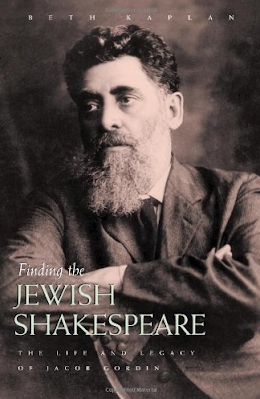
Kaplan, Beth. Finding the Jewish Shakespeare: The Life and Legacy of Jacob Gordin. Syracuse: Syracuse University Press, 2012.  

A clue on Jeopardy! led me on a research path to find Der Yidisher Kenig Lir.

And I found a wonderful account of it in Beth Kaplan's Finding the Jewish Shakespeare. In a chapter entitled "A Russian Jew in America," she details the story. 

Jacob Gordin is our Jewish Shakespeare, a masterful playwright working in America at the end of the eighteenth and the beginning of the nineteenth center. He interacts with Jacob Pavlovich Adler, one of the greats of the Yiddish theatre in New York around that time. The play was first produced in 1882, and it created quite a stir.

And I can't do better than provide you with a sample from that chapter (pages 57 to 60). [Warning: It's very moving. You may cry. I did.]


What a fantastic story! I only wish (as Bardfilm often does) that a version of a performance could have been filmed.

Click below to purchase the book from amazon.com
(and to support Bardfilm as you do so).


Bonus image: A Playbill from an 1898 production of the play:

Friday, March 25, 2022

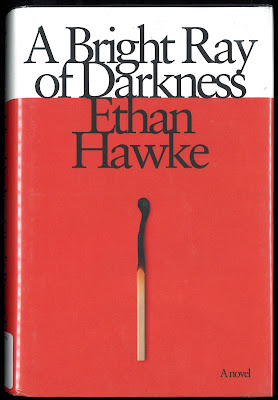
Book Note: A Bright Ray of Darkness

Hawke, Ethan. A Bright Ray of Darkness. New York: Knopf, 2021.
Here's another novel that involves a select group of people engaging with Shakespeare. This time, it's a troupe of professional actors.

William Harding, our protagonist and narrator, is a famous movie star whose life is falling apart. He has been unfaithful to his rock-star wife, and all the tabloids (and others) are shouting about it. All that when he's on the verge of his Broadway premiere in Shakespeare's 1 Henry IV

Ethan Hawke is a famous movie star. Remember his Hamlet (for which, q.v.)? I don't know anything about his private life, but he does have considerable insight into how an actor does the job of acting, which is the part of the novel I found most interesting.

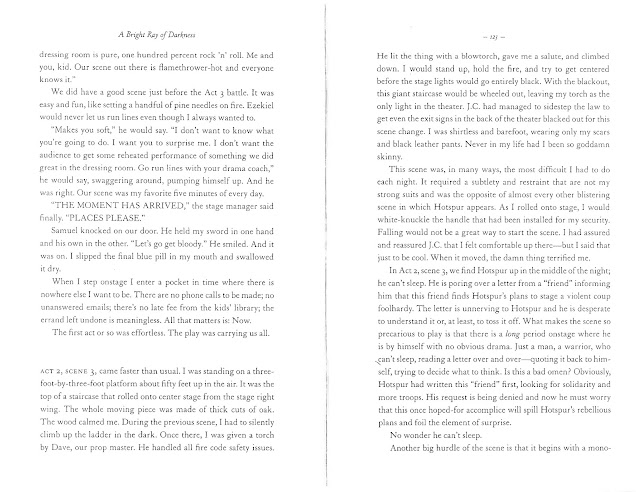
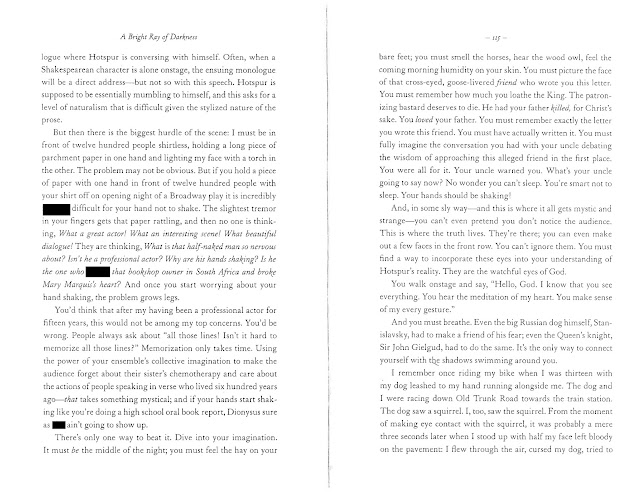
In that light, let me give you a sample—it's opening night of the play, and Harding is giving the role of Hotspur everything he's got.  [As a quick note, this novel is heavily on the R-rated side in general.]


I find that quite insightful.

The connections to the other actors are also developed convincingly—as is the way the director is portrayed.

Finally, I appreciated the choice of play—it wasn't one of the biggies we often find in Shakespeare-related novels. I'm not particularly drawn to the Henry IV plays, but this helped me gain one insider's perspective.

Click below to purchase the book from amazon.com
(and to support Bardfilm as you do so).

Wednesday, March 23, 2022

Book Note: If We Were Villains

Rio, M. L. If We Were Villains. New York: Flatiron Bookx, 2017.

I'm playing a bit of catch-up with my reading—and even more with my posting on that reading.

Here, then, is a novel that's loaded with Shakespeare. It's set in an exclusive college for artists of all kinds (think Juilliard). We spend most of our time with the actors—and all they do is Shakespeare. Really, they eat, breathe, and act Shakespeare.

And it's also a murder mystery. Our narrator is getting out of prison having served ten years for a murder he claims not to have committed (though he confessed to the murder ten years earlier).

Since I found the novel compelling, I don't want to give any spoilers beyond that. But, as is my habit, I'd like to provide a sample for you, my dedicated readers.

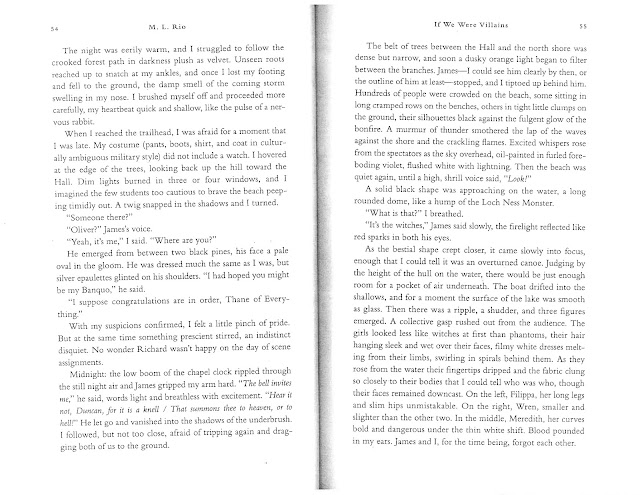
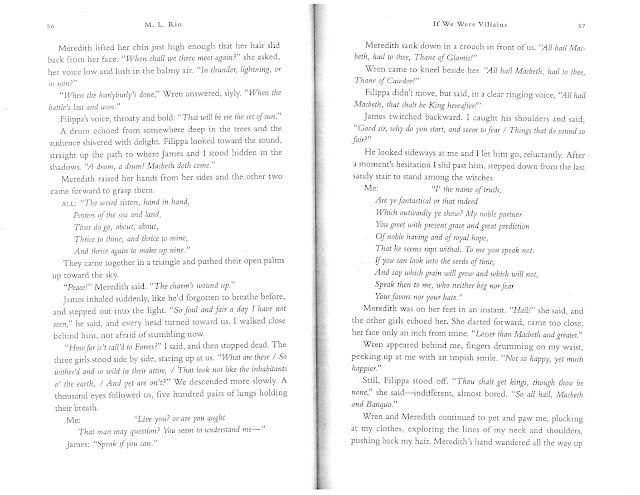
Here, then, is part of a scene where the students enact scenes from Macbeth. The school has a tradition where a select group of students is tapped to perform scenes from a particular play. Each student is meant to keep his or her role confidential until the performance.

Let's sample some of their performance:


The students are, as one would expect if one really put one's thoughts to it, pretentious, but the plot is interesting, and the students quote from Shakespeare at the drop of a hat, which keeps things sharp.

Click below to purchase the book from amazon.com
(and to support Bardfilm as you do so).

Monday, March 21, 2022

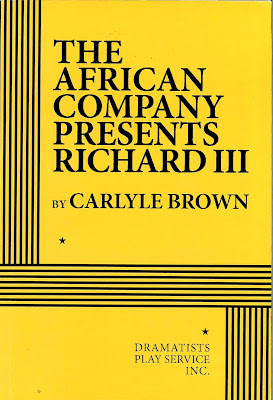
Book Note: The African Company Presents Richard III

Brown, Carlyle. The African Company Presents Richard III. Dramatists Play Service, 1994.

I cannot now recall where I heard of this play, but I know that I immediately wanted to track it down and find out what it's all about.

It's all about two productions of Richard III in 1821 in New York City.  One is by a black company, but it's attended by both black and white audiences (though the audiences are segregated). Interestingly (and crucially to the development of the plot), the white audience has to stand in the back in a roped-off section.

That gives the second production—a white production bringing a famous actor over from England (Junius Brutus Booth, as it happens) to play their Richard—to manipulate the law to get the black production shut down. Fire codes, you know, and excessive noisemaking, et cetera.

The play itself was first performed here in Minneapolis in 1988.  It "premiered at Penumbra Theatre, Minnesota’s only Black Professional Theatre Company, in February 1988, during the same time that The Guthrie Theater in Minneapolis was presenting Shakespeare’s Richard III" (from Red Bull Theater).

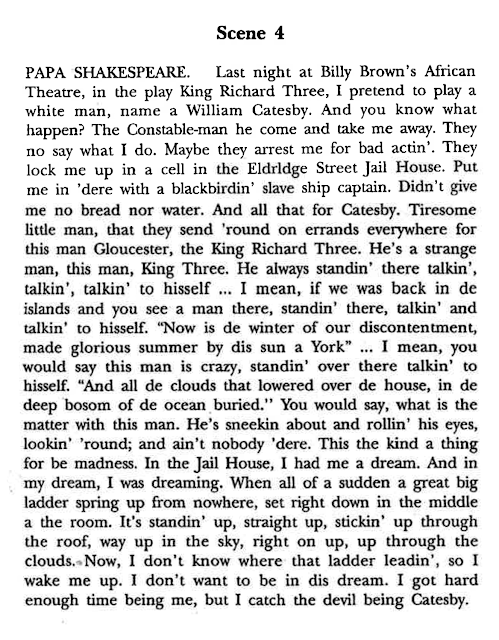
I'd like to give you two samples from this brief play.  The first is Act One, scene four, a monologue by Papa Shakespeare:


The other is Act Two, scene five, in which the performance of Richard III by the black company—now moved to a playing area directly across the street from the white production—is shut down by the authorities (pages 50-52, here made into a two-page spread):


There you have it. It's very interesting, and I'd like to see it in performance.

Click below to purchase the film from amazon.com
(and to support Bardfilm as you do so).


You can also purchase it from the Dramatists Play Service.

Monday, February 21, 2022

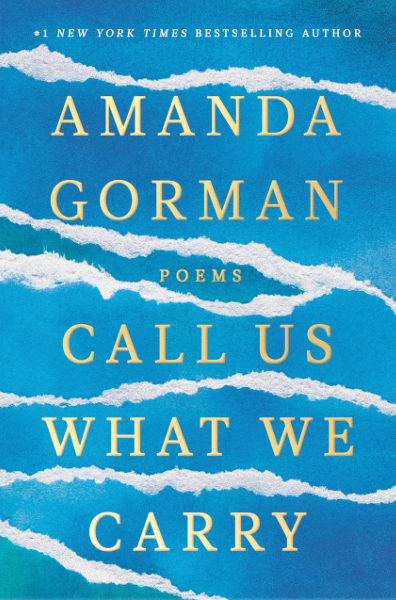
Shakespeare in Amanda Gorman's Call Us What We Carry

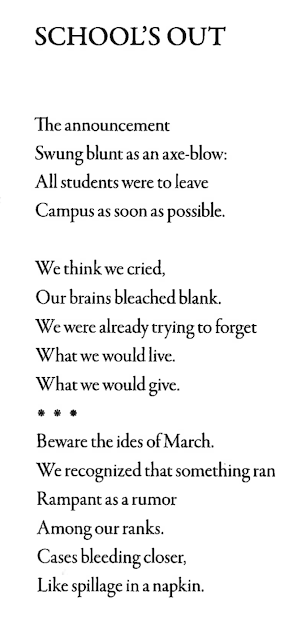
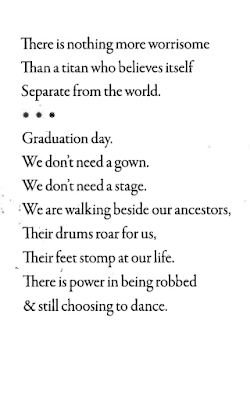
Gorman, Amanda. Call Us What We Carry: Poems. New York: Viking, 2021. "School's Out" appears on pages 17 and 18.

I've been waiting for a long time for this volume of Amanda Gorman's poetry. I was captivated by the poem she read at the most recent inauguration, and I wanted to see—and hear—more.

I didn't quite realize that I'd be getting some good Shakespeare in there as well.

At first, it seems somewhat incidental. There was an epigraph from Othello:


And a delightful purposefully-misquoted quote from Hamlet:


And then we get a poem relating to the COVID-19 lockdown in March of 2020 that closed most of the schools across the nation:


All that and more! The collection as a whole is remarkable. When you get it, try "Cordage, or Atonement" and "_ _ _ _ _ [Gated]" in particular.

Click below to purchase the book from amazon.com
(and to support Bardfilm as you do so).

Friday, February 11, 2022

A Touch of Shakespeare in Elementary

"Ill Tidings." By Jeffrey Paul King. Perf. Jonny Lee Miller and Lucy Liu. Dir. Ron Fortunato. Elementary. Season 5, episode 6. CBS. 13 November 2016. DVD. Paramount, 2019.

Most television shows will go for the low-hanging Shakespearean fruit.

Not, at least in this case, Elementary

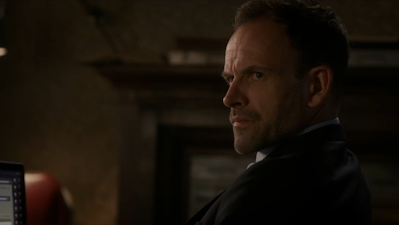
It's brief, but we have a nice quote from Antony and Cleopatra in the middle of a Season Five episode:


The line is Cleopatra's. After beating up a messenger who brings her news that Antony, returned to Rome, has also returned to Octavia, she asks him to come back, promising not to hurt him any more. To encourage him to elaborate on his news—or just to confirm it—she says, "Give to a gracious message / An host of tongues, but let ill tidings tell / Themselves when they be felt" (II.v.86–88).
 
Naturally, Sherlock recognizes the quote immediately (I, for one, had to look it up). But he's slower on the uptake about its purpose (that I got pretty quickly). 

It's brief, but it's interesting—the more so since it's not a usual go-to quote from or allusion to Shakespeare.

Update: During a recent viewing of this episode, I noticed that Sherlock himself repeats the quotation at the very end:


Links: The Episode at IMDB.

Click below to purchase the entire series from amazon.com
(and to support Bardfilm as you do so).

Tuesday, January 4, 2022

I am the Very Model of a Professor Shakespearean

"I am the Very Model of a Professor Shakespearean." Parody of "I am the Very Model of a Modern Major General" by W. S. Gilbert, music by A. S. Sullivan. Perf. kj. For a thoroughly and delightfully annotated version of "I am the Very Model of a Modern Major General," see
"I am the Very Model of a Modern Major General," The Pirates of Penzance, by William Schwenck Gilbert, Asimov's Annotated Gilbert & Sullivan, New York (Doubleday 1988), 227-34.
You, my readers, often say, "Oh, I wish I could take your Shakespeare and Film course!" After assuring you that I wish, too, that you could be in my course, I wonder if you have any idea what you would be letting yourself in for if you actually did sign up for the course.
 
The only things I can think to do are (1) Share the twenty-five page syllabus with you, (2) Send you back to the first Bardfilm post and ask you to read forward from there, or (3) Give you a general idea of what the first day of class would be like.
 
You can choose your own path, of course; however, while you're here, why not see what the first day of one of my Shakespeare courses might be like (the lyrics are printed in the video below, but they're also in the text below that): 

I am the Very Model of a Professor Shakespearean.

I am the very model of a Professor Shakespearean.
I know that Hamlet’s Danish and that Twelfth Night is Illyrian.
I know the plays are comedy or tragedy or history
And that the English Drama has evolved from plays of Mystery.
I can tell trochaic trimeter from iambic pentameter
And know that Fortinbras is a Norwegian or a Laplander . . .
I see that Romeo for Juliet had what is true desire . . .

[Worried about the rhyme . . .]

And I can quote the speech that has the line “O, for a muse of fire.”

[Line repeats with chorus.]

When reading King Lear, I suggest that Gloucester really ought to see;
And I’ll enliven dinner dates with a “to be or not to be.”
And if you mention pirates, I say “Hamlet’s trip buccaneerian”—
I am the very model of a Professor Shakespearean.


I’m pretty sure I know to whom Shakespeare left all his underwear;
I also know which play has someone exit pursued by a bear.
Both Much Ado and Henry Five—I’ve seen the films Branagh-ger-y—
And I can yell, “Is this a dagger that I see in front of me?”
I know that all the world’s a stage and that each one must play a part.
I know Bernardo’s cold and that Fransisco’s really sick at heart.
You know I can decipher all the speeches of Polonius . . .

[Worried about the rhyme . . .]

And nearly all he says is merely dictum ab bolonius.

[Line repeats with chorus.] 

I can say which character would trade a kingdom for a measly horse,
And if you call for sonnets, I can quote you every one, of course.
And I remember Hamlet’s line “a satyr to Hyperion”:
I am the very model of a Professor Shakespearean.


In fact, when I can tell all seven bloody Henry plays apart
And even sit though that play with the fat guy in the laundry cart—
When I can play the Scottish play with bagpipes or accordian
And have the sharpest answers for the most confirmed Oxfordian—
When I can tell if it’s a fretful porpentine or platypus,
And pronounce honorificabilitudinitatibus
In short, when I know every bit of bawdy joke and knavery,

[Certain about the rhyme . . .]

You’ll say a better Professor Shakespearean could naaver be.

[Line repeats with chorus.]

For my knowledge of Will Shakespeare, though I’ve seen an awful lot of films,
Is limited because, quite frankly, I can become overwilmed.
But I know Hamlet’s Danish and that Twelfth Night is Illyrian:
I am the very model of a Professor Shakespearean.

And there you have it. Now you know what it's like to be in one of my Shakespeare classes!

And I'd just like to add, as a brief codicil, these points:

Yes, I know there's another genre called "Romance"—and (conceivably) even another called "Problem Play"—but I only had so many syllables to work with.

Yes, but you try coming up with a rhyme for "film."  At least mine has a bit of a pun on Shakespeare's name.

Yes, the "nearly" / "merely" internal rhyme is quite nice!  Thank you.

And if you didn't get enough here, why don't you write your own verse and post it in the comments?  Or head over to Good Tickle Brain and sing her "Modern Major Shakespeare Fan" number? Its rhythm, in particular, is commendable.

If you enjoyed this—or, frankly, whether you enjoyed this or not—you can also try "Shakespearean Rhapsody," "Danish Paradise," "Dunsinane Prison Blues," or "Let's Do It (Let's Fall in Love . . . with Shakespeare)." Or steer toward this musical version of King Lear's madness. Alternately, investigate the big number from the musical Pyramus! If you're desperate for something to do with Richard III, you could try the (admittedly not very well performed) "I'll Make a King out of Me."  Or you could listen to this musical PSA that warns people to stay clear of the Great River Shakespeare Festival.
[Note: Should the embedded video above go sour, here's a blog-native version.]


Wednesday, October 6, 2021

Book Note Book Note: Tigers, Not Daughters

Mabry, Samantha. Tigers, Not Daughters. New York: Algonquin, 2020.

This is going to be a quick one because I'm not convinced this book has much to do with Shakespeare.

I found it on a list of modern novels that retell the works of Shakespeare—in the King Lear section. And the novel is about a father who is not very good at being a father and three daughters—well, four, but one dies early on and comes back as a ghost to haunt the others.

But apart from that general framework, I'm not finding much that reflects the play. Are there any readers out there who know this book and who can point me in the right direction?

Oh, there's also one direct reference to King Lear (other than the title, that is). Here it is. One of the daughters returns the school-owned copy of King Lear, saying that she doesn't need it since she is living it every day.


Click below to purchase the book from amazon.com
(and to support Bardfilm as you do so).
Monday, August 9, 2021

Tangential Shakespeare in Back-to-School FoxTrot

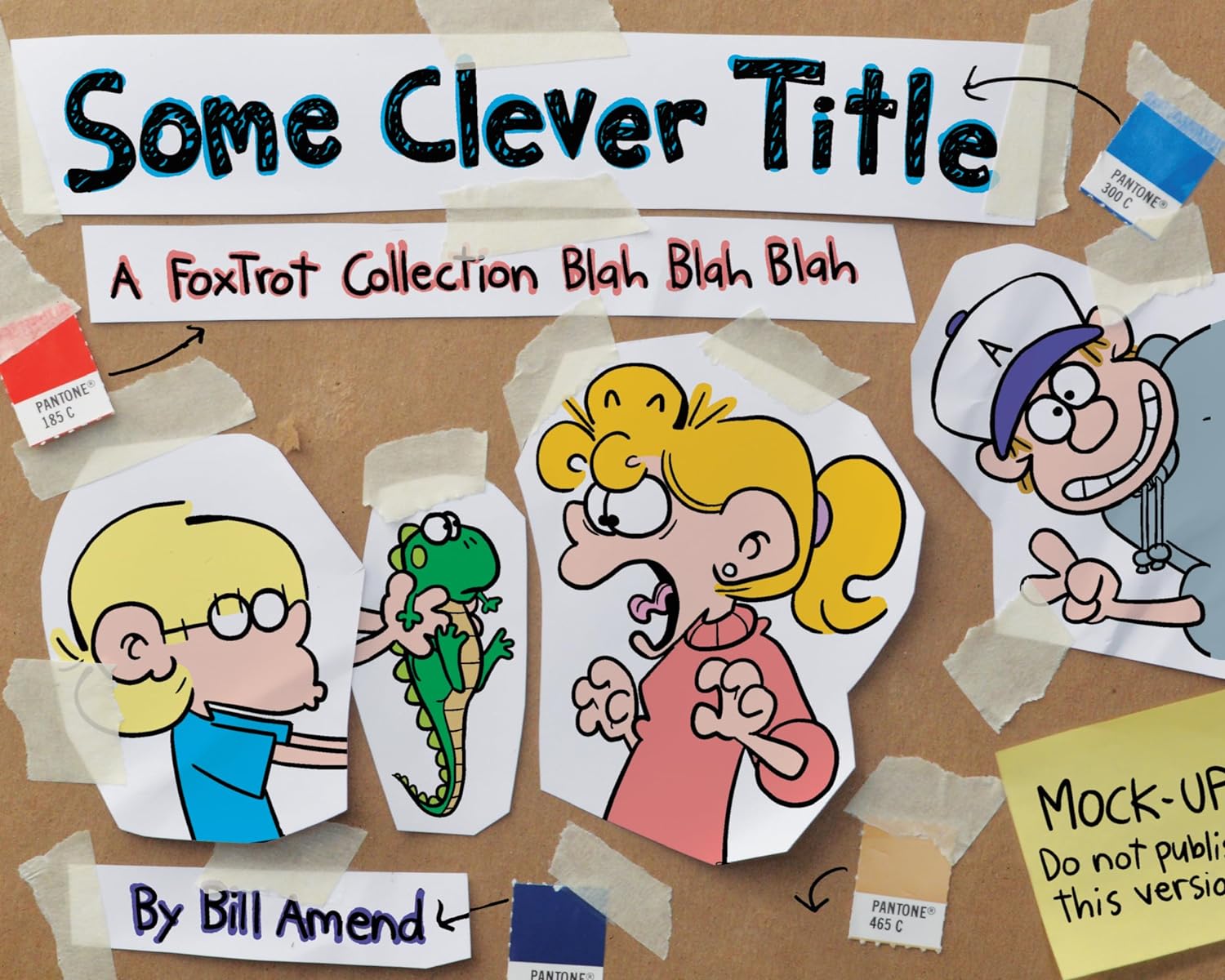
Amend, Bill. "Pencil Test." Some Clever Title: A FoxTrot Collection Blah Blah Blah. Kansas City: Andrews McMeel, 2016. 73. 

It's always nice when Shakespeare and math come together in harmony—even if it's only tangentially. And it's even better when it's in a FoxTrot comic.

I try to keep my eye on the Shakespeare in FoxTrot (search the blog for other moments of Bard / Amend connections), but I missed this one, perhaps because it's only tangential. However, knowing the Shakespeare part of the math question will get you a long way toward solving it (though you might, as I did, have to Google the atomic number of boron to be certain (though, if you look and read carefully, the comic itself cleverly answers the question in its own context).


Click below to purchase the book from amazon.com
(and to support Bardfilm—and, perhaps obviously, Bill Amend—as you do so).

Thursday, August 5, 2021

“Only the Good Drown Young”: A Parody of Billy Joel's “Only the Good Die Young.”

kj, jk. “Only the Good Drown Young”: A Parody of Billy Joel's “Only the Good Die Young.” N.c: n.p., 2021.

Well, my voice just isn't up to recording this one, but I did want to share it with you. Grab your favorite karaoke version of "Only the Good Die Young" by Billy Joel (here's one) and impress all your Shakespearean friends—particularly those who are into Hamlet.

Come out, Ophelia, don’t make me wait.
You Danish-y girls start much too late.
Oh, insanity isn’t a character trait
From walking i’ th’ sun . . .
Well, they gave you a prayer book and asked you to pray;
They hid in the arras to watch what you’d say—
Ah, but they never thought that your brain would decay
When Hamlet said, “Be a nun.”
Only the good drown young—that’s what I said.
Only the good drown young.

You might know that I run with Horatio, and
He ain’t strange things apt to understand,
But at least he saw the ghost firsthand,
Ah, and he told me what it done.
So, come on, Ophelia, shall I lie in your lap?
Let’s watch the play: Don’t you know? It’s a trap!
There’s one more thing that I ought to recap:
Ophelia, you’re just no fun.
Darling, only the good drown young.
Whoa, whoa, whoa.
I tell you, only the good drown young.
Only the good drown young.

You got a big bouquet at your daddy’s funeral oration.
You got some rosemary . . .
Mmmmm, and a few pansies.
But, Ophelia, they didn’t give you quite enough good flotation.
You said, “Any more is sin”
When you were saying your orisons.
O, o, o . . .

They say there’s a purgatory for dad.
They also say that I may go mad.
I’d rather be melancholy than just plain sad—
Must no more be done?
You know that only the good drown young.
O, baby, babe.
I tell you, only the good drown young.
Only the good drown young.

You say my mother said the willow by the brook was an invitation.
Aww, she never saw you splash.
But was the deed bloody and rash?
O, o, o . . .
Come out, come out, come out,
Ophelia, don’t make me wait.
You Danish-y girls start much too late.
Insanity isn’t a character trait
From walking i’ th’ sun . . .
You know that only the good drown young.
Tell you, baby . . .
Only the good drown young.
Only the good . . .
Only the good drown young. [Splash.] 


Monday, August 2, 2021

Book Note: The Orchard Book of Shakespeare Stories

Matthews, Adrew. The Orchard Book of Shakespeare Stories. Illus. Angela Barrett. London: Orchard Books, 2001.

We've dealt with the nifty Shakespeare Stories (for which, q.v.), but I've neglected to let you know that the same retellings of Shakespeare are illustrated in an entirely different manner for a single-volume experience.

If you like your illustrations in color and less like cartoons—or if you just like to have all your Shakespeare stories in a single volume, this is the one for you. Here's a bit of Hamlet to encourage you (since I gave you some of the other illustrator's version of that play):


Click below to purchase the book from amazon.com
(and to support Bardfilm as you do so).

Bardfilm is normally written as one word, though it can also be found under a search for "Bard Film Blog." Bardfilm is a Shakespeare blog (admittedly, one of many Shakespeare blogs), and it is dedicated to commentary on films (Shakespeare movies, The Shakespeare Movie, Shakespeare on television, Shakespeare at the cinema), plays, and other matter related to Shakespeare (allusions to Shakespeare in pop culture, quotes from Shakespeare in popular culture, quotations that come from Shakespeare, et cetera).

Unless otherwise indicated, quotations from Shakespeare's works are from the following edition:
Shakespeare, William. The Riverside Shakespeare. 2nd ed. Gen. ed. G. Blakemore Evans. Boston: Houghton Mifflin, 1997.
All material original to this blog is copyrighted: Copyright 2008-2039 (and into perpetuity thereafter) by Keith Jones.

The very instant that I saw you did / My heart fly to your service; there resides, / To make me slave to it; and, for your sake, / Am I this patient [b]log-man.

—The Tempest