Tuesday, July 9, 2013

A Perfect Twelfth Night at the Great River Shakespeare Festival

Twelfth Night. Dir. Paul Mason Barnes. Perf. Corey Allen, Doug Scholz-Carlson, Christopher Gerson, Tarah Flanagan, Donny Repsher, John Maltese, Kyle Cotton, Gerrad Alex Taylor, Benjamin Boucvalt, Brian White, Stephanie Lambourn, Laura Jacobs, Chris Mixon, Michael Fitzpatrick, Jonathan Gillard Daly, Robert Montgomery, Jamie Dufault, Peter Eli Johnson, Katie Bowler, Eva Rose Scholz-Carlson, Carter Briggs, Anna Scholz-Carlson, and Bailey Bestul. Great River Shakespeare Festival. Winona, Minnesota. 2013.

On Friday afternoon, I saw a rare thing indeed. I saw a perfect performance of Twelfth Night.

I've always admired the productions put on by the Great River Shakespeare Festival, but I was even more impressed than usual with Director Paul Barnes' Twelfth Night. The usual adjectives describing a Great River Shakespeare Festival performance—magnificent, marvelous, compelling, brilliant—are inadequate. Perfect is the only word.

Friday's performance redeemed the play for me. I've had a checkered past with Twelfth Night. My first encounter with Twelfth Night was on a grade school field trip. I was amazed at how much spit the actors produced, how funny my classmates thought that was (I was more interested than amused), and how much energy the actors expended while leaping about singing "Hold Thy Peace." In short, I enjoyed it very much.

And then Trevor Nunn's 1996 film version of the play came along. The film was so dark, dreary, and depressing that it put me entirely off the play. After that, I taught the play a few times in introductory literature classes, but without much interest and with very little passion.

In short, any production of Twelfth Night had a very long way to go to convince me of the humor, significance, and value of the play. The Great River Shakespeare Festival's production tore up all my doubts and left them in the dust by the side of the road a thousand miles away.

The production avoids every trap into which it could have fallen. Its melancholy parts are poignant and deep, but they do not tip the balance of the play into despondency. The humorous parts are hysterically funny, but they never descend into pointlessness. Malvolio's imprisonment is treated seriously but not with sadistic cruelty, and his response is measured, not casting a pall over the reconciliations at the end of the play.

Moreover, every single role was cast and played perfectly. Secondarily, the music was carefully and thoughtfully integrated into the play as a whole. Sixth and lastly, the set was beautifully constructed. Thirdly, the choreography—particularly of the scene in which Malvolio finds the letter—was brilliantly conceived and flawlessly executed. And, to conclude, the Great River Shakespeare Festival has produced a perfect Twelfth Night.

I could go on for days about the magnificent details of this production, but I need to curb my enthusiasm and keep myself to mentioning just a few small points.

The production is set in Victorian England at Christmas time. The costumes are generally dark and somber, fitting the mourning and melancholy that are, in part, the play's concerns. That somber look is balanced by the music and revelry. The characters (particularly those affiliated with Sir Toby Belch) occasionally break into a rowdy wassail, perfectly complementing the play's more somber moments. The show also made incredible use of the folk song "The Water is Wide" throughout. It became a theme of separation and eventual reunion and reconciliation.

Jonathan Gillard Daly's Feste was simply superb. His singing voice and his acting are at the topmost level, but he casually and seemingly-effortlessly delivers Feste's witty lines and songs. They felt completely comfortable and sustaining. The music for Feste's songs was written for this production, and it was magnificent. Indeed, if I were absolutely forced to admit that this production had some flaw somewhere, I would very reluctantly say that having live music (as the Great River Shakespeare Festival did with its Comedy of Errors in 2010) rather than canned would give even greater flexibility and depth to the excellencies of the performance.

Daly's Feste is also one who knows much. When he exits in Act I, scene v, he gives Malvolio a prophetic glance as he says "the fool shall look to the madman" (I.v.137-38). He also starts saying "Sir" with great, incredulous emphasis during an early exchange with Viola-disguised-as-Cessario. This gave a great and pleasing wisdom to the fool.

I was completely floored by Christopher Gerson's Malvolio. He played the sour and demanding steward with empathy, bringing out his honest sense of duty to Olivia to balance his less-pleasing characteristics. And he played Malvolio's imagination—both before and after his discovery of the letter—so vividly that we saw his every thought. Peter Saccio, who has lectured on this scene and who will be speaking at the Great River Shakespeare Festival later this summer, will be immensely pleased at Gerson's rendition of the character.

Gerson also was able, in the scene where the letter instructs him to smile, to keep the audience in hysterical laughter for three full minutes without saying a word. The experience was unparalleled—although we laughed nearly as much when he re-entered in yellow stockings (and a costume likewise vibrant with yellow). The dark and somber costuming and set design would be worth it if it only served as a contrast to Malvolio's yellow outfit.

Sir Toby Belch (Michael Fitzpatrick) and Sir Andrew Aguecheek (Chris Mixon) formed an astonishing pair, particularly when joined by Fabian (Brian White) and Maria (Laura Jacobs). Their comic timing could not have been better. Especially (but not exclusively) in the trickery scene, they hit the laugh lines and actions absolutely right—particularly when Fitzpatrick, Mixon, and White had to disguise themselves suddenly as a nativity scene under the Christmas tree behind which they had been hiding. Genius.

Tarah Flanagan's Viola was moving and funny and touching and remarkable. She was able to convey the bifurcated nature of her position—wishing to serve Orsino in his wooing of Olivia while desiring his love for herself—in a deeply sympathetic way. She was also able to banter with Feste, critique (and compliment) Olivia, and react to the news that her brother was still alive in extraordinarily complex ways. Flanagan's versatility as an actor was able to bring out the versatility in the character in astounding ways.

Too many other marvelous things happened in this performance to list, let alone to detail. I wish I could say more about the role of The Caroler (played by Doug Scholz-Carlson), who, Chorus-like, introduced us to the background of the play and served a something of a foil to Feste; the distribution of Christmas ornaments during the curtain call—and Malvolio's reception of only a lump of coal; the slapstick surrounding the fight between Viola and Sir Andrew; the decisions Paul Barnes made as director; and the power Corey Allen brought to the role of Orsino. Instead, I must on your imaginary forces work to fill that in—or, better yet, you can see the show yourself.

I do admonish each of you to get to the Great River Shakespeare Festival this year to see a perfect Twelfth Night.

Bonus Image: The Fool and King Lear from the Great River Shakespeare Festival's 2012 season.

Links: The Great River Shakespeare Festival.

Tuesday, July 2, 2013

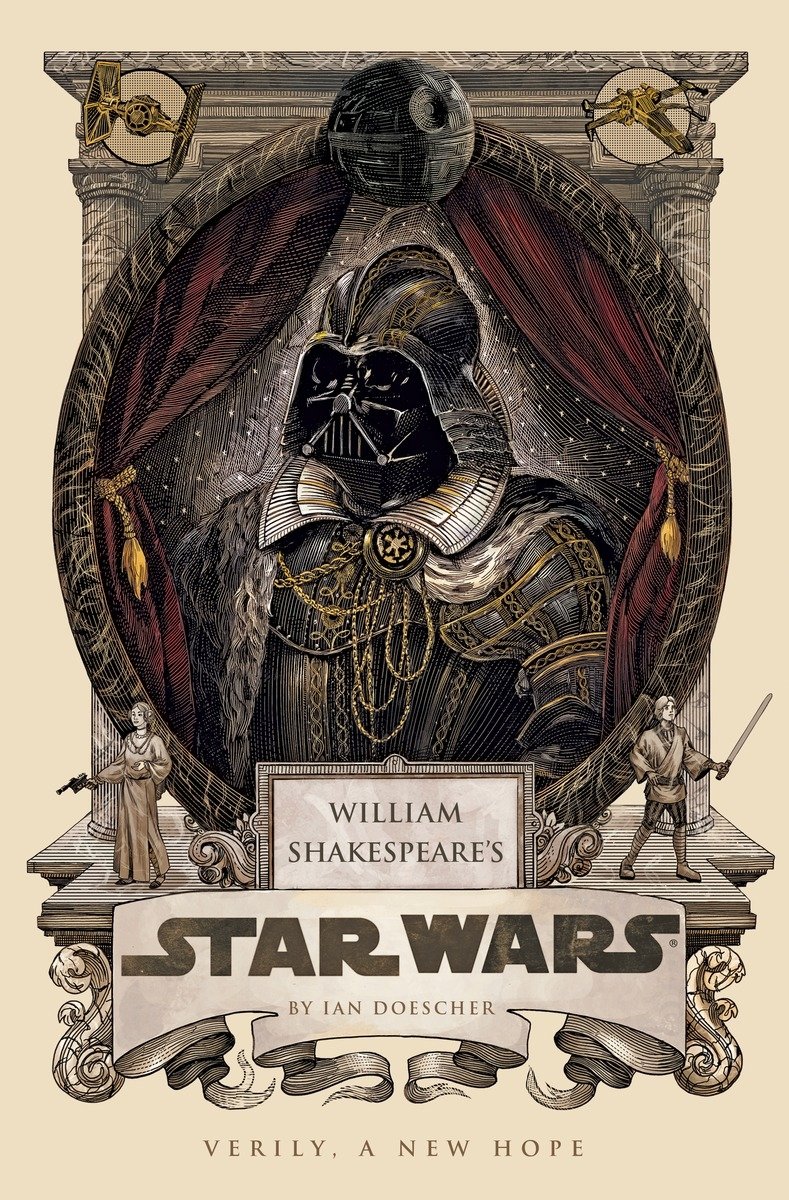
Book Note: William Shakespeare's Star Wars: Verily, A New Hope

Doescher, Ian. William Shakespeare's Star Wars: Verily, A New Hope. Philadelphia: Quirk Books, 2013.

I have nothing against Novelty Shakespeare—not even when it's connected to Star Wars. Indeed, I think I was the first person to give the world these gimmicky gems:
A Tauntaun! A Tauntaun! The Third Moon of the Ice Planet Hoth for a Tauntaun!

Alas, poor Yorick. I knew him, Obi-wan. Pah! And I thought he smelled bad on the outside!
Act III, scene ii. Another part of the heath. Stormtroopers still.

Jedi have died from time to time, and worms have eaten them—but they always come back as shiny, shiny ghosts.
You don't need to see his identification. We don't need to see his identification. The Earl of Oxford is not the poet you're looking for. The Earl of Oxford is not the poet we're looking for. He can go about his scholarship without distractions about the authorship issue. You can go about your scholarship without distractions about the authorship issue. Move Along. Move along.

Luke, I am thy father's spirit, doomed for a certain term to walk the night.
Note: For others, see this post on Shakespeare Geek's blog.

Naturally, then, I was curious when I heard about a retelling of the plot of Star Wars: A New Hope entirely in iambic pentameter, and I was grateful when they sent me a copy. And the author of the book has clearly put a lot of thoughtful time into its creation. But, in all honesty, the book begin to pall pretty quickly. Good, strong lines lines like these (something of a silolquy by Darth Vader) . . .
And so another dies by my own hand,
This hand, which now encas’d in blackness is.
O that the fingers of this wretched hand
Had not the pain of suff’ring ever known.
But now my path is join’d unto the dark,
And wicked men—whose hands and fingers move
To crush their foes—are now my company.
So shall my fingers ever undertake
To do more evil, aye, and this—my hand—
Shall do the Emp’ror’s bidding ever more.
And thus we see how fingers presage death
And hands become the instruments of Fate. (I.ii.27-38)
. . . are offset by lines that are a bit too tedious:
LUKE: It seemeth that the Sand People have done
This wretched deed—yon gaffi sticks and tracks
Of bantha, aye. But ne’er in all my years
Have Tuskens gone awry so far as this.

OBI-WAN: And they have not, though they who this vile deed
Have done, would make us think Sand People did.
But hark! Take note, and look ye thereupon:
Yon tracks are side by side, yet Sand People,
’Tis known, e’er one behind the other ride,
So better may they hide their numbers large. (II.iv.1-10)
On the other hand, the publisher has put together this amusing trailer for the book:


The book is excellent in the genre of Novelty Shakespeare and will make a lovely gift for the Star Wars and / or Shakespeare fans in your life, but I'm not certain it will bear multiple readings.

Click below to purchase the book from amazon.com
(and to support Bardfilm as you do so).

Thursday, June 27, 2013

Horatio in Star Trek

“Conspiracy.” By Tracy Tormé and Robert Sabaroff. Perf. Patrick Stewart, Jonathan Frakes, LeVar Burton, Michael Dorn, Denise Crosby, Gates McFadden, Marina Sirtis, Brent Spiner, and Wil Wheaton. Dir. Cliff Bole. Star Trek: The Next Generation. Season 1, episode 25. Syndicated television. 9 May 1988. DVD. Paramount, 2002.

Every time I think my Shakespeare and Star Trek Complete post is complete, I find just one more reference to Shakespeare.

Near the end of Star Trek: The Next Generation's first season, the captain of the USS Enterprise has a secret meeting with the captains of three other starships. One of those ships is named the USS Horatio.

Some may think that the starship is named for Horatio Nelson, but I think it more likely to have been named after the character in Hamlet. Watch the salient points in the clip below and see if you don't agree:

Alas, poor Horatio.

The Horatio is an ambassador-class vessel. In Hamlet, Horatio's involvement with the new reign of Fortinbras at the end of the play makes him a de facto ambassador. The Horatio is associated with a large amount of wreckage. In Hamlet, Horatio is associated with all those dead bodies lying around the stage. It's pretty clear that the ship is named after the character in Hamlet, making this one more Shakespeare allusion in Star Trek.

Note: For more connections between Hamlet and Star Trek, try The Noble Heart of Star Trek, a recent project by a student at The George Washington University. 

Links: Shakespeare and Star Trek CompleteThe Noble Heart of Star Trek.

Wednesday, June 26, 2013

See the First U.S. Preview Screening of Muse of Fire at the Great River Shakespeare Festival

Muse of Fire. Dir. Dan Poole and Giles Terera. Perf. Dan Poole, Giles Terera,  Ian McKellen, Judi Dench, Ralph Fiennes, John Hurt, Ben Kingsley, Michael Gambon, Zoë Wanamaker, Jeremy Irons, and Simon Russell Beale. Muse of Fire Film, Timebomb Pictures, Lion Television, 2013. Screening at the Great River Shakespeare Festival on 6 July 2013 at 10:30 a.m.

The Great River Shakespeare Festival. 26 June to 4 August 2013.

The Great River Shakespeare Festival offers some of the best Shakespeare productions in the midwest. This year, the Festival presents Twelfth Night and Henry V, and that's thrilling enough.

But, in conjunction with Winona’s Frozen River Film Festival, they are also offering a preview screening, for the first time in the United States, the documentary Muse of Fire, an innovative film in which two actors set out on a quest to find out more about Shakespeare. And they seem to have interviewed everyone from Dame Judi Dench to Sir Ian McKellen—and even people who don't have OBEs—in their effort to do so.

The preview screening will be on July 6, 2013, at 10:30 a.m.

I could say more, but let me allow the actors and directors to make the case themselves for coming to the preview screening at The Great River Shakespeare Festival:


If that doesn't sway you, take a look at the trailer for the film. It's brilliant:


And if that doesn't move you, let me tell you this: I, Bardfilm, will be there in person to lead a discussion after the screening.

All right. If even that doesn't move you, perhaps this picture of Sir Ian Mckellen during the making of the film will be the final encouragement that will enable you to come see the film:


I hope to see you there!

Links: The Official Site for Muse of Fire. The Film at IMDB. The Great River Shakespeare Festival.

The Illustrations of Wallace Tripp and my Earliest Memories of Shakespeare

Tripp, Wallace, comp. and illus. A Great Big Ugly Man Came up and Tied his Horse to Me: A Book of Nonsense Verse. Boston: Little, Brown, 1973.

Tripp, Wallace, comp. and illus. Granfa' Grig had a Pig and Other Rhymes without Reason. Boston: Little, Brown, 1976.

Tripp, Wallace, comp. and illus. Marguerite, Go Wash Your Feet. New York: Houghton Mifflin, 1985.

I'm often asked when I first came to Shakespeare. A better question is probably when Shakespeare first came to me.

Either way, it's a difficult question to answer. I have a few stories about youthful experiences with a book, a stage production, or a film, but none of them is a clear first.

The image above, a detail from the image below, may come closest to being the first place I remember encountering Shakespeare. When I was young, I used to pour over two books by the unbelievably amazing illustrator Wallace Tripp. In them, he compiled nursery rhymes, famous sayings, and pieces of poetry and provided meticulous and marvelous illustrations for them. His illustrations are dense, funny, thoughtful, and detailed, and they reward repeated study—much like the works of William Shakespeare!

The image below (from A Great Big Ugly Man Came up and Tied his Horse to Me) is a giant two-page spread of an elephant in Renaissance dress causing London Bridge to crumble. To the far left, a horse is jumping clear of the destruction; its rider, having been thrown from the saddle, is falling after it, crying "My kingdom for a horse!" I don't know quite when I learned that those words came from Shakespeare, but I do recall the immense enjoyment the line gave me.

Note, too, the Fishmonger's shop behind the falling figure (is Polonius within?) and the bill reading "Now Playing Globe Theatre—Historie of Henry ye Fourth"

Tripp's details intrigued me and sparked my imagination. I'm not absolutely certain that his illustration of the proverbial "For want of a nail, the shoe was lost" is intended to depict Richard III and the Battle of Bosworth, but I connected it in my young mind with the cry of "My kingdom for a horse" from the earlier illustration. I also used to spend hours squinting at this drawing, trying to find the nail that all those soldier had missed. Note: The nail is in the image below—can you spot it?

From A Great Big Ugly Man Came up and Tied his Horse to Me.

Tripp's Granfa' Grig had a Pig has only one quote from Shakespeare that I could find, but it's a very useful one to have in your word-hoard:

A Snide Side Remark from King Lear.

I wasn't aware of Tripp's Marguerite, Go Wash Your Feet until many years after it was published, but I wish I had been. In it, the Shakespeare is more direct and more abundant (and the side remarks by other characters more humorous):

A Quote from Macbeth and a Complaint about a Carrot Omelet.

William Shakespeare, the Ordinary Human Being

A Quote from Hamlet as a Horologist's Lament

Prospero's Abjuration of his Magic
(And a Flippant Comment from a Rabbit)


And that is the last image in Marguerite, Go Wash Your Feet. I gather that Wallace Tripp has retired from illustrating. I wish to thank him for the hours, days, and years of pleasure his work has given the world. Thank you, Wallace Tripp!


I'm returning to this after nine years to provide one more example.  This time, it's from the book mentioned by Tripp's daughter in one of the comments below: Rose's are Red, Violet's are Blue and Other Silly Poems (New York: Little Brown & Co., 1999).

First, here's the full spread for "There was an Old Person of Ware":


And now, a detail of the packages on the back of the bike:


We have something there for "Bear Bodkin" on "Quietus St." in "Whipscorn." And something for Fardel's Bear on Grunt St. in Sweatby.

Thank you again, Mr. Tripp, for such delightful, playful cleverness.

Note: If you're looking for some more William Shakespeare and Wallace Tripp, try A Brief and Hilarious Biography of Shakespeare: Wm. Shakespeare, Gent. (by W. Tripp, Gent.), written by Wallace Tripp and narrated by yours truly.


Click below to purchase the books from amazon.com
(and to support Bardfilm as you do so).


Tuesday, June 25, 2013

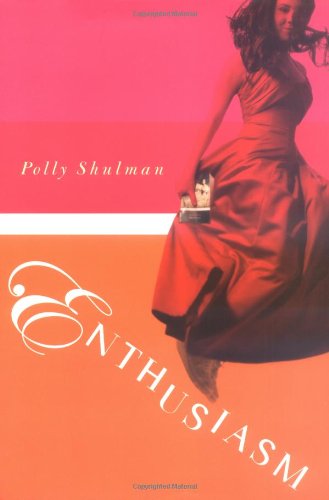
Book Note: Enthusiasm by Polly Shulman

Shulman, Polly. Enthusiasm. New York: G. P. Putnam, 2006.

Although this Young Adult Novel is, strictly speaking, far more of a Jane Austen derivative than a Shakespeare-related book, it was enjoyable enough—and there was Shakespeare enough in it—to justify a quick post on it here.

The events of the novel center on Ash, a girl who is continually caught up in a never-ending series of enthusiasms. In this book, she has fallen in love with the world of Jane Austen, and she has determined to emulate Miss Austen's characters—especially in pursuing a boy of genuine merit to be the love of her life.

Naturally, my favorite parts involve Shakespeares. The students in the novel are putting on a musical version of A Midsummer Night's Dream entitled Midwinter Insomnia. Some of the lyrics are too good to miss:
As Daniel [the Demetrius analogue], Chris sang:

Half an hour of hanging out with Hermia
Would give a seal or walrus hypothermia.
She's the Queen of the Ice.
She doesn't know the meaning of nice.
Turn the thermostat up and crank it!
I need another sweater and a blanket.


Ash / Hermia responded,

Insinuating snake!
He's a man on the make,
Out to get what he can take,
And take what he can get—
Which is nothing . . . yet.


The yet came as Hermia drank the tainted water and found herself falling under his spell. (119)
The whole novel is fun and fancy-free. I enjoyed it immensely. It's just the antidote necessary to a Young Adult Novel scene far too laden with Vampires and Zombies.

Click below to purchase the book from amazon.com
(and to support Bardfilm as you do so).

Monday, June 24, 2013

Book Note: Three Classic Shakespeare-Related Novels I'm Supposed to Like (And One I Actually Do)

Whenever I talk to people about a course I'm teaching, I always encounter the "Why aren't you teaching this text?" lists. That's particularly true of my Food Lit. and Humor Lit. courses, but it was also the case with the Modern Shakespearean Fiction class I taught for the first time this past semester. People have their own texts—whether favorites or classics—classified under that genre, and they're sometimes offended that I haven't chosen those texts for my course.

Here are three novels that often appear in conversations about modern Shakespearean fiction and a few brief comments about each of them.

Updike, John. Gertrude and Claudius. New York: Random House, 2000.

As an English teacher, I'm supposed to like John Updike. I mean, he's the author of the most famous rabbit books since Beatrix Potter. And I do like the rabbit books (though I actually think The Centaur is even better). He won the Pulitzer Prize for Fiction—not once, but twice!—and he's enormously prolific.

His late novel Gertrude and Claudius is, for me, a dud. It tells the backstory to Shakespeare's play, using bits and pieces of that play and of Shakespeare's source material for the play. Its last chapter overlaps with Act I, scene ii of Hamlet.

But the novel is very inconsistent. Some parts read like a tale of Courtly Love (with all that that term implies), some parts have a faux Medieval flavor, all the parts about sex are thoroughly modern or post-modern, and some parts are sprinkled with inauthentic Renaissance lingo.

In short, it's not very interesting, and that's reason enough for it to be excluded from my Modern Shakespearean Fiction course.

Burgess, Anthony. Nothing Like the Sun: A Story of Shakespeare's Love-Life. New York: W.W. Norton, 1964.

English teachers are also supposed to like the edgy work of Anthony Burgess. And I do—to a point. A Clockwork Orange is a bit too much for me, but I clearly see its literary merit.

That is not the case with Nothing Like the Sun. I've tried on numerous occasions to choke through this novel, but I find it unpleasurably difficult and unnecessarily abstruse. In fact, my disappointment at this book early in my Shakespeare studies led me to swear off Shakespeare-related novels entirely for several years.

It's not just the pseudo-Renaissance English style in which the book is written; it's also the indistinguishability of the characters. They all seem exactly the same, and they all seem as dull as ditch water.

That's a harsh, unorthodox view, but I can't imagine having much to say in a classroom about this novel. It's another one to exclude from the course.

Steinbeck, John. The Winter of Our Discontent. New York: Viking Press, 1961.

And then there's Steinbeck. He's another Pulitzer Prize winner, another prolific and well-respected author, another writer English teachers should like.

And The Winter of Our Discontent is a masterpiece of characterization, a thoughtful commentary on the modern era, a lucid depiction of small-town life, a triumph of realism.

The novel's protagonist is the scion of a once-wealth family who has taken up the profession of grocery clerk to support himself and his family. But he has Richard III-like schemes.

The novel depicts his implementation of those schemes in an interesting and suspenseful way. I'm disinclined to give the details of the schemes because, unlike the other two novels mentioned here, they are interesting and unpredictable.

I will add that I was enormously dissatisfied with the book's final chapter—but the rest of the novel was marvelous enough to merit a second reading and a great deal more thought about how that chapter works. 

The novel will make an appearance in the next version of Modern Shakespearean Fiction that I teach, though I haven't yet decided whether it will be a major part of the course or an optional supplement to the reading.

I hope that answers your questions about why these texts weren't in my Modern Shakespearean Fiction course this year.

Click below to purchase the books from amazon.com
(and to support Bardfilm as you do so).


Wednesday, June 19, 2013

Book Note: Eyes Like Stars

Mantchev, Lisa. Eyes Like Stars. New York: Square Fish, 2010.

Opening note: While composing this post, I discovered that this novel is the first in a trilogy, which may cause me to rethink my opinion of the individual book.

I read this book at the suggestion of one of the students in my Modern Shakespearean Fiction class, and I enjoyed it to a degree.

The novel follows the adventures of Beatrice Shakespeare Smith in the fantasy setting of the Théâtre Illuminata, a magical theatre that houses all the characters in every play ever written. For me, the best parts (naturally) involve the Shakespeare characters—Ophelia far more than the fairies from A Midsummer Night's Dream, who are mean to be the comic relief of the book but who turn out to be largely annoying. But it's intriguing to imagine Shakespeare's characters behaving as Shakespeare's characters in different settings—it's something like Six [Shakespeare] Characters in Search of an Author.

In any case, Beatrice (nicknamed “Bertie”) is given an ultimatum: she must either find a proper place and role in the theatre or leave it forever. That's where the best part comes in.  She proposes producing a radically-new version of Hamlet—one set in ancient Egypt (an idea I have often entertained seriously). Here's a sample of that part of the novel (click to enlarge the image):

Page 107

Disappointingly (especially after pages and pages have been devoted to the rehearsal of that play), the novel changes direction and the play that is presented has very little to do with Shakespeare.

All the same, the novel is diverting. And perhaps I'll get my Hamlet in Egypt in one of the other two books in the trilogy!

Click below to purchase the books from amazon.com
(and to support Bardfilm as you do so).


Thursday, June 13, 2013

Sammy Davis, Jr. Quotes from Henry V in The Cosby Show

“Shakespeare.” By Matt Robinson. Perf. Bill Cosby, Phylicia Rashad, Malcolm-Jamal Warner, Arnold Stang, and Sammy Davis, Jr. Dir. Jay Sandrich. The Cosby Show. Season 5, episode 16. NBC. 6 Feb. 1989. DVD. Urban Works, 2007.

One brief line from Shakespeare makes its way into the mouth of a character played by Sammy Davis, Jr. in a fifth-season episode of The Cosby Show.

The plot involves a character who has never learned to read or write. At the end of the episode, he chances upon a retired English teacher—played by the astonishing Arnold Stang (you'll recognize his voice instantly)—who offers to teach him.  Observe:


The quote Arnold Stang’s character gives in reply—“Oh, gods and worms, what mockery!”—isn't from Shakespeare at all. It comes from Winterset by Maxwell Anderson, about which I know nothing.

Links: The Episode at IMDB.

Click below to purchase the entire run of the show (!) from amazon.com
(and to support Bardfilm as you do so).

Tuesday, June 4, 2013

Book Note: William Shakespeare and the Globe by Aliki

Aliki. William Shakespeare and the Globe. St. Louis: Turtleback Books, 2000.

Avi had a take on Romeo and Juliet; Aliki has a take on Shakespeare's biography—and on Sam Wanamaker's construction of the new Globe Theatre.

I'm very fond of this children's book. It's marvelously illustrated, and it's in sync with the current scholarship on Shakespeare's life and times.

I've included two separate images below that show something of the range that the book covers. Aliki tells us about William Shakespeare's young days in "Act One" (click on the images below to enlarge them); later, we get a good sense of the other people in Shakespeare's life—the actors and the rivals.

It's a great book for anyone, but it's particularly good for kids to get a good sense of who Shakespeare was and what he did.

Act One

Act Three

Click below to purchase the book from amazon.com
(and to support Bardfilm as you do so).

Friday, May 24, 2013

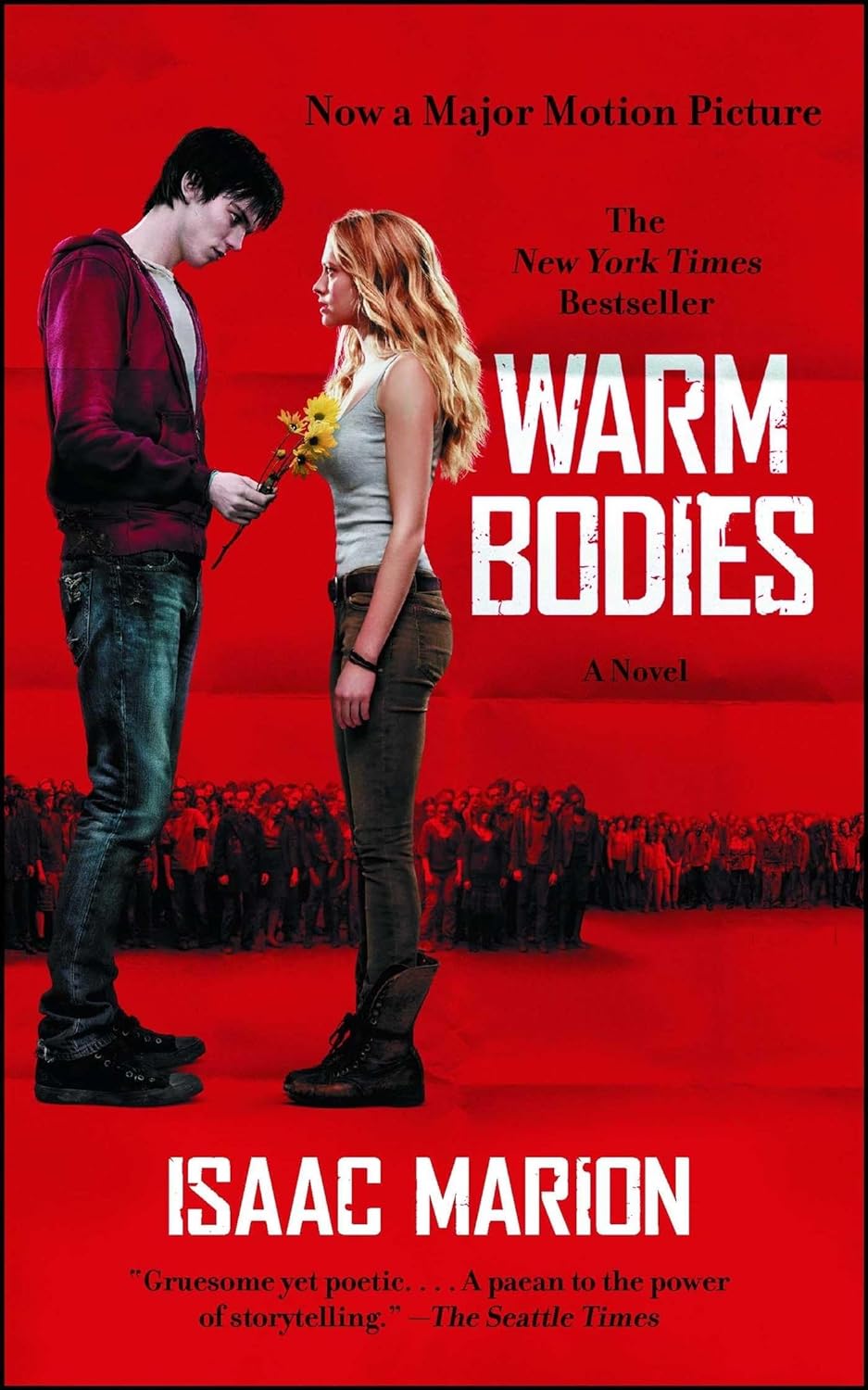
Minor but Persistent Shakespeare Use in Warm Bodies: A Novel

Marion, Isaac. Warm Bodies: A Novel. New York: Atria Books, 2011.

Zombie stories are anathema to me. I do not understand the recent acceleration in the production of Zombie-related books, games, and films. Sure, I watched the trailer for Zombie Hamlet (for which, q.v.), and I even watched Romeo and Juliet vs. The Living Dead in its entirety (for which, q.v.), but I just am not on the same zombie page as the Zombophiles seem to be.

Yet the recent release of the film Warm Bodies led to huge number of Zombinorata—largely college students—urging me to see it and to think about its connections to Romeo and Juliet.  "The Zombie protagonist's name is 'R,'" they would cry, "and his beloved—who is not a zombie—is named Julie."  Then, as if to clinch the argument, they would add, "There's even a balcony scene."

I haven't yet seen the film (I will have to, of course, once the DVD is released), but I've been shambling, zombie-like, through the novel on which the film is based, and I've finally finished it.

I don't like it. I don't like the rules of the zombie universe or the details of brain eating. I don't like the creepy horror elements.

But this is a great book. If you are into zombie narratives, this book will knock you sideways. The prose is strong and interesting and the characters are intriguing.

And, yes, the novel has its balcony scene. I've scanned in an image of the relevant pages (click on the image below to enlarge it), and there's very clearly a direct connection to Romeo and Juliet's balcony scene.  Note: The selection below contains some obscenities.

Pages 126-27.

The equivalent of Juliet's speech has its own kind of charm:
I miss R! I know that's crazy, but is it really that crazy? Just because he's . . . whatever he is? I mean, isn't "zombie" just a silly name we came up with for a state of being we don't understand? What's in a name, right? (127)
If you're liking the zombie trend—if you are, as @JohnDranski might say, a "Zombudsman"—try the book. If, like me, you're over-saturated with zombies, thank me for reading it so you didn't have to!

Click below to purchase the book from amazon.com
(and to support Bardfilm as you do so).

Tuesday, May 14, 2013

Bottom the Weaver's Guest Appearance in Royal Pains

“Bottom’s Up.” By Carol Flint & Simran Baidwan. Perf. Jake Weber, Mark Feuerstein, Paulo Costanzo, Jill Flint, Reshma Shetty, Brooke D'Orsay, and Campbell Scott. Dir. Tricia Brock. Royal Pains. Season 3, episode 14. USA Network.  8 February 2012.  DVD.  Paramount, 2008.

Certainly, the Pyramus and Thisbe scene in A Midsummer Night's Dream is meant to be terrible. But is it meant to be this terrible?

To be fair, the actor playing the actor playing Bottom (the repetition is necessary and intentional there) plays Bottom's role with great gusto. But everything else that frames that performance is just Soap Opera Awful (SOA). Take a gander and you'll understand:


Links: The Show's Episode List at IMDB.

Click below to purchase 
the Season Three, Part Two DVD 
from amazon.com
(and to support Bardfilm as you do so).

Monday, May 13, 2013

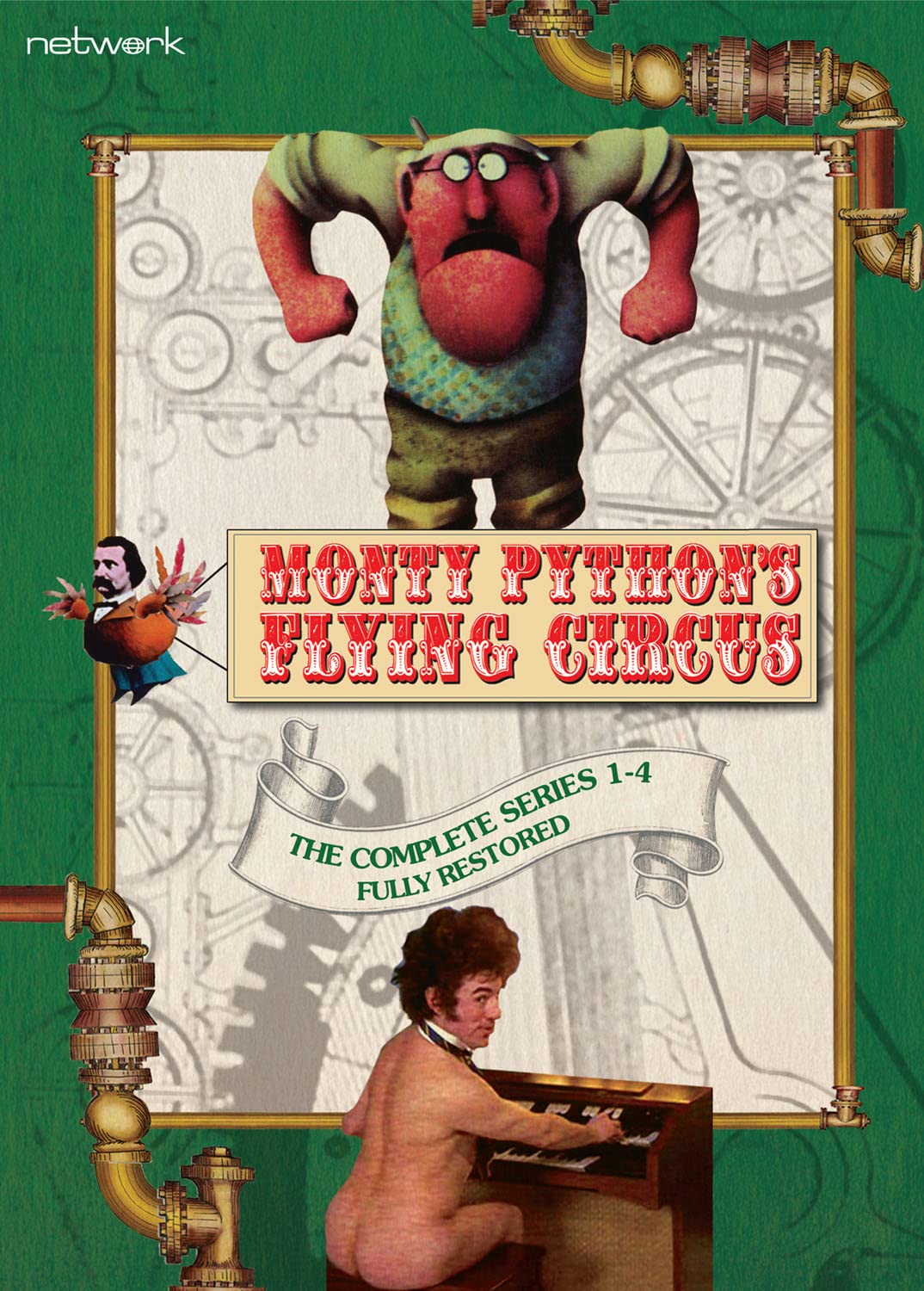
Hamlet in Monty Python’s Flying Circus

“Hamlet.” By Monty Python et al. Perf. Terry Gilliam, John Cleese, Graham Chapman, Terry Jones, Michael Palin, Connie Booth, and Eric Idle. Monty Python’s Flying Circus. Season 4, episode 4. BBC. 21 November 1974. DVD. New Video, 1999.

I've commented before on the notion that the British Comedy Troupe Monty Python has a relative scarcity of Shakespeare-related material. Of course, there is the Underwater Measure for Measure sketch—and the sketch that includes something of Shakespeare's biography—and, naturally, the optional Shakespearean subtitles to Monty Python and the Holy Grail (more can be found here)—and the one about the Overactors Hospital—and, finally, Julius Caesar on an Aldis Lamp. But there's not much beyond that.

When I wrote on those points of convergence between the comedy troupe and Shakespeare, I knew about the episode entitled “Hamlet”—but I didn't like it very much. It descends into crudity and obscenity far too often and far too quickly.

Still, I felt Bardfilm was letting its public down by not noting the episode. In the clip below, I've expurgated the naughty bits, leaving in three key points: Hamlet on the psychiatrist's couch, two ladies suddenly and inexplicably quoting from Hamlet, and the end of the episode, with its Shakespeare-related credits. Enjoy, Bardfilm's public!


Links: The Episode at IMDB.

Click below to purchase 
all the Monty Python’s Flying Circus there ever was 
from amazon.com
(and to support Bardfilm as you do so).

Friday, May 10, 2013

Shakespearean Advertisements

The Bard on Madison Avenue. A Few Selected Advertisements. Various Years. Various Sources. Various Products.

Bardfilm has addressed Shakespeare in advertising just a few times: Contrasting powerful and weak ads, pondering how the power of the St. Crispin's Day speech was harnessed to sell a computer gaming console, and imagining a Pepsodent ad connected to the Guthrie Theatre's production of Two Gentlemen of Verona.

But there's more!  Much more!

A student in my Modern Shakespearean Fiction class presented us with a few cell phone ads that use Romeo and Juliet to sell their products. One of those is listed below; I happened to track down a commercial for diapers and a commercial for a dating service that do the same.


What do you think of these uses of Shakespeare's Romeo and Juliet? Please add your voice to the comments below!

More Snogging than Shakespeare: A Midsummer Tights Dream

Rennison, Louise. A Midsummer Tights Dream. New York: HarperTeen, 2012.

In the name of awareness more than anything else, I'm mentioning this book for older young adults with a mere modicum of Shakespeare.

Louise Rennison has written a ton of books—and, once again, I'm not in the target audience for any of them.

This one has to do with an girl who is becoming a woman, Irish Dance, A Midsummer Night's Dream, and the art of snogging.

But it's mostly about snogging: when, how, why, with whom, and how often.

As I made my way through the book, I kept hoping that those themes, which are present in Shakespeare's play, would be caught up by our narrator—but they are only sporadically present.

This book continues the story begun by the author's 2010 novel Withering Tights.

Click below to purchase the book from amazon.com
(and to support Bardfilm as you do so).

    
Bardfilm is normally written as one word, though it can also be found under a search for "Bard Film Blog." Bardfilm is a Shakespeare blog (admittedly, one of many Shakespeare blogs), and it is dedicated to commentary on films (Shakespeare movies, The Shakespeare Movie, Shakespeare on television, Shakespeare at the cinema), plays, and other matter related to Shakespeare (allusions to Shakespeare in pop culture, quotes from Shakespeare in popular culture, quotations that come from Shakespeare, et cetera).

Unless otherwise indicated, quotations from Shakespeare's works are from the following edition:
Shakespeare, William. The Riverside Shakespeare. 2nd ed. Gen. ed. G. Blakemore Evans. Boston: Houghton Mifflin, 1997.
All material original to this blog is copyrighted: Copyright 2008-2039 (and into perpetuity thereafter) by Keith Jones.

The very instant that I saw you did / My heart fly to your service; there resides, / To make me slave to it; and, for your sake, / Am I this patient [b]log-man.

—The Tempest