Saturday, November 7, 2009

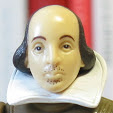
Baby Shakespeare may be even more Lost than Perdita

Baby Shakespeare. N.d. Perf. Aspen Clark and Sierra Clark. 2002. DVD. Disney, 2002.

I've always loathed the Baby Einstein series on principle. Real life and real interaction seem so much more three-dimensional and interesting than videos of spinning toys. The reason for this is primarily because they are!

It seems that the people behind the videos are acknowledging that they made claims that were too extravagant, and, as this article explains, they're offering refunds to parents who are willing to admit that their children are dimwitted. Or that they didn't turn into geniuses from watching videos. I suppose marketing the DVD under the name Baby Couch Potato didn't seem like a good idea, but the "genius" claim has gotten them in some trouble.

I grabbed the video from our library and watched it—well, mostly listened to it while grading papers—and there's very little Shakespeare there. At one point, the camera pans over some flowers, and we hear one of Oberon's most lyrical speeches:
I know a bank where the wild thyme blows,
Where oxlips and the nodding violet grows,
Quite over-canopied with luscious woodbine,
With sweet musk-roses and with eglantine:
There sleeps Titania sometime of the night,
Lull'd in these flowers with dances and delight. (II.i.249-54)

Out of all this, we can at least say that we're virtually certain that Shakespeare did not obtain his genius by being plunked down as a baby to watch videos of spinning toys. We here at Bardfilm shudder to think of it.

Oh, there's one more thing—you can buy the onesie pictured above if you so desire! (The shop is not affiliated with Bardfilm.)

I also should mention that I couldn't resist an allusion to a lost baby in the title of this post. The reference is to The Winter's Tale.

Links: The Film at IMDB.

Click below to purchase the film from amazon.com
(and to support Bardfilm as you do so).

Friday, November 6, 2009

The Phantom of 42nd Street; or, "Where was Shakespeare in 1945?"

The Phantom of 42nd Street. Dir. Albert Herman. Perf. Dave O'Brien, Kay Aldridge, Alan Mowbray, Frank Jenks, and Vera Marshe. 1945. DVD. Alpha Video, 2004.

One of the most thrilling categories of Shakespearean derivatives is the "Mirror Movie" mentioned in Kenneth S. Rothwell's classification system. In that type of derivative, characters in a film are putting on a Shakespeare play—and, most frequently, the events of their lives reflect or are reflected in the play.

The Phantom of 42nd Street isn't, on the whole, remarkable. It's a more-or-less typical B movie in the slightly-hardboiled detective / slightly-film noir vein. But some of the bit parts steal the show.

The cabbie, for example, is named "Romeo," but we don't know why until he accurately cites a quotation from Hamlet (and smug he looks about it, too!) and tells us that he was brought up on Shakespeare. The female bit player finally lands a line (not one actually in Shakespeare) to everyone's great amusement.

For the most part, though, the play settles down to a plot involving putting on a production of Julius Caesar to catch a murderer.


In the scene, we get a bit of the beginning of Act II, scene ii of Julius Caesar, including the "Cowards die" speech alluded to in The Music Man:
Cowards die many times before their deaths;
The valiant never taste of death but once.
Of all the wonders that I yet have heard.
It seems to me most strange that men should fear;
Seeing that death, a necessary end,
Will come when it will come. (II.ii.32-37)
You may notice that the actors playing the detective / reporter and the cabbie play amateur actors well. The detective, as Decius, needs to project, and he prompts the cabbie (who is playing Casca) with what amounts to a nonce-line: "Speak of hands for me" instead of "Speak, hands, for me" (III.i.76). The line that should follow, the most famous in the play, is cut. We hear no "Et tu, Brute?" (III.i.77)—but that may be part of the exigencies of the mystery plot.

In short, Shakespeare was alive and kicking (in B movies, at least) in 1945. He may have been kicking to get out of them, but he was kicking all the same.

Links: The Film at IMDB.

Click below to purchase the film from amazon.com
(and to support Bardfilm as you do so).

Thursday, November 5, 2009

The Beatles and Shakespeare, Take Three

The Music of Lennon and McCartney. Dir. Philip Casson. Perf. John Lennon, Paul McCartney, and Peter Sellers. 1965.
I just remembered one more connection between the Beatles and Shakespeare—and Peter Sellers. In a strange moment, John and Paul point out Peter, who is dressed as Richard III (à la Olivier), and he delivers a speech. Here you go:

Wednesday, November 4, 2009

Noël Coward: The Shakespeare of Comic Lyricists

Coward, Noël. “Why Must the Show Go On?” The Lyrics of Noël Coward. London: Heinemann, 1965. 355-57.

A Midwinter’s Tale [a.k.a. In the Bleak Midwinter]. Dir. Kenneth Branagh. Perf. Richard Briers, Hetta Charnley, Joan Collins, Nicholas Farrell, Mark Hadfield, Gerard Horan, Celia Imrie, Michael Maloney, Jennifer Saunders, Julia Sawalha, and John Sessions. 1995. Videocassette. Turner, 1999.

Branagh’s A Midwinter’s Tale (for which q.v.) is brilliant beyond bearing, but we shouldn't overlook Noël Coward's contribution. The opening sequence of the film uses one of his songs, and that song has been running through my head. Coward is a brilliant lyricist—something of a cross between P. G. Wodehouse and Lennon / McCartney and Gilbert & Sullivan. This song (see the lyrics below) is particularly amazing. It strikes me as something a Fool in a modernized King Lear would sing:

Why must the show go on?

The world for some years
Has been soddden with tears
On behalf of the Acting profession,
Each star playing a part
Seems to expect the ‘Purple Heart’,
It’s unorthodox
To be born in a box
But it needn’t become an obsession,
Let’s hope we have no worse to plague us
Than two shows a night at Las Vegas.
When I think of physicians
And mathematicians
Who don’t earn a quarter the dough,
When I look at the faces
Of people in Macey’s
There’s one thing I’m burning to know:

Why must the show go on?
It can’t be all that indispensable,
To me it really isn’t sensible
On the whole
To play a leading role
While fighting those tears you can’t control,
Why kick up your legs
When draining the dregs
Of sorrow’s bitter cup?
Because you have read
Some idiot has said,
‘The Curtain must go up’!
I’d like to know why a star takes bows
Having just returned from burying her spouse.
Brave boop-a-doopers,
Go home and dry your tears,
Gallant old troupers,
You’ve bored us all for years
And when you’re so blue,
Wet through
And thoroughly woe-begone,
Why must the show go on?
Oh Mammy!
Why must the show go on?

We’re asked to console
With each tremulous soul
Who steps out to be loudly applauded,
Stars on opening nights
Sob when they see their names in lights,
Though people who act
As a matter of fact
Are financially amply rewarded,
It seems, while pursuing their calling,
Their suffering’s simply appalling!
But butchers and bakers
And candlestick makers
Get little applause for their pains
And when I think of miners
And waiters in ‘Diners’
One query for ever remains:

Why must the show go on?
The rule is surely not immutable,
It might be wiser and more suitable
Just to close
If you are in the throes
Of personal grief and private woes.
Why stifle a sob
While doing your job
When, if you use your head,
You’d go out and grab
A comfortable cab
And go right home to bed?
Because you’re not giving us much fun,
This ‘Laugh Clown Laugh’ routine’s been overdone,
Hats off to Show Folks
For smiling when they’re blue
But more comme-il-faut folks
Are sick of smiling through,
And if you’re out cold,
Too old
And most of your teeth have gone,
Why must the show go on?
I sometimes wonder
Why must the show go on?

Why must the show go on?
Why not announce the closing night of it?
The public seem to hate the sight of it,
Dear, and so
Why you should undergo
This terrible strain we’ll never know.
We know that you’re sad,
We know that you’ve had
A lot of storm and strife
But is it quite fair
To ask us to share
Your dreary private life?
We know you['re] trapped in a gilded cage
But for Heaven’s sake relax and be your age,
Stop being gallant
And don’t be such a bore,
Pull up your talent,
There’s always Plenty more
And if you lose hope
Take dope
And lock yourself in the John,
Why must the show go on?
I’m merely asking
Why must the show go on?
Coward also wrote the lyrics for a musical called Sigh No More—but I only just learned that, so I have nothing more to say on that subject . . . yet.

Links: Previous Post on the Subject. Previous Previous Post on the Subject.

Click below to purchase the film—or the shooting script!—or the book of Noël Coward lyrics!—from amazon.com
(and to support Bardfilm as you do so).


Tuesday, November 3, 2009

The Beatles and Shakespeare, Take Two

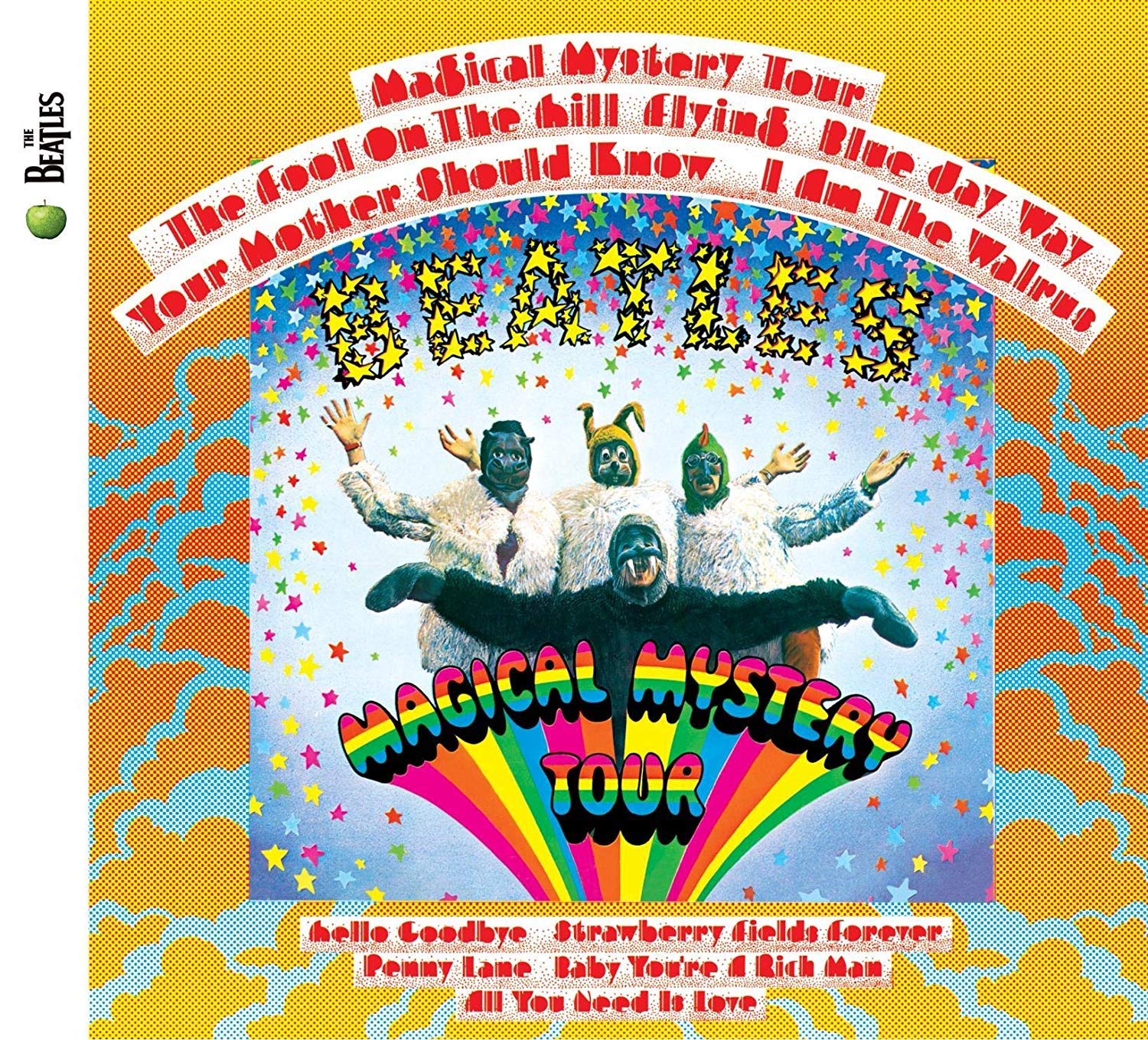
The Beatles. "I am the Walrus." By John Lennon and Paul McCartney. Magical Mystery Tour. 1967. EMI, 2009. CD.

The Beatles played a scene from Midsummer Night's Dream, but they also—however unwittingly—incorporated portions of King Lear into one of their songs.

"I am the Walrus" contains, among much else, a radio spinning between stations—mostly static-filled ones—one of which was broadcasting an audio production of King Lear. I will be trying to track down a more scholarly source than my own memory, and I'll update this post when I get that material. In the meantime, I re-listened to the track from an earlier CD release than the most current, and, just after the two minute mark, some indistingishable (to me) words come in (it sounds like "What light," but there's nothing with those sounds anywhere near the rest of the words from Lear). Then, right after the "Sitting in an English garden, waiting for the sun. / If the sun don't come, you get a tan from standing in the English rain" pair of lines, the lines "Now, good sir" and "poor man, made tame to fortune's . . . good pity." The lines are part of an exchange between Gloucester and Edgar at a point where Gloucester has been blinded and met the mad King (sorry if any of these are spoilers) and while Edgar is still disguised. Here's the more complete exchange:
Gloucester: Now, good sir, what are you?

Edgar; A most poor man, made tame to fortune's blows,
Who, by the art of known and feeling sorrows,
Am pregnant to good pitty. (IV.vi.220-23)
The broadcast seems to progress at the right speed for the scene to pick up at 3:51 in the song with Oswald's lines after Edgar has fought and overcome him:
Oswald: Slave, thou hast slain me. Villain, take my purse:
If ever thou wilt thrive, bury my body,
And give the letters which thou find'st about me
To Edmund earl of Gloucester; seek him out
Upon the British party: O, untimely death!
Death!

Edgar: I know thee well; a serviceable villain,
As duteous to the vices of thy mistress
As badness would desire.

Gloucester: What, is he dead?

EDGAR Sit you down, father; rest you. . . . (IV.vi.246-55)
The Wikipedia entry points out that these lines formed part of the "Paul is dead" theory. Note, however, that no direct answer is given in the song, even though Edgar says, "He's dead" just two lines later. I don't know if anyone ever considered Paul's line "Now am I dead" from the Midsummer Night's Dream scene, but it could be used as evidence: those who are able to say "I am dead" are seldom (if ever) actually dead.

Links: The Wikipedia entry on the song.

Click below to purchase the album from amazon.com
(and to support Bardfilm as you do so).

Monday, November 2, 2009

A Midsummer [Hard Day's] Night's Dream

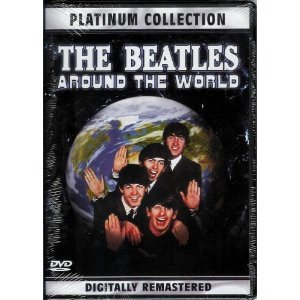
The Beatles: Around the World. [a.k.a. Around the Beatles]. Perf. John Lennon, Paul McCartney, George Harrison, Ringo Starr, and Trevor Peacock. 1964. DVD. Video Music, 2003.

A long time ago, I tracked down this rare clip of the Beatles performing Shakespeare, started considering all the clever ways Beatles songs could be worked into productions of Shakespeare, and promptly forgot about the clip itself.

But it's back. The Fab Four here portray the rude mechanicals from A Midsummer Night's Dream as they put on their version of Pyramus and Thisbe:


This clip mainly has the effect of filling its viewer with wonder and awe that anyone was ever able to hear the Beatles well enough to judge their musical quality—early fans of the Beatles were apparently seldom if ever able to hear the Beatles perform (at least at any live venue) over the screams of the fans next to them. But even if it's hard to hear, it's fascinating to see John, Paul, George, and Ringo (and Trevor Peacock, for good measure) in these roles. The audience seems to eat it up. But they'd probably be screaming with joy if they were performing Moose Murders or gargling with low-quality ginger ale.

Links: The Film at IMDB.

Click below to purchase the film from amazon.com
(and to support Bardfilm as you do so).


Sunday, November 1, 2009

The Music Man and Shakespeare

The Music Man. Dir. Morton DaCosta. Perf. Robert Preston, Shirley Jones, and Buddy Hackett. 1961. DVD. Warner Brothers, 1999.

A few small allusions to Shakespeare in The Music Man recently caught my attention. The first is from Mayor Shin's daughter; the second is provide by Harold Hill himself. Interestingly, neither is a direct quotation:


Of course, the poet actually said (though Caesar, which is an important qualification) this:
Cowards die many times before their deaths;
The valiant never taste of death but once. (Julius Caesar, II.ii.32-33)
I'm curious as to whether this misquotation is part of Harold Hill's character (surely Marion would recognize a misquotation on this scale if so) or if it's meant to be taken as a direct line from the bard. In any case, it's interesting to think how Caesar's line got to be put down in eight and six and then attributed to "the poet."

Links: The Film at IMDB.

Click below to purchase the film from amazon.com
(and to support Bardfilm as you do so).

Friday, September 18, 2009

Revisiting Shakespeare in the Bush

Bohannan, Laura. “Shakespeare in the Bush.” Natural History August-September 1966: 28-33.
Rpt. in Pen America: A Journal for Writers and Readers 1.2 (2001): 66-76.

Some considerable time ago, I wrote on the notion that a production of Hamlet was like a game of chess. The analogy I proposed was designed to enable contemplation of the way meaning and form relate. I suppose (to put it in [perhaps] needlessly-Saussurian terms) the rules of chess are la langue while a specific game of chess is une parole. In other words, the rules of chess are its grammar while a game of chess is a text—a manifestation of those rules.

The question, when taken from linguistic theory through chess to Hamlet, becomes complicated. Is the text of Hamlet the equivalent of la langue and a given performance of the play une parole? Or is the text of Hamlet itself une parole—one that points toward a meaning that lies beyond itself? If it is the latter, then there may be different forms that draw upon the same meaning presented in Hamlet. If it is the former (disregarding the question of which text of the play is the text of the play), then any specific performance can either be described in terms of its adherence to the rules or be used as a way of determining what the rules of Hamlet are.

Hamlet delivers meaning in a highly-specific form. Another form may deliver similar (or identical?) meaning. The issue becomes whether such a form would be Hamlet or just be like Hamlet.

At this point, I need to repeat the sentence that my grandmother often said: “I told you that to tell you this.”

In 1966, the article "Shakespeare in the Bush" by Laura Bohannan was first published. It has been reprinted in numerous places since, and it’s available on the web in an authoritative version here.

The narrative itself is extremely interesting, even though its presentation leaves a great deal to be desired. Indeed, the title itself may be considered offensive: the word “bush” here is a charged term that conveys a sense of superiority and condescension that is genuinely intolerant, intolerable, and imperialist (cf. the OED’s example quotation, written by J. S. Huxley in 1942: “Over most of Africa . . . not 10 per cent of the schools are anything but the most primitive sub-elementary bush-schools.”

The condescension in the title carries over into the narrative. Bohannan is an anthropologist who has travelled to a remote section of Nigeria to study the Tiv, one of the people groups that live there. Because she isn’t able to witness the ceremonies that she went there to study, she becomes morose and withdrawn. Eventually, she is asked to tell one of the stories of her country. She tells the plot of Hamlet. The members of the Tiv raise objections. The conclusion is that Hamlet cannot be transplanted or translated or transmigrated into the Tiv culture.

I think I’m ready to concede if the play were translated word for word and plot point for plot point into the Tiv language that it wouldn’t be a very good play. If a culture doesn’t believe in (or cannot suspend its disbelief in) ghosts, and if a major portion of the plot hinges on the nature of ghosts, the play becomes less comprehensible. It would be as if a play where a man from Mars appears to the protagonist and tells her what she ought to do was presented to playgoers who cannot suspend their disbelief in extraterrestrial beings. It would make a certain amount of sense, but the general reaction could be summed up in the phrase “Yeah, right!” and it wouldn’t be taken seriously.

But the extraterrestrial plot could be modified so that it would make better sense to a non-extraterrestrial-believing audience. The man from Mars could be presented as a CIA agent who has disguised himself as a man from Mars. Or the man could be presented as a man from Mars, Pennsylvania.

Likewise, it seems like a careful consideration of Tiv beliefs (which an anthropologist working among them would have) could make the transmission of a comprehensible Hamlet relatively easy and poignant. The objection to the ghost of Hamlet’s father could be overcome by presenting that character as either “an omen sent by a witch” (29) or “a dead body the witches had animated to sacrifice and eat” (30)—in other words, a Zombi—suggestions made by members of the Tiv during the course of the conversation. Claudius could also be held responsible for Hamlet’s madness because of witchcraft, and Laertes could have “killed his sister by witchcraft, drowning her so he could secretly sell her body to the witches” (33).

Maddeningly, Laura Bohannan did not immediately bring in a film crew, a screenplay writer, and an anthropological consultant to produce a Tiv Hamlet with a Zombi Hamlet, Sr.; a witchcraft-practicing Laertes; a Gertrude who, according to local mores, was entirely right to marry Claudius; and a Hamlet who was bewitched into actual madness instead of merely pretending to be mad. What a show that would be! What a production! What a story! What a play! Using Tiv culture to tell the story of Hamlet instead of smashing the story of Hamlet into Tiv culture is both a brilliant and attainable idea!

But would it still be Hamlet?

It’s clearly like Hamlet, even if the original language is abandoned and some major plot points are altered significantly. A play like the Tiv Hamlet here imagined would still be recognizable as Hamlet. And it might be the only Hamlet comprehensible in that culture.

A game of chess played entirely without pawns or a game in which players make two moves per turn would be recognizable as forms of chess. Acknowledging that this parole is a departure from the absolute norms of la langue while still being indebted to them may be a reasonable qualification, but it shouldn’t detract from the interest in studying the differences it makes.

In “Shakespeare in the Bush,” the old man says, “We believe you when you say your marriage customs are different, or your clothes and weapons. But people are the same everywhere” (33). People, like Hamlets, are not identical everywhere, but there are enormous similarities. Recognizing and studying the similarities and differences will make for better understanding among people everywhere—not to mention better Hamlets for everyone!


Thursday, September 17, 2009

Modernized Measure for Measure

Measure for Measure. Dir. Bob Komar. Perf. Daniel Roberts, Simon Phillips, Kristopher Milnes, Dawn Murphy, Simon Nuckley, and Josephine Rogers. 2006. DVD. Lucky Strike Productions, 2007.
The tag line for this production is "Prepare to be Judged."

I wonder how many critics have used that as a preface to their review. Too many, I imagine, to allow me to use it with any flavor of freshness—especially as I haven't managed to see the entire film and am, therefore, not prepared to judge it completely!

When I purchased Bob Komar's Measure for Measure from amazon.co.uk (it hasn't been released in the U.S. yet), I thought that it was a derivative version of the play. I thought that Shakespeare's language had been abandoned but the plot retained in the manner of the BBC's Shakespeare Retold series. Instead, it's an adaptation—a modified version of the text, but one that retains Shakespeare's language. It's setting is modern: we're in the British army now.

Again, I haven't watched the film in its entirety, but I have seen enough to be interested. The moral laxity of Measure for Measure's Vienna is translated to drinking, drug use, and debauchery in the troops, and that seems to be a careful decision rather than a flippantly-random setting. On the other hand, I am somewhat skeptical of the cinematography, which is highly influenced by reality-show conventions.

The main concern I have so far is the film's sporadic approach to the text. For example, Angelo's "'Tis one thing to be tempted, Escalus, / Another thing to fall" (II.i.17ff) is removed from its context of a discussion between Angelo and Escalus on Claudio's life and the nature of temptation and presented more or less as a set speech:


'Tis one thing to be tempted, Escalus,
Another thing to fall. I not deny,
The jury, passing on the prisoner's life,
May in the sworn twelve have a thief or two
Guiltier than him they try. What's open made to justice,
That justice seizes: what know the laws
That thieves do pass on thieves? 'Tis very pregnant,
The jewel that we find, we stoop and take't
Because we see it; but what we do not see
We tread upon, and never think of it.
You may not so extenuate his offence
For I have had such faults; but rather tell me,
When I, that censure him, do so offend,
Let mine own judgment pattern out my death,
And nothing come in partial. (II.i.17-31)
That said (and that shown), I'm still interested in seeing how Komar works his way through the rest of the play. The setting seems both reasonable and thoughtfully-chosen, and the acting (though not brilliant) isn't to be scorned. Furthermore, the idea of a female Escalus is an intriguing one. Once I'm more prepared to judge it, I'll attempt to do so, recognizing that my own screenplay of a Measure for Measure derivative will be judged by the same standards I apply to this adaptation.
Links: The Film at IMDB.

Click below to purchase the film from amazon.co.uk
(and to support Bardfilm as you do so).

Wednesday, September 16, 2009

Love’s Labor’s Lost in Space

“Love’s Labor’s Lost in Space.” By Matt Groening. Perf. Billy West, Katey Sagal, John Di Maggio, and Lauren Tom. Dir. Brian Sheesley. Futurama. Season 1, episode 4. Fox. 13 April 1999. DVD. Fox Film Corporation, 2006.

In a similar vein to "Much Ado About Scrooge," we have "Love’s Labor’s Lost in Space." Unlike the Ducktales animated Shakespeare-related show--which has references to a number of plays and some pretense to biographical details--Futurama's falls into a classification known as "titularly parasitical." Not much more than the title has any connection to Shakespeare.

Links: The Film at IMDB.

Click below to purchase the film from amazon.com
(and to support Bardfilm as you do so).

William Drakespeare

“Much Ado about Scrooge.” By Karen Willson and Chris Weber. Perf. Charles Adler, Victoria Carroll, Will Ryan, Russi Taylor, Alan Young, and Chuck McCann. Dir. David Block. Ducktales. Season 1, episode 18 [according to the DVD—variously listed as episode 11 or episode 23 in other sources]. Syndicated television. 14 October 1987. DVD. Disney DVD, 2005.

My attention was briefly drawn away from more serious endeavors late in the spring semester by someone mentioning a Shakespeare-related Ducktales episode. Our library had it, the wait wasn't too long, and I found time to watch it.

It isn't terribly good. The plot involves a search for the lost play—the last play—of William Drakespeare (since it's all about ducks, all the puns have to be about ducks, too). The intrepid Scrooge McDuck and his three nephews journey to an island populated with characters out of Shakespeare, all making duck-related puns.

That's about it! I'm just filling in the gaps of animated Shakespeare as I find them!


Links: The Episode at IMDB.

Click below to purchase the show from amazon.com
(and to support Bardfilm as you do so).

Tuesday, September 15, 2009

Freely Adapted as a One-Act Play from A Midsummer Night's Dream

McMahon, Luella. The Lovers in Midsummer. Chicago: The Dramatic Publishing Company, 1970.

Something odd just fell off my shelf. I used to remember the history of most of the books I have—it's part of the joy of book ownership to be able to say, "Oh, yeah! I got that at Lobster Lane Books in the late 1990s" instead of "Oh, yeah! I downloaded that to my Kindle at an airport somewhere sometime." But I have no idea where this volume came from!

It's a pretty maudlin adaptation of A Midsummer Night's Dream designed (I deduce from the chart on where Upstage Left is) for amateur productions. It cuts the rude mechanicals, adds a maid named Felicia for Hermia, and gives us some Shakespeare-sounding speeches—e.g., "But these be modern days and modern ways" (5).

What struck me, however, was the opening advice. We are advised to avoid "declaiming Shakespeare as if reading a song, as read, for example, by Sir John Gielgud" and to follow the manner "made familiar by Richard Burton" (4) instead. Embodied in that brief note is a really interesting slice of stage history—and one that continues to evolve. Contemporary amateurs might be advised to avoid the Burton and cling to the Branagh—or to skip the Branagh and go for the Tennant approach.


There are a few used copies available at amazon.com—starting at $15.00. Perhaps I won't put this out on the free table after all!

Click below to purchase the play from amazon.com
(and to support Bardfilm as you do so).

Thursday, September 3, 2009

Another Return to Measure for Measure


A Waste of Shame. By William Boyd. Perf. Rupert Graves, Tom Sturridge, Indira Varma, and Anna Chancellor. Dir. John McKay. Shakespeare Retold. 2005. DVD. Open University / BBC, 2005.

The incomprehensible magic of iSquint, combined with other programs, has enabled me—for educational purposes only—to conquer the Region Two DVD Barrier. I recently learned of a derivative version of Measure for Measure released in the UK, and I needed to be able to view it in the US.

But I told you that to tell you this.

When I converted the extracted file with iSquint, I realized that I might be able to do the same with another Region Two purchase from some time ago: The Shakespeare Retold series' A Waste of Shame. And if I could convert it, I could provide an extract from it, something I'd hoped for since I last wrote on the work (for which, q.v.).

Here, then, is the speech in question. We are to imagine it being presented to an audience (amongst whom is Shakespeare himself) in 1604:


The speech comes from (Measure for Measure, II.ii.181-87). It follows forthwith:
. . . . . . . . . . . . . . . . . . . . . Most dangerous
Is that temptation that doth goad us on
To sin in loving virtue: never could the strumpet,
With all her double vigour, art and nature,
Once stir my temper; but this virtuous maid
Subdues me quite. Ever till now,
When men were fond, I smiled and wonder'd how.
I'll have to write about the new derivative later—once I've had time to view it!

Links: The Film at IMDB.

Click below to purchase the film from amazon.com
(and to support Bardfilm as you do so).

Wednesday, September 2, 2009

Romeo and Juliet Get Married

Romeo and Juliet Get Married [O Casamento de Romeu e Julieta]. Dir. Bruno Barreto. Perf. Luana Piovani and Marco Ricca. 2005. DVD. Lifesize Entertainment, 2008.

In the vein of the micro-review, let me mention Romeo and Juliet Get Married, a film I saw a few weeks ago. It's a Brazilian comic derivative version of Romeo and Juliet that places the star-crossed lovers in a different sort of ancient grudge than that of their Montague and Capulet analogues.

Soccer. It's all about the soccer.

Romeo is a deeply-devoted fan of the Corinthians, while Juliet has been attending Palmeiras games with her Italian-Brazilian father ever since she was a little girl. To woo her, Romeo has to pretend to be a Palmeiras fan.

I don't think I'm giving anything away by saying that trouble and hilarity ensue when their families find out that they want to marry supporters of the rival team. And, if you want to have a spoiler about the end of the film, take a look at the title!

All in all, not a bad film—some good stock characters, some good soccer footage (football footage sounds better but might confuse those in the American audience), a nice romance, and a happy ending.

Links: The Film at IMDB.

Click below to purchase the film from amazon.com
(and to support Bardfilm as you do so).

Tuesday, September 1, 2009

Mini-Review: Helen Mirren, Diana Rigg, and Judi Dench (et al.) in A Midsummer Night's Dream

A Midsummer Night’s Dream. Dir. Peter Hall. Perf. Helen Mirren, David Warner, Diana Rigg, Michael Jayston, Ian Richardson, Judi Dench, Barbara Jefford, and Ian Holm. 1968. DVD. Water Bearer Films, 2004.

Another phenomenal recent addition to Bardfilm's Shakespeare and Film Library is this 1968 Midsummer Night’s Dream. The phrase "all-star cast" is probably bandied about too much, but I can't think of an easier way to describe this film. Indeed, I can't imagine why I've never seen this before! In addition to the stupefying trio of Helen Mirren, Diana Rigg, and Judi Dench—let us pause for a moment in reverent awe—we're given the top-notch talents of David Warner, Michael Jayston, Ian Richardson, Barbara Jefford, and Ian Holm! Egad!

I haven't seen this in its entirety, but I was thrilled by the speech Helena makes to close Act I, scene i ("How happy some o'er other some can be!"). Diana Rigg gives us just the right tone: it's deep but not too serious.


The cinematography is interesting, but it's a bit hit-or-miss. Occasionally, it tends toward the avant-garde (indeed there are some passages that may not be appropriate for all audiences) and not altogether successfully. Still, the performances are remarkable. It's a film that must be added to your library immediately.

Links: The Film at IMDB.

Click below to watch the film at amazon.com
(and to support Bardfilm as you do so).

Bardfilm is normally written as one word, though it can also be found under a search for "Bard Film Blog." Bardfilm is a Shakespeare blog (admittedly, one of many Shakespeare blogs), and it is dedicated to commentary on films (Shakespeare movies, The Shakespeare Movie, Shakespeare on television, Shakespeare at the cinema), plays, and other matter related to Shakespeare (allusions to Shakespeare in pop culture, quotes from Shakespeare in popular culture, quotations that come from Shakespeare, et cetera).

Unless otherwise indicated, quotations from Shakespeare's works are from the following edition:
Shakespeare, William. The Riverside Shakespeare. 2nd ed. Gen. ed. G. Blakemore Evans. Boston: Houghton Mifflin, 1997.
All material original to this blog is copyrighted: Copyright 2008-2039 (and into perpetuity thereafter) by Keith Jones.

The very instant that I saw you did / My heart fly to your service; there resides, / To make me slave to it; and, for your sake, / Am I this patient [b]log-man.

—The Tempest