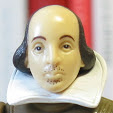
Manzer, Paul. Anecdotal Shakespeare: A New Performance History. London: Bloomsbury Arden ws, 2015.I've had my eye on this book for some time, but it was on the dear side for someone with Quarto tastes and a Dover Thrift Edition budget. But I finally convinced a library to buy it.
And I don't regret that, though I am a bit disappointed. I really wanted more anecdotes and less analysis. And I really wanted to track down an anecdote about the blinding scene in a production of King Lear that used (unsuccessfully) a sheep's eyeball as a prop—vile jelly indeed!
But that's what we have: an interesting collection of theatrical anecdotes dating back through the ages to Shakespeare's day and some serious scholarly commentary on them. All the anecdotes relate to just five plays—Hamlet, Othello, Romeo and Juliet, Richard III, and Macbeth.
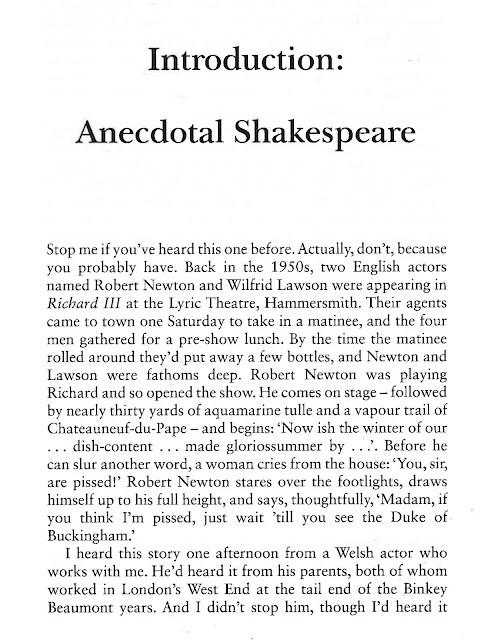
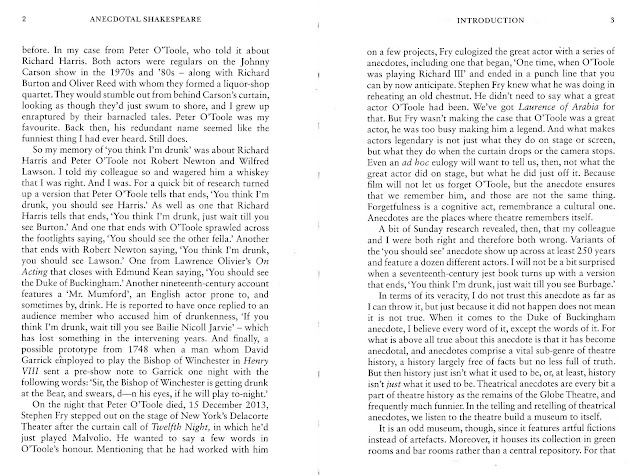
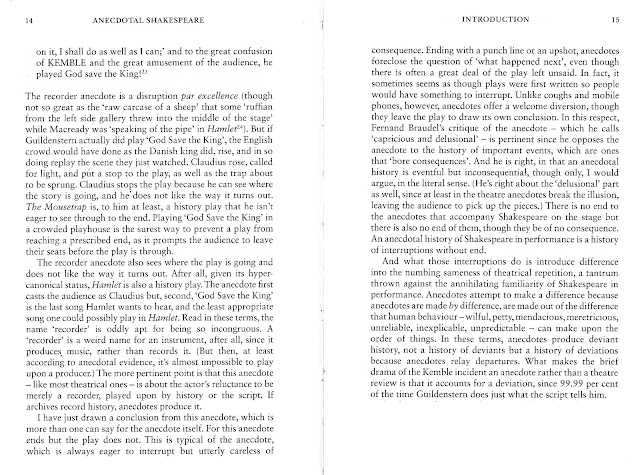
For some of them, I appreciate the commentary as much as the anecdote. For example, here's an old saw that's been told and retold many times before—the "which actor is the more drunk" trope:
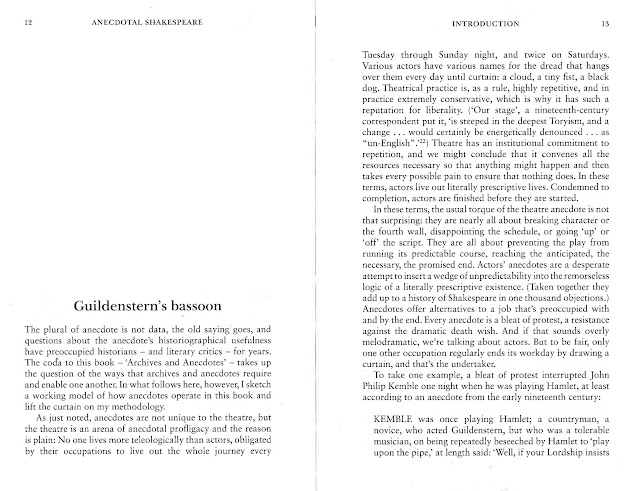
In the Hamlet chapter, we have a delightful anecdote or two about Guildenstern's off-script response to Hamlet's demands that he play on the pipe:
Oh, I would have loved to have been there for that first one. It seems like a show could recover from that and move on successfully—the other one, not so much.
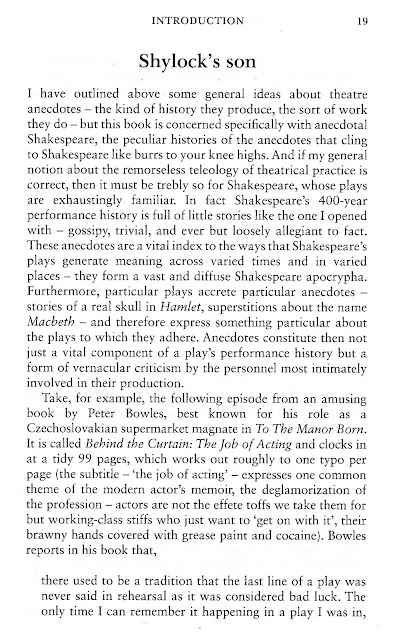
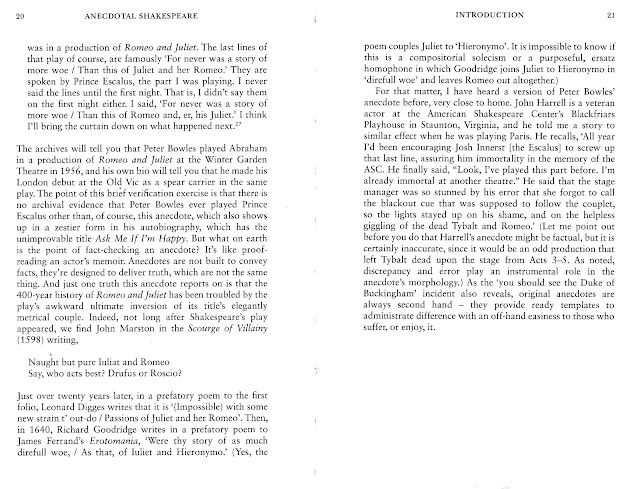
Finally, we have an anecdote told by Peter Bowles which is too good not to be true (though it seems not to be true):
The book is worth reading, but, again, I'd like to have a full collection of theatrical anecdotes—and ones from many more plays than are represented here.
Click below to purchase the book from amazon.com
(and to support Bardfilm as you do so).
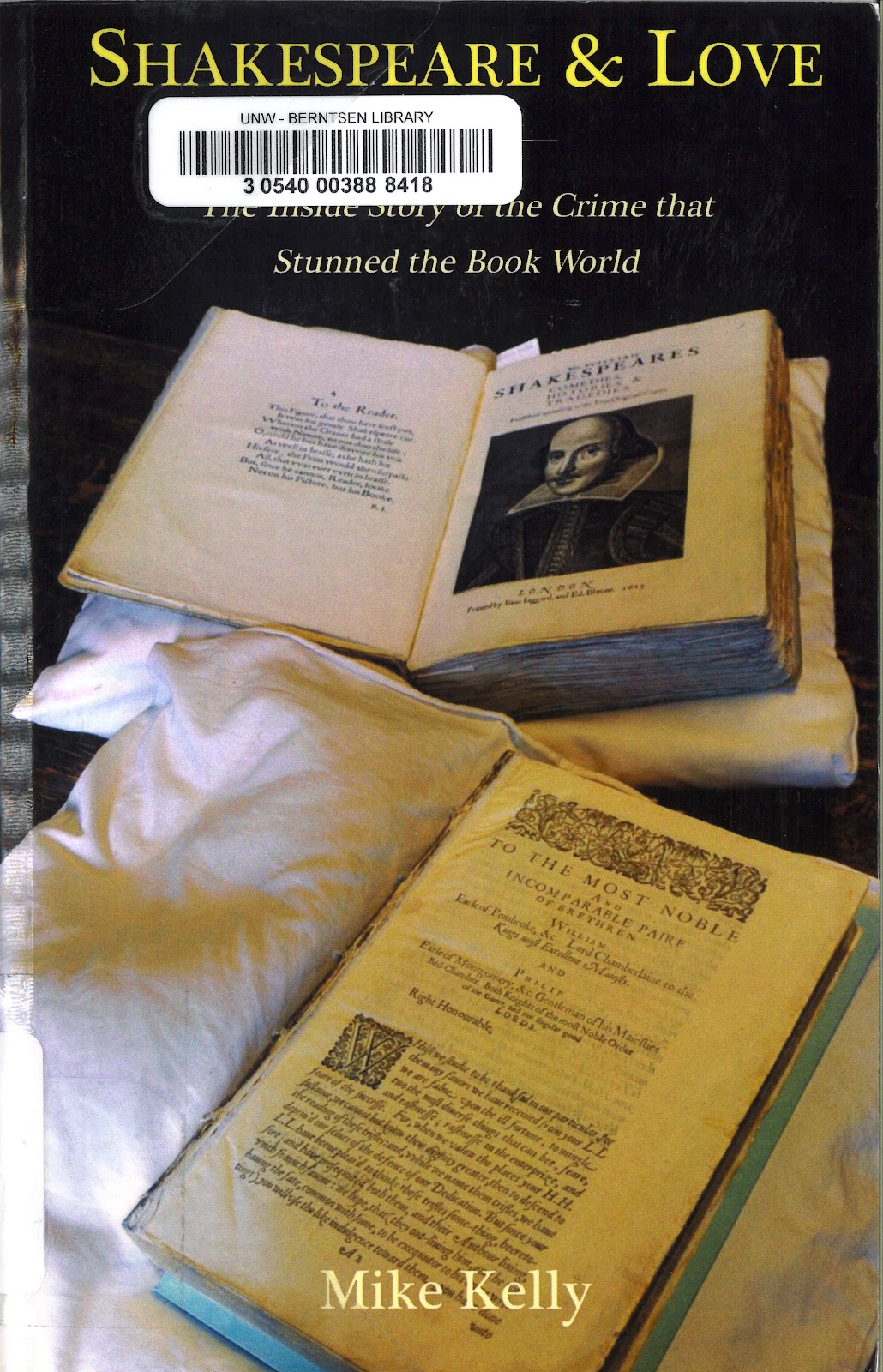
Kelly, Mike. Shakespeare and Love: The Inside Story of the Crime that Stunned the Book World. London: Ashgrove, 2014.Do you remember the interesting film Stealing Shakespeare, which tells the story of the theft and recovery of the Durham University First Folio (for which, q.v.)?
Shakespeare and Love tells you more—much more—about the case and about Raymond Scott, the man convicted of handling (though not of stealing) the stolen property.
Mike Kelly is a journalist who followed the story for a year and a half. Scott may have communicated more to and with him than he did to and with his own solicitors and barristers.
The book gives a lot of information about that relationship. Indeed, it told me much more than I really wanted to know! But I'm glad the information is out there—including the semi-confessions Scott made to Kelly and subsequently retracted.
In one anecdote, Scott implied that he might have gone into the library, broken into one of the cases, stolen some books, and exited. When he found that he wasn't challenged, he hid his horde in some bushes and went back and did the same with the First Folio. But later he told Kelly that it was all fairy stories.
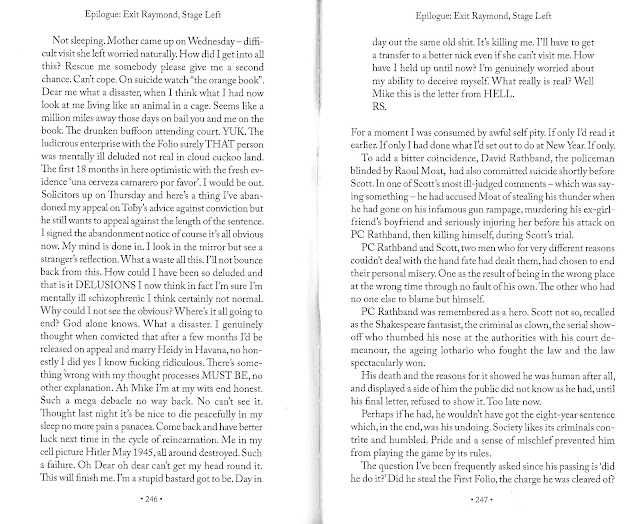
If you're interested, it's worth looking into. As a sample, I've decided to give you the epilogue. It contains Scott's last communication with Kelly and an account of the sad end of his life.
Click below to purchase the book from amazon.com
(and to support Bardfilm as you do so).
Taneja, Preti. We That Are Young. New York: Alfred A.Knopf, 2018.
Fortier, Anne. Juliet: A Novel. New York: Ballantine Books, 2010.
Brandreth, Benet. The Spy of Venice. London: Twenty7 Books, 2016.
But, of course, that doesn't mean that you can't try them and even like them!
I wanted to like these. But, for various reasons, I'm just not going to make it through any of them.
For one thing, they're all really thick! I mean, look at these—they're all clocking in at over 400 pages:
And then each one has something preventing me from getting very far into them. I was determined to love We That Are Young. I thought I could work it in to my Modern Shakespearean Fiction course . . . and then possibly into my Non-Western Contemporary Literature course. But the complications of an epic of this size was too daunting for me. But read the flyleaf—it might be just what you are looking for!
King Lear in India. But I couldn't make it.
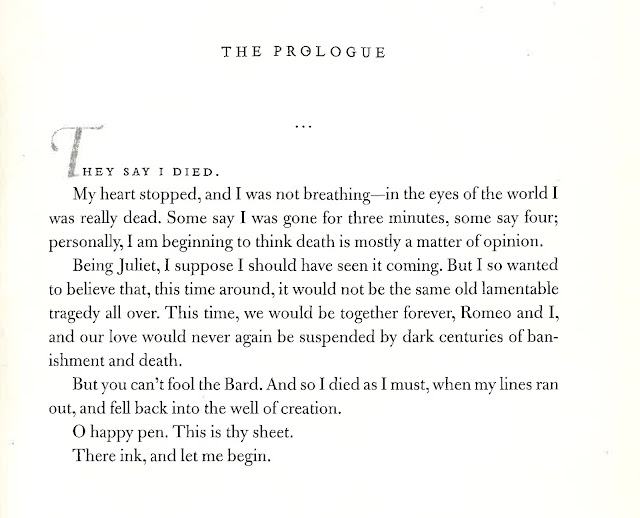
Juliet is a time-travelling novel, jumping from the present day back to 1340s Siena. As near as I can make out, some sort of modern descendant of the Capulets needs to investigate the circumstances surrounding the story of the star-crossed Romeo and Giulietta. I'm not invested enough in Shakespeare's Romeo and Juliet to explore this further. But here's the first page—maybe this is just right for you!
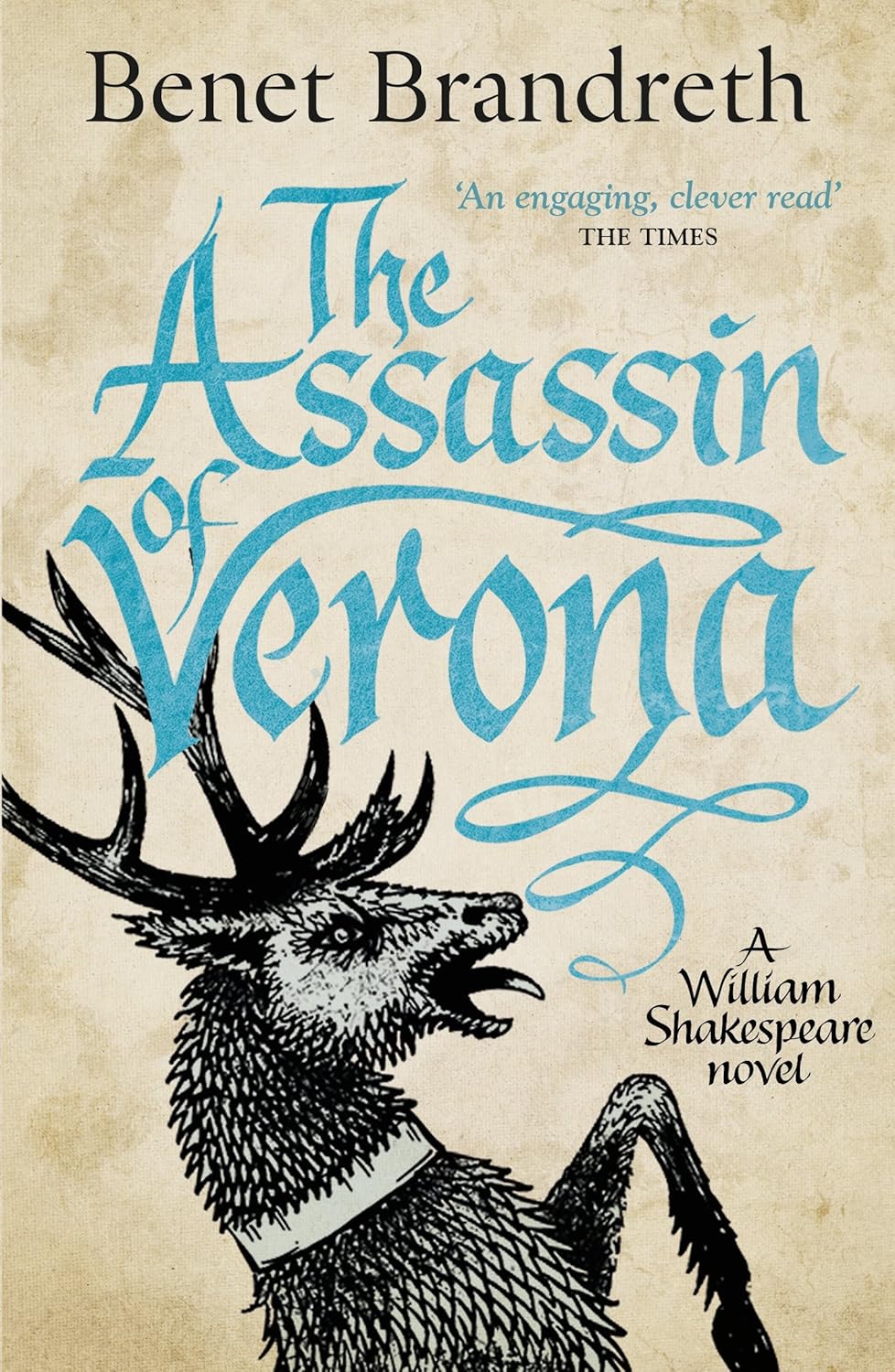
The Spy of Venice seems a bit more promising—it's more the sort of thing I would invest in. Shakespeare is on a spy mission in Venice. [Note: There's a second book in the series that I won't get around to reading either: The Assassin of Verona.] Yes, I might read that—except it has a three-page list of the main characters. I don't think I'll be able to make it. But you might! Here's the first chapter for you to try:
And there you have it! Three (or four) books you might like. Let me know what you think!
Click below to purchase the books from amazon.com
(and to support Bardfilm as you do so).
Palfrey, Simon, and Emma Smith. Shakespeare's Dead: Stages of Death in Shakespeare's Playworlds. Oxford: Bodleian Library, University of Oxford, 2016.
Without the subtitle, the response to this book might be, "Well—yes. Literally, yes. Figuratively, not so much." But it's not a contraction: it's a possessive.
In other words, this is not a proclamation that Shakespeare is dead. Rather, it's a book about the dead of Shakespeare—or, really, ideas about death, dying, and the dead in Shakespeare's day.
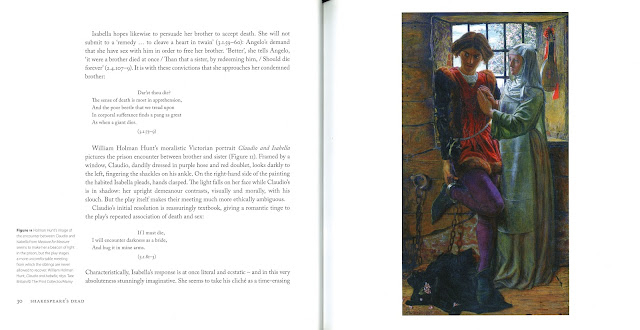
Beautiful images complement a rich text that provides readings of death-related elements of the plays and explorations of Shakespeare's culture's ideas of death.
I also greatly appreciate the book's starting point. Where does one go to examine ideas of death in Shakespeare? The most famous Shakespeare quote of them all, right? In this case, no. We go to Measure for Measure to learn what Claudio and the Duke have to say about it.
I can't give you that whole chapter—it's too long—but I can give you a sampling of the writing and the images you'll encounter.
It's a great book—well worth a gander.
Click below to purchase the book from amazon.com
(and to support Bardfilm as you do so).
Wodehouse, P. G. Galahad at Blandings. Woodstock: The Overlook Press, 2009.
When we enter the world of P. G. Wodehouse, we find ourselves filled with marvelous metaphors, intriguing plots (or, arguably, one intriguing plot repeated with dozens of variations), and a host of biblical and literary allusions and quotations.
Because they're so stylistically integrated, Wodehouse fans often take a chance in extracting their favorite Wodehouse moments. But I'm going to risk it with one of Wodehouse's Blandings novels.
My impression is that most people who know Wodehouse know the Jeeves and Wooster novels and short stories—possibly because of the very popular (at least in its day) Jeeves and Wooster series staring Hugh Laurie as Bertie Wooster and Stephen Fry as Jeeves, Wooster's brainy valet. If you don't know the Blandings books, you're missing out, but you can start catching up here.
And you can get more specific with a plot summary of Galahad at Blandingshere. Take the time to glance through it; that way, the excerpts below will have a bit of context.
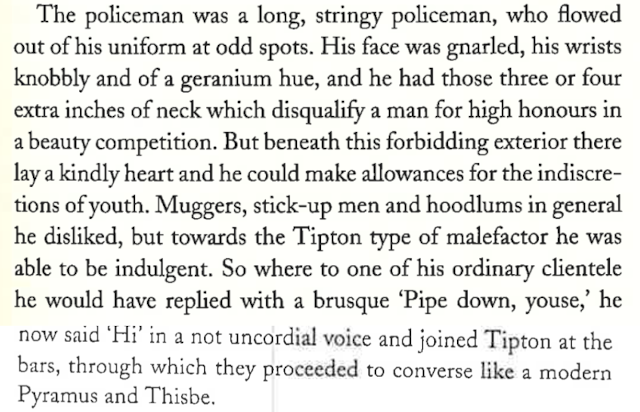
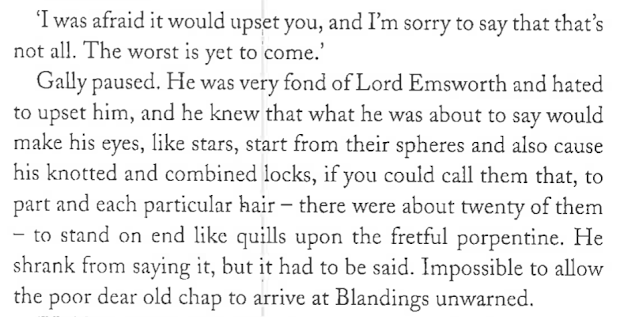
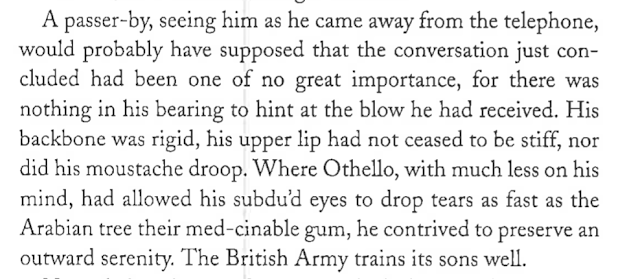
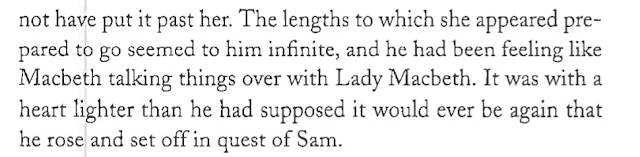
All set? Then let's proceed. I just want to present you with some representative uses of Shakespeare (with one other favorite passage) that take us through that plot and show Wodehouse's mastery of his source material.
And that's just one novel's worth! Imagine what other delights await us!
I know it's hard to get the feel of these things from brief excerpts—so try an entire novel. But I suppose I should warn you . . . it can become addictive—especially if you get your hands (or ears?) on audiobook versions of them!
Click below to purchase the book from amazon.com
(and to support Bardfilm as you do so).
Bonus Material!
Wodehouse, P. G. Heavy Weather. Middlesex: Penguin Books, 1981.I find it hard to resist including two of the funniest Wodehouse moments of all time—even though neither has anything to do with Shakespeare. So I'm not going to. Resist, that is. I'm not going to resist.
Here are two of the funniest Wodehouse moments of all time. They both come from another Blandings Castle novel: Heavy Weather. In the first, we look over the shoulder of Lord Tilbury as he reads an article that was printed in the latest issue of Tiny Tots, the children's periodical he publishes (those in America can imagine Highlights magazine). Monty Bodkin, a recent hire, has been put in charge of the "Uncle Woggly to his Chicks" section of the magazine. Here's what he thought appropriate for that audience:
When Monty Bodkin is called in to get the sack, he's worried that Lord Tilbury is worried that the information might be inaccurate . . . not that he's been encouraging toddlers to make bets about whisky!
The other funniest moment (at least to me) is a story Galahad Threepwood tells to Sue Brown, the latest imposter to find herself at Blandings. It's not so much the story as the way in which it's told. Observe:
It's really the "finished it up cold next day" that breaks me up completely.
Q Brothers (GQ and JQ). Othello: The Remix. New York: Dramatists Play Service, 2018.I have a category of "Plays and Films that Must be Covered," but I also have a category of "Plays and Films that Could be Taught Depending on the Historical Period or How the Professor Happens to Feel."
For the past few years, I've incorporated Othello into my Shakespeare and Film class. I keep hoping that the issues raised by that play will become irrelevant, but they just don't.
And when we cover Othello, I usually bring in Othello: The Remix as an option for students. It's an interesting, humorous, tragic take on the plot. As some of the opening lyrics go, "Good storytellers borrow, but great ones steal, / So believe me the thievery is how we keep it real."
Othello: The Remix was commissioned by the Chicago Shakespeare Theatre and Shakespeare's Globe Theatre for the 2012 Globe to Globe Shakespeare festival. In conjunction with the 2012 London Olympics, all of Shakespeare's plays were performed—each in a different language. The language for Othello: The Remix is hip-hop. I remember that some of the performances were available for live streaming at the time, and I tried this just for fun—but it completely captivated me. It's the story of a child who goes from dirt poor to the biggest hip-hop artist ever, his romance with and marriage to a woman from the upper crust, and the engineering of his downfall by a fellow performer who feels he should get at least second billing. The show has four performers on stage—they take on nearly all the roles, changing their hats or minor parts of their costumes—one deejay who keeps the beats flowing, and the voice of Desdemona (she's never physically represented on stage). It's a high-energy, fast-moving, engaging show.
Unfortunately, no performance of the show has been commercially released, though you can hear a recording on Spotify or buy an .mp3 of it or get the script. I've been waiting for a performance to come out for a decade now so that I could feel free to share a bit of the show with you and point you to a place where you can buy it for yourself. Alas, I cannot.
But the release of that recording made me want to call your attention to part of the show. Here, then, is one fun song that I wanted to share with you. The video doesn't correspond with the audio—but the video is a montage of / trailer for a performance (it's available as an embedded video at the end of this post). The song starts with an introduction by Othello ("O to the T-H, E double L-O") of the member of his crew who is getting lots of radio play: Cassio. Cassio then takes over and sings his theme song.
I'm thrilled at the cultural references and the clever rhymes ("Classic as a shell toe sneaker on a B-boy, / Take a Trek with this Star—I'm Leonard Nimoy") and the attention to rhythm ("I've practiced enough, now I'm ready for the majors . . . / You're outdated like a pager"). I also like the creation of Cassio's character—he is a big talker (perhaps that's part of building his hip-hop reputation?), but he's essentially harmless. Have a listen / take a look / read the lyrics:
That should give you a bit of a feel for the show, and I wish I could give you more. But I'll only give you Iago's reaction to Cassio's being promoted above him—since it reflects the poppy nature of the song you just heard. He sings,
Cassio's this (What!) and Cassio's that (What!),
But he don't know jack, cuz Cassio can't rap.
He's a poster-child pin-up boy in a land of pop.
I'm half-man, half-Beastie Boy when I drop.
My [stuff] is John Blaze, this kid is just an actor.
I live what I say, he's just a candy rapper . . .
Every time he make noise, I get annoyed, man.
I heard his latest song and he belong in a boy band.
It's a clever way of expressing the anger Iago feels at being the gritty, real hip-hop performer being superseded by the commercial crossover artist.
Now that you've been convinced that this is a good and interesting show, what should you do? I've done the research, and I haven't found very many clips of performances online. The only substantial segment of the Globe Theatre production I've been able to find gives us the first five minutes—which are well worth watching, even though it's a bit rough from time to time and even though the sound quality of the actors isn't great:
Most of what you'll find online are interviews that contain brief clip of performances . . . like this one!
There is also a mini-documentary about the crew's performance at the Cook County Jail:
I've been hoping since 2012 for a commercial release of a performance to become available, but (alas) nothing more than the audio recording has made its way out to what would no double an eager public.
Click below to purchase the script from amazon.com
Bardfilmis normally written as one word, though it can also be found under a search for "Bard Film Blog." Bardfilmis a Shakespeare blog (admittedly, one of many Shakespeare blogs), and it is dedicated to commentary on films (Shakespeare movies, The Shakespeare Movie, Shakespeare on television, Shakespeare at the cinema), plays, and other matter related to Shakespeare (allusions to Shakespeare in pop culture, quotes from Shakespeare in popular culture, quotations that come from Shakespeare, et cetera).
Unless otherwise indicated, quotations from Shakespeare's works are from the following edition:
Shakespeare, William. The Riverside Shakespeare. 2nd ed. Gen. ed. G. Blakemore Evans. Boston: Houghton Mifflin, 1997.
All material original to this blog is copyrighted: Copyright 2008-2039 (and into perpetuity thereafter) by Keith Jones.
The very instant that I saw you did / My heart fly to your service; there resides, / To make me slave to it; and, for your sake, / Am I this patient [b]log-man.
KJ is a professor of English and Literature at a small Christian liberal arts college. In addition to courses entitled “Shakespeare” and “Introduction to Shakespeare,” he teaches a course called “Shakespeare and Film.”
Recently, he developed a course titled “Modern Shakespearean Fiction.” Shakespeare is also integrated into nearly all his other courses, including courses on the Literature of Food and the Literature of Humor.
He is also the author of Bardfilm: The Shakespeare and Film Blog. But you may have known that already.
Note: I'm required by Amazon to say the following: "As an Amazon Associate[,] I earn from qualifying purchases." But you knew that already, too.