Wednesday, March 7, 2018

Book Note: A Winter's Tale

Ashley, Trisha. A Winter's Tale. London: Avon, 2017.

I found this book in a bookstore in Vietnam. It bears the title of a Shakespeare play, and it has a Shakespearean connection, perhaps making it part of the Globe-alization process I noticed there (for which, q.v.).

After lumbering my way through about half of it, I accidentally left it behind in an Uber. Since no library near me had a copy, I had to order a used one from Amazon. A few weeks later, it arrived from England (more Globe-alization).

I managed to make my way through the rest of it this weekend. As you might be able to tell from the tone of that last sentence, this book isn't my cup of tea. The plot involves a woman who finds she's unexpectedly inherited the old family manor (though she's really not "to the manor born"). There's an unscrupulous man who wants to buy it from her—and she becomes romantically involved with him, but she decides not to sell—and not to pursue that relationship. And so on and so forth.

The family manor is near Hoghton Tower. Now, if you've read various modern biographies of Shakespeare, you may be thinking, "Ah! Hoghton Tower, eh? Shakeshaft, eh? That must be the connection!" and you'd be right.

But it does come with a bit of a twist. Each chapter of A Winter's Tale is headed with a quotation from "the journal of Alys Bezzard," starting in 1580 and running through to 1582. These tell the story of Alys (a suspected witch), her connection with the Winter family (they're the ones with the manor), and her encounter with a poet.

Yes, that poet.

That's why I started reading the little quotations before each chapter much more eagerly than the rest of the novel. I'll give you a sample of one from a little over halfway through the novel. It's a spoiler, but it's also one that you could guess a mile off:


Apart from that (and some off-stage arguments about the authenticity of the journal), there's not much actual Shakespeare. At one point, however, the main characters talk about what quotes from Shakespeare they should put into their guide book, and that's a tiny bit interesting:


All in all, if vaguely romantic narratives are your cup of tea, why not try this one? If they're not, you should probably steer clear.

Click below to purchase the book from amazon.com
(and to support Bardfilm as you do so).

Tuesday, March 6, 2018

Book Note: The Lightkeepers

Geni, Abby. The Lightkeepers: A Novel. Berkeley: Counterpoint, 2016.

This was presented as a Tempest analog. Our hero is named Miranda, she's on an island with very few people around, and there are strange happenings. Miranda is a nature photographer, and she's stationed on one of the Farallon Islands with a small number of scientists and an interesting history. Her mom died when she was little, and she's still writing her mom letters (most of which end up in various dead letter offices around the world).

There's also a ferry (one that takes people to the island), but not a fairy (that intervenes in people's lives).

Also, tragically, she undergoes not just an attempted rape but an actual rape.

If I tell you any more, I'll be giving away too many spoilers. But I will say that the rest of the novel becomes something of a lyric version of a mystery story (with heavy doses of natural science mixed in).

The novel is well-written. Long, lyric sections provide us insight into our narrator's psychology. Descriptions of sharks feeding are balanced with sections about the history of the Farallon Islands, which involves two basic groups—the Eggers (who come to steal birds' eggs off the island) and the Lightkeepers (a more lyric name for the keepers of the lighthouses on the islands).

I'm just not sure I get much Shakespeare coming through.

All the same, it's a good novel. Here's a brief segment from early in the novel that will give you a taste of things (as well as revealing that no one on the island calls Miranda by her correct name):


Click below to purchase the book from amazon.com
(and to support Bardfilm as you do so).

Friday, March 2, 2018

Remember the Episode of Sanford and Son Where They Did Othello?

"Lamont as Othello." By Ilunga Adell. Perf. Red Foxx, Demond Wilson, Don Bexley, Maureen Arthur, Jack Manning, and Ann Driscoll. Dir. Peter Baldwin. Sanford and Son. Season 3, episode 1. NBC. 14 September 1973. DVD. Sony Pictures Home Entertainment, 2008.

I didn't see this when it was broadcast, and I'm not sure I remember this specific episode when it was in reruns, but I've been aware of the episode for a long time.

The plot of the episode involves Lamont's attempt to rehearse the role of Othello with Marilyn, the woman in charge of his drama workshop. I wish I could give you the entire episode because there really is a lot of thoughtful material in what seems like a silly seventies sit-com on the surface. The episode thinks about black and white reactions to the idea of a black man murdering a white woman.

I've put together a clip with all I can give you, and it breaks into four basic segments: The Shakespearean Setup, Fred's reaction to his son's rehearsal of Desdemona's death scene, some riffing on Shakespeare, and Marilyn's parents' reaction when they see the same scene.

Throughout the show, there's an uneasy conversation about bigotry, about how white people are viewed in the Watts area of Los Angeles (then primarily black) and how black people are viewed in Beverley Hills (then predominantly white), and about underlying racism.

After Fred Sanford breaks up the rehearsal at the Sandfords' home, he asks why they can't rehearse at Marilyn's house. When he learns that she lives with her parents in Beverly Hills, he declares that to be the reason they can't rehearse there. But, to prove a point about black people being welcome in their home, Marilyn insists that they move the rehearsal.

Marilyn thinks that her parents are out of town, but they've actually gone to bed. Fred Sanford, bored by the rehearsal and searching for the TV, accidentally walks into their bedroom. When he tells them he's just looking for the TV, they fearfully tell him that he can take it.

After everything is explained, Fred accuses of the parents of being bigots because they assumed that he was there to rob them. The mother says that they're not bigots, offering this proof: "We both belong to the Urban League." The father keeps referring to Fred as "a strange man," at which he takes great offense; Fred refers to the family as "you people," which the father takes as an indication of intolerance on Fred's part.

The show thus asks for a deeper consideration of actual, potential, or latent racism, using Othello as a starting point for doing so.

Here's a clip that has most of the Shakespearean elements of the episode:


Links: The Episode at IMDB.

Click below to purchase the entire series from amazon.com
(and to support Bardfilm as you do so).

Thursday, March 1, 2018

Remember the Episode of Cheers Where They Did Othello?

"Homicidal Ham." By David Lloyd. Perf. Ted Danson, Shelley Long, Nicholas Colasanto, Rhea Perlman, John Ratzenberger, George Wendt, Derek McGrath, and Severn Darden. Dir. James Burrows. Cheers. Season 2, episode 4. NBC. 27 October 1983. DVD. Paramount, n.d.

Well, neither did I, and I was a trifle surprised when I learned of it. I knew that Frasier had done a Hamlet episode (for which, q.v.), and the character of Frasier Crane owes its very being to Cheers, but I never found Cheers to be that interesting. The main plot motif (will Sam bed or marry whatever women lead is in that season, and how many other women will he sleep with in the meantime?) seemed pretty dull and not open to tremendous depth of character development. It also got pretty repetitious and pretty old. But I digress.

Early in Season two, an episode works in a performance of Desdemona's death scene from Othello. Diane has taken an ex-con (whose crime was murdering a barmaid) under her wing, and he develops a crush on her. But he sees her kiss Sam at one of the couple's on-again phases of their on-again / off-again (on-again / off-again, repeat ad nauseum) relationship, and that makes him murderously jealous. In character as Othello, he attempts to strangle Diane. Thus, the episode fits Kenneth Rothwell's "Mirror Movie" category (for which, q.v.).

I feel a need to warn you that the clip that follows is pretty disturbing and not, for the most part, funny. But it's also interesting. The show uses the jealousy in Othello without addressing the race issues in Othello. The man playing Othello is white (as is our Desdemona), but he's also marginalized (because he's an ex-con).


It's certainly not the typical way to work Shakespeare in to a sit-com, but it may help us think about the abstraction of jealousy without the issue of race being connected to it.

Note: Of additional interest are the audience reactions. Norm and Cliff are offended when they think they're being condescended to—as if Shakespeare were too high for them to reach. And Coach (who is often portrayed as . . . well, not all there), when Diane says, "Help! This psycho's trying to kill me," says, "It's the only line of Shakespeare I ever understood!"

Links: The Episode at IMDB.

Click below to purchase the entire series from amazon.com
(and to support Bardfilm as you do so).

Wednesday, February 28, 2018

Have I been Duped into Watching the 1990 film Ghost as a Hamlet Derivative?

Ghost. Dir. Jerry Zucker. Perf. Patrick Swayze, Demi Moore, and Whoopi Goldberg. 1990. DVD. 

Somewhere, at some point, I saw the 1990 movie Ghost—you know the one . . . Patrick Swayze, Demi Moore, Whoopi Goldberg?—on a list of Hamlet derivatives.

"Really?" I thought.

But I put it on a list of films to get to, and I've recently managed to get to it.

And I'm not convinced.

Shakespeare Geek and I often argue about whether The Lion King counts as a Hamlet derivative or not. My basic answer falls back on the intentional fallacy. Whether the creators intended it to be related to Hamlet or not, it's evident that it's related to Hamlet (though the ways in which it's related are complicated and interesting).

I'm not entirely sure I can make that argument about Ghost. So many things just don't fit.

Spoiler warning.

So, yes, there will be spoilers ahead. But Ghost was one of the most popular films of 1990, so if you don't know the basic plot by now, you might just want to read on to learn it.

Sam (the Patrick Swayze character) and Molly (played by Demi Moore) are sweet on each other and hope to get married. They work together on some pottery in the film's most iconic scene. Same has found some strange incongruencies in the accounts at work. Carl finds out—and the's the guilty, embezzling party. So he hires someone to kill Sam. Sam stays around as a ghost, and figures out Carl's guilt. Carl starts to make the moves on a grief-stricken Molly. Using Oda Mae Brown (played by Whoopi Goldberg), a fake psychic who turns into a real psychic when she hears Sam's voice, Sam figures out a way to get revenge on Carl and to express his love for Molly.

To fit this in to the Hamlet narrative, we need to imagine that Sam is Hamlet and Hamlet, Sr., that Molly is Gertrude and Ophelia, and that Carl is Claudius.  And I suppose Oda Mae is Horatio or the ghost. There's something there, but it's not absolutely clear.

Here's one scene that resonates, even though there's no direct correspondence with Hamlet:


I think Hamlet, Sr. would have gotten a big kick out of being able to do something like that.

The only direct connection to Shakespeare is actually a reference to Macbeth—not actually to any plot element or any line, but to a production of Macbeth that Molly and Sam go to see:


Yes, Sam isn't particularly impressed by the production. Of course, that's before he became a ghost—perhaps his perspective on Shakespeare changes when he makes that change.

What are your thoughts? Have you been told this is a Hamlet derivative?  Does that make sense to you, or is it confusing to you like it is to me?

Links: The Film at IMDB.

Click below to purchase the film from amazon.com
(and to support Bardfilm as you do so).

Tuesday, February 27, 2018

Book Note: Life on the Mississippi

Twain, Mark. Life on the Mississippi. New York: Signet Classic, 1961.

Shakespeare crops up in both expected and unexpected places constantly.

I was recently listening to an audiobook of Life on the Mississippi, Mark Twain's fascinating, semi-autobiographical of growing up on, learning to pilot on, and taking a tour of the Mississippi river. Somehow, I didn't note the Shakespeare in any of my previous trips up and down Life on the Mississippi.

Perhaps that's not so rare—there's not all that much there. But what there is makes me wonder if the possibility of a scene like The Duke and the Dauphin in Huckleberry Finn (for which, q.v.) is starting to develop in Twain's mind.

The section comes late in the book (in the edition cited above, it's on pages 287 and 288). Twain tells the story of an apprentice to the blacksmith in (most probably) Hannibal, Missouri. A couple English actors arrived in the town and eventually performed a fight scene from Richard III. That was it for the blacksmith's apprentice. He left the small town to travel to the big city to take up the profession of acting.

Sound familiar? In this case, we substitute Hannibal and St. Louis for Stratford and London . . . and the rest of the story differs as well.

But I'll let Mr. Twain tell you in his own inimitable words:


Click below to purchase the book from amazon.com
(and to support Bardfilm as you do so).

Monday, February 26, 2018

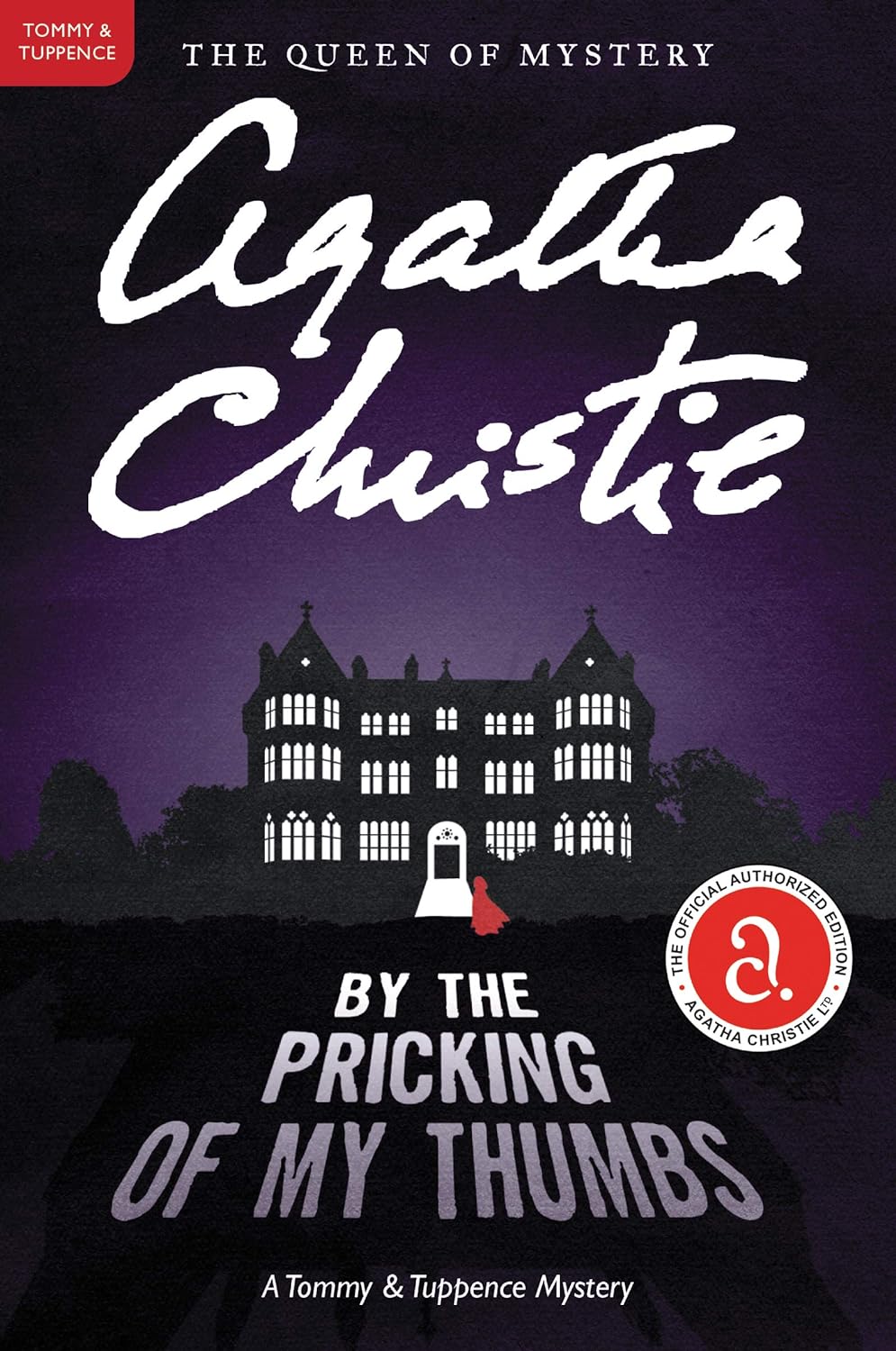
Book Note: By the Pricking of my Thumbs

Christie, Agatha. By the Pricking of my Thumbs: A Tommy and Tuppence Mystery. New York: William Morrow, 2012.

If you ever feel like Alice and want to jump down a rabbit hole, start browsing and / or reading your way through this list of works that take their titles from Shakespeare quotes. The works may or may not have anything else to do with Shakespeare–they may simply be parasitical works that find a nifty title in a Shakespeare play.

Agatha Christie's By the Pricking of my Thumbs is along those lines—there's not much in the way of Shakespeare in it . . . and what there is is misquoted.

The novel starts Christie's Tommy and Tuppence—a pair she used for more adventure / spy / thriller types of mysteries. A little way in, Tuppence tries to explain why she thinks there's something odd happening at the nursing home. She says, "I don't quite know . . . .  It's like the fairy stories. By the pricking of my thumbs—Something evil this way comes" (55).

"Evil" is a fairly common substitution in that quote, but "wicked" is the word Shakespeare used. In this case, it's not a question of a difference between a quarto and the folio editions—no quarto of Macbeth exists. And Macbeth is not quite a fairy story.

All the same, let's let Dame Agatha put the misquoted line in the mouth of her character. And I'll give you the rest of the context of the quote as well.  Enjoy!


Click below to purchase the book from amazon.com
(and to support Bardfilm as you do so).

Friday, February 23, 2018

Book Note: Hag-Seed

Atwood, Margaret. Hag-Seed: The Tempest Retold. London: Hogarth Shakespeare 2016.

The Hogarth Shakespeare series has often been disappointing. But Hag-Seed does it just right.

Atwood gives us a "mirror novel"—a novel about a group of actors putting on a play. But it's more than that. She weaves a re-imagined Tempest plot into the production of The Tempest.

In the novel, Felix Phillips finds himself ousted from his position at the theatre where he has basically been king. He moves into something of an exile, taking on a new name and plotting his potential revenge.

Whether it's part of his revenge or not, he takes up a position directing Shakespeare plays at a nearby penitentiary.

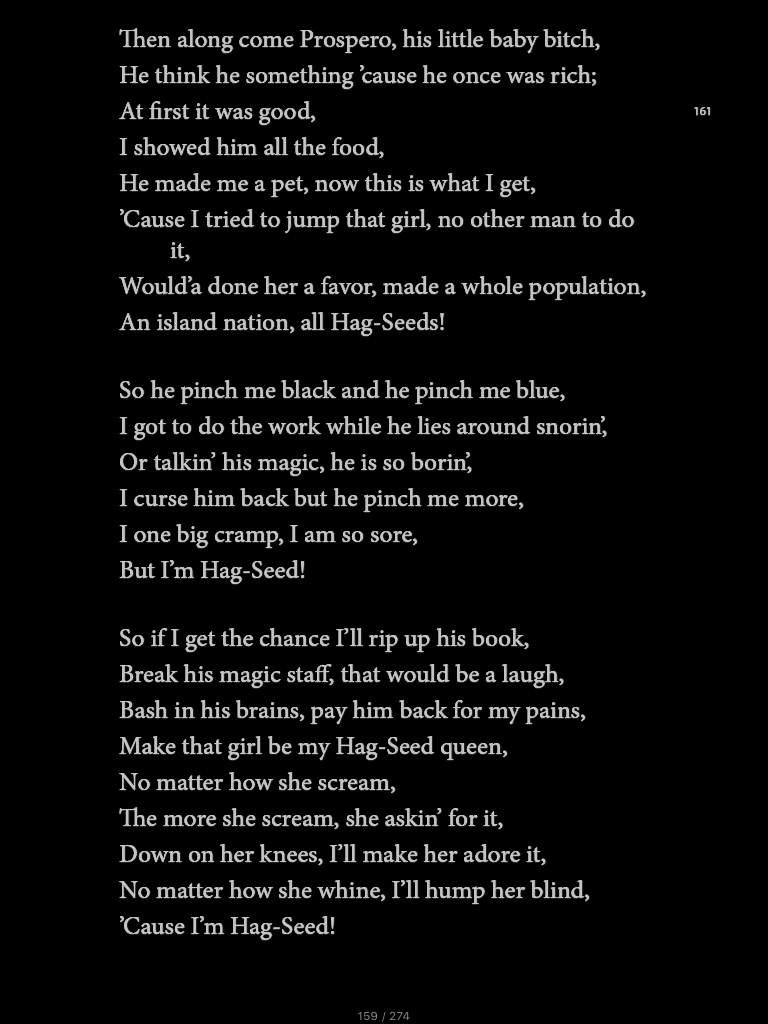
I was able to check this out from my library in electronic form—let me use that to do something I haven't done before. It's something of a live-tweet encounter with the novel.

In this first section, Felix, in a wonderfully self-reflexive, self-aware way, starts to see his own story as the story of Prospero:


As one way to get his actors interested in the play, he asks them to find all the curses they can in The Tempest:


In the following scene, Felix contemplates the vengeance he wants to take on the person who ousted him and took his position at the theater:


Here, he defends Shakespeare--and why Shakespeare is valuable for everyone, not just some high-culture upper-crust group:


Here, too, the defense of Shakespeare takes center stage:


We also get his opening speech to his new group of actors, quoting a bit from The Tempest and summing up one answer to "Why do Shakespeare?":


As they rehears, the players decide to come up with a rap for Caliban. Here it is:


I am very impressed by Atwood's careful and intriguing use of The Tempest in her creation of this novel.

Click below to purchase the book from amazon.com
(and to support Bardfilm as you do so).

Thursday, February 22, 2018

Book Note: Macbeth, Illustrated by Salvador Dali

Shakespeare, William. Macbeth. Illus. Salvador Dali. Garden City: Doubleday, 1946.

As you might expect, I have a fairly-large collection of Shakespeare books. I have large scholarly tomes and children's retellings, modern Shakespearean fiction and Shakespeare biographies, critical editions of the plays and books on Shakespeare films.

But I don't have much that would count as rare or valuable—except one book: The first edition of the Macbeth illustrated by Salvador Dali. It's not in great condition, and it doesn't have the slipcase that originally accompanied it, but I picked it up at a bargain rate, and perhaps it will appreciate in value.

If it doesn't, that's fine—that's not the point. The point is that I will grow in my appreciation of it.

I don't dip into it too often, but my eye fell on it (insert King Lear joke here) as I was glancing over my shelves, and I decided to glance through it and give it a write-up here.

The illustrations seem to me to be typical of Dali—they're odd and unexpected . . . and they seem to pop right off the page into the viewer's face. Here, for example, is the illustration of the line about Duncan's horses eating each other:


And here's an illustration that goes with Macbeth's visit to the Weïrd Sisters in Act IV:


The illustrations are wild, interesting, and disturbing. They do seem to fit the play pretty well.

Click below to purchase the book from amazon.com
(and to support Bardfilm as you do so).

Wednesday, February 21, 2018

Book Note: Nutshell

McEwan, Ian. Nutshell: A Novel. New York: Doubleday, 2016.

Whole handfuls of Hamlets have filled bookshelves and DVD racks around the world. There's even a collective noun for a bunch of Hamlets.

It's "a vengeance of Hamlets" for those of you keeping score (for which, q.v.).

Productions of and retellings of Hamlet fill every genre out there: tragedy, comedy, history, pastoral, pastoral-comical, historical-pastoral, tragical-historical, tragical-comical-historical-pastoral, scene individable, or poem unlimited.

There are male Hamlets and female Hamlets, truly insane Hamlets and cagey Hamlets, skeptical Hamlets and religious Hamlets, old Hamlets and young Hamlets.

Speaking of young Hamlets, Ian McEwan retells the story of Hamlet from a record-breakingly young Hamlet. His Hamlet has not yet been born—though he's very nearly ready to do so.

The epigraph for the book is, perhaps unsurprisingly, from Hamlet: "Oh, God—I could be bounded in a nutshell, and count myself a king of infinite space" (II.ii.254-55). That's our narrator—bounded in the womb, he thinks and plans and schemes . . . but cannot act—or can he?

That's a clever device, but McEwan makes more of it than just a passing, fleeting idea. Our narrator overhears the plots his mother and uncle concoct—in this modern setting, juice of cursed hebenon in a vial has been replaced by antifreeze in a smoothie (and it's ingested rather than poured in the ear)—and contemplates the fate that awaits them all

I found it to be a compelling novel, providing an interesting reading of Hamlet's helplessness. Let me give you a sample of the narrator's voice. At the beginning of Chapter Nine, he imagines what he might say to his father (who's a published poet rather than a king)—and contemplates the fallen world:


I've done some preliminary searching to see if anyone has taken a stance on just which Shakespeare sonnet Hamlet alludes to, but I'm not finding anything definitive. It does sound like an awful lot of them, but I wonder if it's Sonnet 74 ("But be contented: when that fell arrest / Without all bail shall carry me away . . ."). If you have another suggestion, please leave a comment!

The novel may not become a mainstay of my modern Shakespearean fiction class, but it's important to know and pretty amusing.


Click below to purchase the book from amazon.com
(and to support Bardfilm as you do so).

Tuesday, February 20, 2018

Book Note: Tom Jones

Fielding, Henry. The History of Tom Jones, A Foundling. New York: Modern Library, n.d.

I've been reading a lot of modern Shakespearean fiction recently—and also Tom Jones, which is really just one of those three. But it does have a lot of Shakespeare in it (by way of quotations or allusions), and some of the comic scenes (particularly those involving exasperating servants) have a Shakespearean flavor to them.

But there's also a scene where some of our main characters head off to the theatre. The summary of Book XVI, chapter v is a beginning:  "In which Jones receives a letter from Sophia, and goes to a play with Mrs Miller and Partridge." But when we get there, we learn not only that they're seeing a production of Hamlet, but they're seeing David Garrick in the title role!

Garrick is known for his tireless promotion of Shakespeare, including his organization of the 1769 Shakespeare Jubilee in Stratford.

In any case, the scene in Tom Jones brings to mind the Shakespeare scenes from Huckleberry Finn (for which, q.v.). Partridge, Tom's loyal traveling companion, doesn't think much of the play—and is particularly scornful of the Ghost, saying, "Though I can’t say I ever actually saw a ghost in my life, yet I am certain I should know one, if I saw him, better than that comes to. No, no, sir, ghosts don’t appear in such dresses as that, neither" (737).

All that changes when he sees how Garrick reacts to the ghost. But I'll let you read it yourself. Note: The full text of the novel is readily-available, but I'm providing images from my copy for your edification. The section in question begins at the second full paragraph on page 737:


It's a fascinating fictional account of a trip to the playhouse in the middle of the 1700s. Would that we had been there. It would have much amazed us.

Click below to purchase the book from amazon.com
(and to support Bardfilm as you do so).

Monday, February 19, 2018

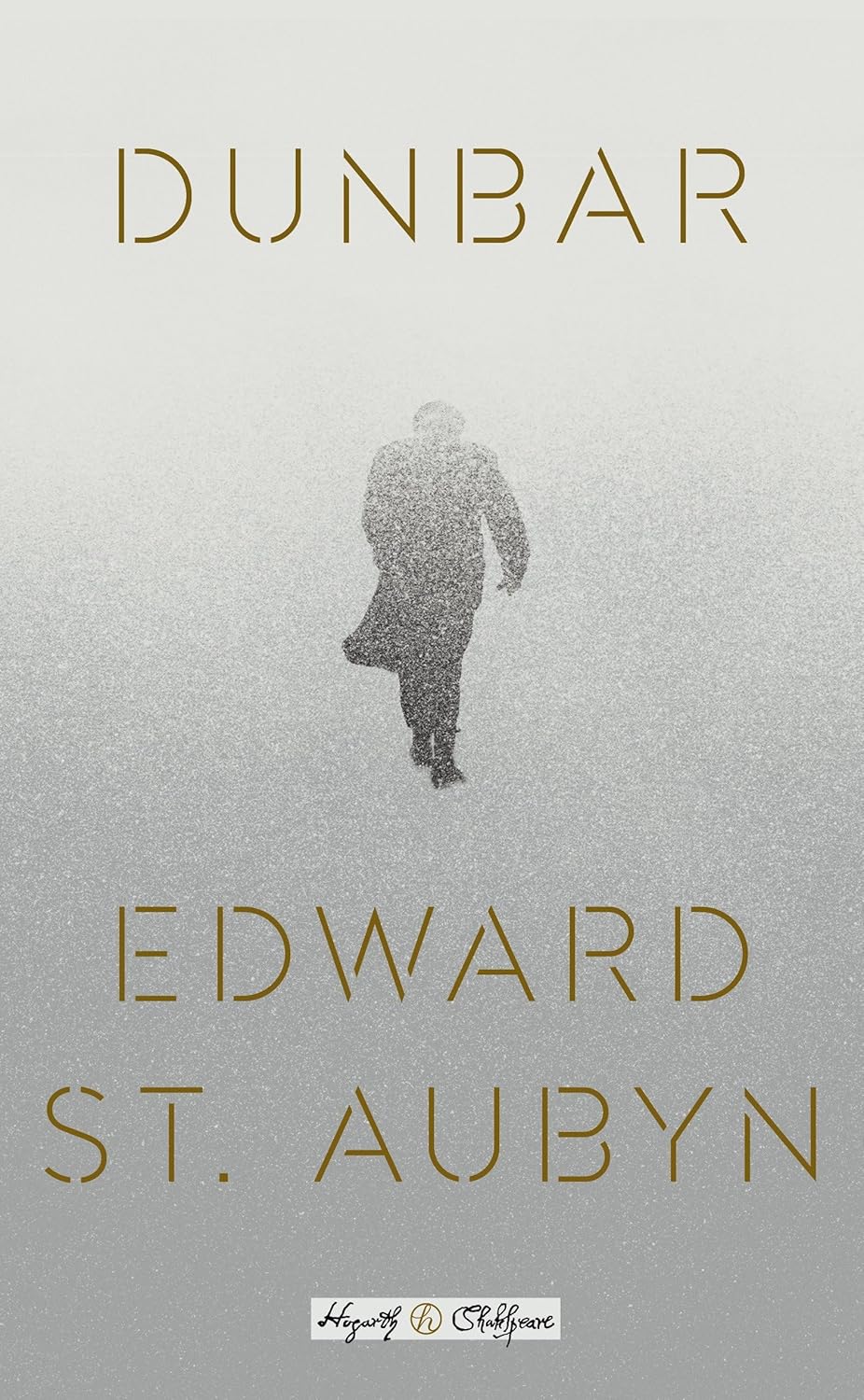
Book Note: Dunbar

St. Aubyn, Edward. Dunbar. London: Hogarth Shakespeare, 2017.

While we seem to be on the general subject of King Lear, we might consider one of the recent additions to the Hogarth Shakespeare series.

Dunbar is a retelling of King Lear that has some wonderful moments but is also largely unsuccessful.

The best thing about the novel is its starting point. St. Aubyn takes King Lear and begins in medias res. Henry Dunbar, our Lear analogue, is on the point of escaping from a sanitarium into which he's been confined by his greedy, horrible daughters who have an insider trading scheme for taking over his vast media and investment enterprise. He's made an alliance with a deeply-alchoholic retired comedian named Peter Walker to escape and to gain some sort of revenge on his daughters Abby and Megan. In the meantime, Florence (our Cordelia), aided by Wilson (Kent) is on her way to rescue him.

Dunbar's decision to leave the Fool and to try to make his way to London—and his subsequent descent into madness with the elements—is very moving. I'd like to provide an extract from Chapter Seven to illustrate the powerful reimagining of Shakespeare's Lear on the Blasted Heath scenes:


St. Aubyn gives us some tremendous character development and psychological insight in those few pages.

The novel's reimagining of Regan and Goneril are not so subtle. Not to put too fine a point on it, they are sexual deviants (one of them nearly bites off the nipple of Dr. Bob—our Edmund figure—early in the novel, and things go downhill from there).

The conclusion of the novel also leaves much to be desired. St. Aubyn throws a number of balls in the air—particularly in the last twenty percent of the novel—and then walks away, leaving them to fall where they will.

For me, the value of a work of Shakespearean fiction is at least partially found in what it enables us to think about Shakespeare's play. Dunbar makes me want to re-examine the character of King Lear, but it doesn't invite much else.

Click below to purchase the book from amazon.com
(and to support Bardfilm as you do so).

Bardfilm is normally written as one word, though it can also be found under a search for "Bard Film Blog." Bardfilm is a Shakespeare blog (admittedly, one of many Shakespeare blogs), and it is dedicated to commentary on films (Shakespeare movies, The Shakespeare Movie, Shakespeare on television, Shakespeare at the cinema), plays, and other matter related to Shakespeare (allusions to Shakespeare in pop culture, quotes from Shakespeare in popular culture, quotations that come from Shakespeare, et cetera).

Unless otherwise indicated, quotations from Shakespeare's works are from the following edition:
Shakespeare, William. The Riverside Shakespeare. 2nd ed. Gen. ed. G. Blakemore Evans. Boston: Houghton Mifflin, 1997.
All material original to this blog is copyrighted: Copyright 2008-2039 (and into perpetuity thereafter) by Keith Jones.

The very instant that I saw you did / My heart fly to your service; there resides, / To make me slave to it; and, for your sake, / Am I this patient [b]log-man.

—The Tempest