Tuesday, August 9, 2016

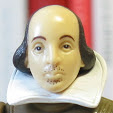
Nicol Williamson's Hamlet

Hamlet. Dir. Tony Richardson. Perf. Nicol Williamson, Judy Parfitt, Anthony Hopkins, Marianne Faithfull, and Mark Dignam. 1969. DVD. SPE, 2012.

A few people have told me that their very favorite film version of Hamlet was Nicol Williamson's. I know him primarily from the BBC Macbeth (for which, q.v.), but I've heard that his 1969 stage version of Hamlet rivaled Gielgud's, Barrymore's, and Burton's.  I've also heard that he was rather difficult to deal with when he was in the New York production of I Hate Hamlet (for the play, but not that particular production, q.v.; for that particular production, cf. this article from the New Yorker).

Intrigued by the number of people who count this version as their favorite (and usually count it there by a large margin), I watched it.

I'm not sure I see the brilliant acting that others see.

The production is good, but I just don't see where it rises even to the top of the vengeance of Hamlet films that are out there—much less far above others.

The film has some interesting points—notably how much of it is filmed in bed. Some of John and Yoko's late-'60s influence may be there, but there's also some intentionally.  I was struck by the sequence from Polonius' reporting and reading of Hamlet's letters through "To be or not to be" and on to the nunnery scene. Gertrude and Claudius (played by Antony Hopkins) receive Polonius' news in bed; Hamlet delivers the soliloquy in bed; he affronts Ophelia in a kind of hammock.

Two clips will serve as examples here. The first shows Polonius reporting his news. Hopkins delivers his lines well—but without ever pausing before their delivery. As a consequence, the scene seems rushed and Claudius seems (giving the intention of the actor and director the benefit of the doubt) to give very little consideration to anything. Without the benefit of the doubt, it seems like students reading through the text in class--just trying to get through it:


The second clip gives us the nunnery scene. Some interesting camera work toward the end is worth noting, and the performance itself is fine, but I don't see the insanely good Hamlet others rave about:


What are your thoughts? Give me a defense of Williamson in the comments and I'll reconsider!

Links: The Film at IMDB.

Click below to purchase the film from amazon.com
(and to support Bardfilm as you do so).

Monday, August 8, 2016

Chimes at Midnight

Chimes at Midnight. Dir. Orson Welles. Perf. Orson Welles, Jeanne Moreau, John Gielgud, and Margaret Rutherford. 1967. Blu-ray. Criterion Collection, 2016.

This post is mainly to anticipate the Criterion Blu-ray release of Chimes at Midnight. It will come out at the end of this month.

The film richly deserves the full Criterion treatment. Indeed, I think this is the film that will push me into buying a Blu-ray player.

What I have for you is not from the delicately remastered print to come; it's from an old videocassette that I happened across in a book sale somewhere. Watch it so that you can rejoice that the good people of Criterion have made it better.

The film combines elements from 1 and 2 Henry IV into an amazingly insightful set of character studies and deep reading.

The clip I've excerpted is from the scene in Eastcheap where first Falstaff and then Hal imaginatively enact an exchange between Hal and his father the king.


That should give you a sense of how great this film can be. And now . . . prepare yourselves for the power of the Criterion edition.

Note: Here's a new version of the image that begins this post. Observe the Blu-Ray difference!


Links: The Film at IMDB.

Click below to purchase the film from amazon.com
(and to support Bardfilm as you do so).

Friday, August 5, 2016

3 Henry VI in The Naked Truth

The Naked Truth [a.k.a. Your Past is Showing]. Dir. Mario Zampi. Perf. Terry-Thomas, Peter Sellers, Peggy Mount. 1957. DVD. MGM, 2005.

I've owed this post to an attentive reader for some time now, and I apologize for the delay.

The 1957 film The Naked Truth is a very good example of the madcap yet thoughtful British comedies of the 1950s and 1960s. With Terry-Thomas and Peter Sellers, how could there not be a great deal of fun and insanity?

The plot involves a clever blackmailer who develops an ingenious scheme that leaves him virtually untouchable. But his victims start separately plotting to murder him; eventually, they form a coalition to rid the world of this blot.

The Shakespeare comes in toward the beginning. The Peter Sellers character starts to contemplate murdering his blackmailer, and he quotes from Richard's speech in 3 Henry VI.


That's extracted from a speech about midway through 3 Henry VI when Richard (of Richard III fame) reveals his plan to make his way to the English Crown by removing all those who stand in the succession before him:
Why, I can smile, and murther whiles I smile,
And cry “Content” to that which grieves my heart,
And wet my cheeks with artificial tears,
And frame my face to all occasions.
I’ll drown more sailors than the mermaid shall;
I’ll slay more gazers than the basilisk,
I’ll play the orator as well as Nestor,
Deceive more slily than Ulysses could,
And like a Sinon, take another Troy.
I can add colors to the chameleon,
Change shapes with Proteus for advantages,
And set the murderous Machevil to school.
Can I do this, and cannot get a crown?
Tut, were it farther off, I’ll pluck it down. (III.ii.172-95)
The plan then gives Peter Sellers leave to put on all sorts of crazy costumes and to try out all the access of which he is capable (and he's capable of much). I was particularly struck by his Irish revolutionary—but you'll have to track down the film yourself to see that!

As a final note, remember that we've seen Peter Sellers in a Richard III role before—with the Beatles!

Links: The Film at IMDB.

Click below to purchase the film from amazon.com
(and to support Bardfilm as you do so).

Thursday, August 4, 2016

Big Business: A Comedy of Errors Derivative?

Big Business. Dir. Jim Abrahams. Perf. Bette Midler, Lily Tomlin, and Fred Ward. 1988. DVD. Buena Vista Home Entertainment / Mill Creek, 2002.

While we're on the subject of The Comedy of Errors, let me tell you about another film that I had been meaning to see for some time. Someone, somewhere told me that Big Business, the 1988 Bette Midler / Lily Tomlin film, was a derivative version of Shakespeare's Comedy of Errors. I put it down with a question mark.

After watching the film, I still have the question mark there. The film involves two sets of identical twins—that's certain. But the farce that develops is quite different than Shakespeare's. In this film, the twins are mixed up soon after birth—one of the "city folks" twins is switched with one of the "country folks" twins. That out-of-place twin always longs for her birth environment.

As the plot unfolds, we learn that the city sisters are involved in trying to sell the country sisters' furniture business.  The country sisters journey to the city to try to thwart the sale. And one of the sisters from the city doesn't like the idea of the sale; one of the sisters from the country is fine with the sale.

There's plenty of confusion and fun, but it doesn't really pick up on the themes or much of the plot of Comedy of Errors.

The clip below shows one of the film's opening scenes, explaining the double names.  It then goes on to show "the big reveal"—where all the twins learn that they have twins and that they were mixed up soon after birth.


It's a fine comedy with some Shakespearean elements, but it's not really a retelling of Comedy of Errors.

Links: The Film at IMDB.

Click below to purchase the film from amazon.com
(and to support Bardfilm as you do so).

Wednesday, August 3, 2016

Angoor: A Bollywood Comedy of Errors

Angoor. Dir. Gulzar. Perf. Sanjeev Kumar, Moushumi Chatterjee, and Deven Verma. 1982. DVD. N.s., n.d.

This film has been on my "to watch" shelf for an extremely long time. At first, I had a copy without any subtitles. It was interesting, but I was as lost as a bloodhound with a cold. Finally, I tracked down a DVD with English subtitles, but it took me a while to cycle around to Comedy of Errors again.

It was worth the wait—at least marginally so. The film follows the plot of Shakespeare's play fairly closely, but with some modernizations and some differences in character development. One of the Antipholuses (Antiphonlii?), for example, is a devotee of paperback detective stories. When he arrives in town, he's automatically suspicious of everyone and everything because his head has been filled with gangs and double agents and so on. An additional modernization involves the suspected use of drugs. Whenever a master doesn't recognize a servant (or vice versa), the mistaken one is accused of using hashish. In one elongated scene, the set of Dromio and Antipholus from out of town feed the wives of the other set some eggplant fries laced with hashish.

I was hoping too see more particular engagement or transmigration into the local culture. Still, the local setting worked well—and the plot of the play generally carries the day.

The clip below shows the opening frames of the film—where the film foregrounds its indebtedness to Shakespeare—and then a bit of the confusion of mistaken identities in this setting. It closes as the film closes—with a return to the portrait of Shakespeare. Enjoy!


Links: The Film at IMDB.

Click below to purchase the film from amazon.com
(and to support Bardfilm as you do so).

Tuesday, August 2, 2016

Black Butler Performs Hamlet

"Sono Shitsuji, Kōgyō" [a.k.a. "His Butler, Performer"; a.k.a. "His Butler, On Stage"]. By Mari Okada. Perf. Brina Palencia, Monica Rial, J. Michael Tatum, Daisuke Ono, Maaya Sakamoto, Jun Fukuyama, Yukari Tamura, and Koji Yusa. Dir. Toshiya Shinohara. Black Butler. Season 1, episode 25. Original Video Animation (OVA). DVD. Funimation Productions, 2012.

Anime is one of an enormous number of things that I can appreciate but not understand. I think that I would be able to dig in to its complexity and the rules of the genre and appreciate it even more thereby, but I think I would have to devote considerable time and effort to doing so, and time is not one of the things I have freely at my disposal.

Even with my limited appreciation and even more limited understanding, I can tell that Black Butler is on the high end for anime. I've only watched one episode, but considerable complexity and character development is readily apparent in just that one. And, unlike the Shakespeare in Aa! Megamisama! (for which, q.v.), the Shakespeare in this episode seems to be carefully and intentionally crafted.

In the episode "His Butler, Performer," actors who were to put on a charity performance of Hamlet for a group of orphans are delayed, but, as we've been instructed, the show must go on! Drawing from their limited resources, the show's regulars put on the show. I've complied (and streamlined) the performance of Hamlet in the clip below.


The butler's musing "I don't know that children can quite understand Hamlet" is proven false (even though it did take dancing seaweed to get there.

At the end of that clip, it appears that the show (in both senses) is over. But there's something of an epilogue after the closing credits showing how everyone reflects on their Hamlet:


That gives us a good sense of the larger issues that are at stake in the show as a whole. It convinces me that an investment of time in Black Butler would be well worthwhile. Somehow, I'll just need to track down the time required! 


Links: The Wikipedia Article on the Series.

Click below to purchase the film from amazon.com
(and to support Bardfilm as you do so).

Monday, August 1, 2016

Julia Stiles Plays the Prince of Denmark's Girlfriend Again— This Time, in The Prince and Me

The Prince and Me. Dir. Martha Coolidge. Perf. Julia Stiles, Luke Mably, and Miranda Richardson. 2004. DVD. Warner Bros., 2004.

At first glance, this may seem like a less-grammatical prequel to The King and I. Instead, it's a modern romantic comedy with some Shakespearean connections.

In this film, the Prince of Denmark (inexplicably not named Hamlet) becomes bored with his life in the palace, watches an ad for something along the horrific lines of "Girls Gone Wild," and determines to hide his identity as Prince and to go to college in Wisconsin, USA. Meanwhile, a pre-med student worries about her grades and whether they'll be good enough for her to gain admittance to Johns Hopkins for medical school.

Despite having the great Julia Stiles—who has done a fair number of wonderful things with Shakespeare-related films (including her role as Ophelia in the Almereyda Hamlet), the film isn't great. First—well, look at the brief plot description above.  Second, it's enormously predictable. Here's a quick list of things I predicted with a fair degree of accuracy after about ten minutes of the film. [Note: These are spoilers in the technical sense, but they will probably only concern those who haven't yet watched the first ten minutes of the film. After that, they's so predictable as to stay technically out of the spoiler box.]
  • He'll need help in chemistry; she'll need help with Shakespeare.
  • They will hate each other violently for the first quarter to third of the film.
  • They will fall in love over Shakespeare.
  • When, inevitably, she learns that he is a prince, she will be very angry indeed.
  • Something will necessitate his returning to Denmark. I hold out hope that the reason is that his father's been poisoned by his uncle, but it will probably either be his father's increasing illness or his much younger sister will fall off a horse or something.
  • She will realize she loves him whether he's a prince or not.
  • They'll get back together somehow / somewhere or other.
  • There'll be a cheesy closing song.
That need not ruin a film, of course. I can generally predict what's going to happen in most productions of Hamlet, but I keep watching those. The interest shifts from what happens to how it happens.

Two scenes are important and at least comparatively well done. [Note: I've separated them into individual clips below, but I've put all the relevant Shakespeare-related material into a longer clip at the end of this post.] The first is the "They will fall in love over Shakespeare" piece. Really, it's a "They will begin to fall in love over Shakespeare," which does help matters. In any case, one of my failed predictions was "If they use a sonnet, it will be Sonnet 116—'Let me not to the marriage of true minds / Admit impediments.'" Instead, they went with Sonnet 143, which is more complex and dense.  And they lead into that with a brief discussion of the faults of the more famous Prince of Denmark. I'll give you the clip and follow it with the text of the sonnet:


CXLVIII

O me, what eyes hath Love put in my head,
Which have no correspondence with true sight!
Or, if they have, where is my judgment fled,
That censures falsely what they see aright?
If that be fair whereon my false eyes dote,
What means the world to say it is not so?
If it be not, then love doth well denote
Love's eye is not so true as all men's "No."
How can it? O, how can Love's eye be true,
That is so vex'd with watching and with tears?
No marvel then, though I mistake my view;
The sun itself sees not till heaven clears.
  O cunning Love! with tears thou keep'st me blind,
  Lest eyes well-seeing thy foul faults should find.
Ignoring the bunch of malarky that's trying to pass for a reading of the sonnet toward the middle, there's something to the process of finding something about Shakespeare—about realizing that saying something in this way is different (and better?) than saying it in a straightforward, journalistic way.

The second scene of particular interest is our potential medical student's oral examination in Shakespeare. Take a gander:


"Othello had love, but he chose not to listen to his heart." Thus begins a series of flashbacks and realizations. It looks like she's blowing her chances of an A on the oral exam, but the articulate description of what true love must mean sways the sour-faced professors on the committee.

It's an interesting use of Shakespeare.  It's utterly cornball, of course, and completely unrealistic. But look at the power of Shakespeare to help us understand ourselves! I bet Harold Bloom would love this film.

The clip below contains those two scenes, but it also gives more context to the film's use of Shakespeare. Here are somethings to note as you watch it:

  • The Prince quotes from Romeo and Juliet to apologize: "I have learn'd me to repent the sin / Of disobedient opposition /  To you and your behests, [I] am enjoin'd / . . . And beg your pardon" (from Juliet's conciliatory speech to Capulet at IV.ii.17ff).
  • Sonnet 143 comes up again in the Prince's farewell note.
  • Without quoting again from Romeo and Juliet, one exchange is framed as something of a balcony scene. 
  • The Prince, reunited with the now-graduated student, quotes Titania's "Thou art as wise as thou art beautiful"—delivered to foolish, unbeautiful Bottom at III.i.148.

There you have it. It's a pretty bad film, but it does do some interesting things with Shakespeare.

Bonus Image: Hinting at a Balcony Scene Encounter

Links: The Film at IMDB.

Click below to purchase the film from amazon.com
(and to support Bardfilm as you do so).

Friday, July 29, 2016

Book Note: Something Wicked This Way Comes

Bradbury, Ray. Something Wicked This Way Comes. New York: Avon Books, 1997.

The search for additional resources for my Modern Shakespearean Fiction class leads me on the occasional wild goose chase. In this case, I ended up down an alley that might be called "Novels Whose Titles Come from Shakespeare."

Ray Bradbury's classic novel in the genre . . . the genre—well, I suppose the genre is youth carnival horror science fiction fantasy—gets its title from one of the speeches by one of the Wëird Sisters. A quick glance at a Wikipedia disambiguation page shows that the quote has been used extensively for a wide range of novels, episodes of television shows, albums, and songs.

The line is wonderfully eerie and evocative, and, by those standards, Bradbury's novel lives up to it.

The part of the novel I enjoyed most involves the direct consideration of that line.

The images below contain the full chapter in which it's contained. The father of one of our two adolescent protagonists is starting to realize the immensity of the evil that has come to the small town with the carnival. Click on the images below to enlarge them:


"So vague, yet so immense" (187) gives a good sense of the line from Shakespeare and the appeal it has for entities as otherwise widely separated as Ray Bradbury, Siouxsie & the Banshees, and Ugly Betty.

Click below to purchase the book from amazon.com
(and to support Bardfilm as you do so).

Thursday, July 28, 2016

Pericles at the Guthrie

Pericles. Dir. Joseph Haj. Perf. Barzin Akhavan, Wayne T. Carr, Jeffrey Blair Cornell, Darcy Danielson, Armando Durán, Michael Gabriel Goodfriend, Jennie Greenberry, Michael J. Hume, Cedric Lamar, Brooke Parks, Zlato Rizziolli, Emily Serdahl, U. Jonathan Toppo, and Samuel L. Wick. Guthrie Theatre Company. Minneapolis. 16 January—21 February 2016.

I saw Joseph Haj's production of Pericles on 21 February 2016–the very last day of its run. Had I seen it on the first day, I would have reviewed it much more promptly, but any pressure to let the potential audience know about it was dissipated by the fact that there were no more shows to see.

Still, I'd like to put my two cents in. Ideally, we'll have many more Haj productions at the Guthrie—so I'd like some brief record of the first.

Pericles is an underrated play, but it's still not tremendous. As the old limerick goes,
Shakespeare, the writer of plays,
Had his better and his worse days.
On the best, the best yet:
He composed his Hamlet.
On his worst, he wrote Pericles
That's not entirely fair, but Pericles, despite having remarkable speeches and lines—like this one, for example . . .
Few love to hear the sins they love to act. (I.i.93)
. . . is very uneven.

I was skeptical about how the Guthrie would handle such a mixed bag of pirates, incest, houses of ill repute, riddles, journeys, shipwrecks, and complicated political situations.

Haj allayed my suspicions. His production—a version closely modeled on one he did at the Oregon Shakespeare Festival the previous summer—was genuinely fun, with sweeping and imaginative visual and auditory effects. The most memorable and amazing of them all was Pericles in the shipwreck. A gigantic flowing piece of blue material covered the entire stage, billowing and blowing as Pericles tossed his way through it. There were also projects planets, stars, and maps the were used marvelously well to create a sense of almost infinite scope. Also interesting was the way the opening riddle was presented: Antiochus' daughter had the riddle tattooed on her back. The acting was quite good as well, giving us a sense of King Lear, The Tempest, The Comedy of Errors, Othello, and other plays.

In short, the production was extremely impressive visually—even though the play as a whole didn't have great organic unity. I look forward to seeing what Haj will give us this season—and in all the seasons to come. If he can do this with Pericles, imagine what he will be able to do with, say, King John!

You can read more about the Oregon Shakespeare Festival's production in a review of their 2015 season by Michael W. Shurgot (Shakespeare Bulletin 34.2 (2016): 307-21). Note: Those with Project MUSE access can click here to go directly to the article.

The play at the Guthrie's website.

Wednesday, July 27, 2016

The Penny Arcade Nightmare, courtesy Julie Taymor

Titus. Dir. Julie Taymor. Perf. Anthony Hopkins, Osheen Jones, and Dario D'Ambrosi. 1999. DVD. Twentieth Century Fox, 2000.

In brief, highly-visual vignettes to which Taymor has given the name “Penny Arcade Nightmares” (mentioned in Maria De Luca and Mary Lindroth, “Mayhem, Madness, Method: An Interview with Julie Taymor,” Cineaste 25.3 (2000): 30) or “PANs,” Taymor uses filmmaking techniques highly reminiscent of those used in modern music videos to present Shakespeare’s four-hundred-year-old drama about a much more ancient culture. She also provides a frame for her film that traces provocative parallels between the Rome of the film and the film’s contemporary culture in a highly-conspicuous way.

Each one forces the viewer away from a direct engagement with the otherwise generally-realistic presentation of the plot toward something deeper. Their surrealism invites—or even forces—speculation on a grand scale. They owe their effect to an odd combination of techniques drawn from modern music videos, images similar to those provided by surrealist cinema, and elements of Magical Realism. The PANs present a dreamlike state that often turns to nightmare.

One PAN occurs during the scene in which Lavinia writes the names of her attackers in the sand. As the frantic music plays and Lavinia writes furiously, the film cuts away to a series of moving images in silver and grey. Lavinia stands in a Marilyn Monroe pose, holding her white dress down with the pointed stumps of her hands. The neck and head of a deer extend out of the top of her head, and tigers leap at her from left and right, morphing into the figures of Chiron and Demetrius as they do so. The connection between the despoilers of virtue and the loss of virtus is evident in the scene.

The otherworldly nature of the PANs enables them to serve as periodic signposts to the film’s engagement with violence. They often simultaneously provide and temper images of violence, offering the violence that is a part of this play, human history, and popular culture and transposing it to a realm that is not part of this world.


Links: The Film at IMDB.

Click below to purchase the film from amazon.com
(and to support Bardfilm as you do so).

Tuesday, July 26, 2016

Shakespeare in I Dream of Jeannie

"The Girl Who Never Had a Birthday, Episode 2." By Sidney Sheldon. Perf. Melissa Joan Hart, Caroline Rhea, and Beth Broderick. Dir. Claudio Guzman. I Dream of Jeannie. Season 2, episode 11. NBC. 21 November 1966. DVD. Mill Creek Entertainment, 2015.

Here's a bit more of Shakespeare the man (rather than Shakespeare the words) in an American sit-com.

In this case, it's a sit-com I watched growing up—in reruns, at least: I Dream of Jeannie. Shakespeare finally makes his brief appearance in the second of a two-part (!) storyline in which Jeannie realizes that she doesn't know when her birthday is. After far too many bizarre machinations, they finally determine on a date to celebrate—only to realize that they can't invite anyone to the party.

Not a problem! With a nod of the head, Jeannie summons up a crowd of guests from the past—including good old Shakespeare. I have two clips for you. The first takes us to the bare essentials of Shakespeare's appearance:


The second clip gives you the context of the first. I include it for the dedicated devotee who wants to see who else came to the party. I'm partial to Sigmund Freud myself, but that may be because I grew up in the Bill and Ted's Excellent Adventure era. Enjoy!


Links: The Episode at IMDB.

Click below to purchase the complete series of the show from amazon.com
(and to support Bardfilm as you do so).

Monday, July 25, 2016

Shakespeare in Sabrina, the Teenage Witch

"Jealousy." By Jonathan Schmock, Nell Scovell, and Frank Conniff. Perf. Melissa Joan Hart, Caroline Rhea, and Beth Broderick. Dir. Jeff Melman. Sabrina, the Teenage Witch. Season 4, episode 3. ABC. 8 October 1999. DVD. Paramount, 2016.

When I say "Shakespeare in" (as in the title of this post), in this case, I mean the person of Shakespeare rather than quotations from Shakespeare.

I know next to nothing about this show. It's one that passed me by. I think I was writing my dissertation through the entire multi-season run of the show.

But, as I've said before, I'll try almost anything if there's a Shakespeare payout somewhere in the process. This one, though, did test my limits.

The main character—Sabrina, I assume—becomes jealous of another student's writing. In order to confirm her opinion that it's bad (even though it's actually quite good), she summons three great literary figures from the past to ask their opinions of the work. I'm including that clip below—as well as a bit from later in the show where the expression "the green-eyed monster" (from Othello) makes itself manifest.


There you go! The most exciting minute and fourteen seconds in all of Sabrina, the Teenage Witch. Once again, be grateful to your friendly neighborhood Shakespeare blogger for taking that on.

Links: The Episode at IMDB.

Click below to purchase the complete series of the show from amazon.com
(and to support Bardfilm as you do so).

Friday, July 22, 2016

Party with Shakespeare!

"Midsummer Night's Madness." Seventeen July 1964: 54+.

A little while ago, an image of the cover of the July 1964 Seventeen magazine started making the rounds. It purported to offer help in planning a number of different parties—among them a Shakespeare Party.

The cover was nice and entertaining, but it wasn't enough for Bardfilm—oh, no. With research librarians who have my back, I set out to find the details of the party. Here's what I discovered:
The scene: a garage. Out in the driveway couples are twisting to madrigals. Offstage a noisy chorus of "Happy Birthday, Dear Will" is just ending. It's Shakespeare's Year; his four-hundredth birthday. Join the fun! Plan your party for ten and send out the word to come As You Like It—as Juliet or donkey-headed Bottom or Prince Hal in shiny foil-and-cardboard armor. You put together the armor (boys tend to make much Ado about Nothing over such things) and let your beau help set the stage for the party. (54)
Of course, you may wish to go all out with the invitations and the food:


We're advised to keep attendance from being too easy: "Admission: twenty lines of Shakespeare, memorized" (55).

I'm not too sure about the Hamletburgers—particularly because they're described as "'A dish,' to quote Shakespeare again, 'fit for the gods'" (104). It's a bit off-putting when you realize that the quote is Brutus describing the future corpse of Julius Caesar rather than a delectable dinner concoction:


I'd certainly be wiling to try the Maids of Honor:


Finally, he's the full two-page photo spread from the article:


There's not much summer left—who's going to throw this party . . . and then invite me to it?

Thursday, July 21, 2016

Shakespeare in Time Flies

Time Flies. Dir. Walter Forde. Perf. Tommy Handley, Evelyn Dall, George Moon, and Felix Aylmer. 1944. Gainsborough Pictures, 1944.

In the chronology of this blog, we move from the sublime to the ridiculous.

In this 1944 film, a professor has invented a time machine. An unscrupulous man cons an actor on the music hall stage into investing in its further development; his wife (also an actor) objects. Somehow, all four of them end up accidentally traveling back in time to Elizabethan England, where hijinks ensure.

I watched this film because I heard that Shakespeare makes an appearance. Our actors arrive in the Globe Theatre and find Shakespeare working on the script for Romeo and Juliet. Yes, I know—if they're in the Globe, Shakespeare must have written the play already. But that's the kind of fact you have to forget about so that this film doesn't drive you insane. For example, just as they're teaching Walter Raleigh (not yet Sir Walter) how to smoke a cigar, John Smith starts bragging about owning all of America—until Pocahontas shows up and claims it for herself.

In any case, our music hall actress helps the man she sees with his lines—which she thinks he's forgotten. Only afterwards does she learn that he's Shakespeare himself—and they don't get there until they've practiced the balcony scene together. Have a look:


Immediately afterwards, a few Shakespeare-era musicians arrive; after they have a go at a number about the ringing of the bells, our musical hall actors break into a ridiculous song and dance number. I'm including it here because the music is actually pretty good—and I like the idea of our actor grabbing a clarinet and giving the Elizabethan era a good taste of Benny Goodman-esque jazz:


Finally, one part that was caught my attention was the actor who played the professor. Here's a clip from his role—see if you can figure out what other famous and Shakespeare-related role he played:


That, dear readers, is Felix Aylmer—he played Polonius in Laurence Olivier's 1948 Hamlet (made just four years after this film). It's intriguing to see him in both—but there really isn't much range between our absent-minded professor and that absent-minded Lord Chamberlain.

All in all, Time Flies is a not-too-memorable ephemeral comedy—but I do find it hard to resist anything—even a B-grade movie—that has Shakespeare in it.


Bonus Image One: How to tell where you are in Space.


Bonus Image Two: Shakespeare as Romeo.

Links: The Film at IMDB.

Tuesday, July 19, 2016

Once Again, They Put the Great in Great River Shakespeare Festival

As You Like It. Dir. Doug Scholz-Carlson. Perf. Mark Murphey, Ana Marcu, Stephanie Lambourn, De’Onna Prince, Jason Rojas, Peter Eli Johnson, Ted Kitterman, Zach Curtis, Zach Curtis, Ana Marcu, Michael Fitzpatrick, Jason Rojas, John Maltese, Mark Murphey, Silas Sellnow, Benjamin Boucvalt, Caroline Amos, Tarah Flanagan, JuCoby Johnson, Rob Hancock, and Ted Kitterman. Great River Shakespeare Festival. Winona, Minnesota. 2016. 

Julius Caesar. Dir. James Edmondson. Perf. Mark Murphey, Ana Marcu, Stephanie Lambourn, De’Onna Prince, Jason Rojas, Peter Eli Johnson, Ted Kitterman, Zach Curtis, Zach Curtis, Ana Marcu, Michael Fitzpatrick, Jason Rojas, John Maltese, Mark Murphey, Silas Sellnow, Benjamin Boucvalt, Caroline Amos, Tarah Flanagan, JuCoby Johnson, Rob Hancock, and Ted Kitterman. Great River Shakespeare Festival. Winona, Minnesota. 2016. 

The Great River Shakespeare Festival has given the world two more stunning and superb Shakespeare productions.

I'm always so moved by the beauty of the GRSF's productions and the skill and depth of the actors that I find it hard to get started with a review. I'm also always a bit rushed because I want to get the word out about the shows as quickly as I can. Bear with me, then, as I provide a few points that struck me about each show.

As You Like It.

The costumes, set, and lighting were striking. This Shakespeare Festival puts an incredible amount of thought and work into these elements of the show. After the intermission, the set was littered with letters from Orlando to Rosaline—and the lighting on the backdrop made it take the form of hundreds of letters sewn together. This image (from the GRSF Instagram Page) gives you a sense of the beauty of the sets and costumes:


The music was delightful—please notice the musicians in the background of the image above—they were often in the background of the production. All the songs from the play were given new musical settings for this production—and they mostly rode a delightful line between folk and bluegrass. A cello and guitar were the main instruments, but a mandolin made its way in there from time to time as well.

The acting was superb. The Orlando (played brilliantly and energetically by Benjamin Boucvalt) had a light touch that could turn to utter seriousness on a dime—and do so utterly believably. The Rosaline (played energetically and brilliantly by Tarah Flanagan) was utterly fresh and vivacious. One scene that particularly impressed me between the two was the "I would not be cured, youth" scene. I've mostly seen it played smoothly—Rosaline has a plan in mind and unfolds it to Orlando so that he (and the audience) can understand it. In this production, she came up with the plan hesitantly, adding bits as she thought it through—occasionally frustrating Celia (played extremely well by De’Onna Prince) by how unpolished it is. Flanagan is also often able to respond to a difficult line with a brief glance or a pause or a slight movement in a way that brings its meaning home clearly (and often humorously) to the audience. The text of Shakespeare is vitally important in this production—and Flanagan gives us that and much more.

I mention those two actors in particular, but each of the actors brought great weight and depth to the characters they played. Here's a quick image of Touchstone (with Rosaline in the background).  Rob Hancock's Touchstone displayed considerably mastery of the language and of physical humor. His timing could not have been improved upon.


The director had a powerful and intriguing overall vision for the play. Jaques is utterly thrilled and overcome by the fool in the woods—but he soon becomes fraught with melancholy again as he delivers "All the world's a stage." Jaques' "Seven Ages" speech is often seen as a damper on the play (for some thoughts on this, click here). And it does bring things down in this production—but not for long. But the play brings us back down again—and then back up.

Really, I was struck by how this production of the play exhibits a manic depressive personality. We have incredible highs counterbalanced by desperate lows throughout the entire play—until, in the last scene, we generally run up a crescendo of joy to the end.

Julius Caesar.

The Great River Shakespeare Festival Julius Caesar is one of the best I've ever seen.

The production has something of the flavor of the 1937 Julius Caesar directed by Orson Welles that I've written about (in conjunction with the film me and Orson Welles) here. You may be able to see something of that in this image (from the GRSF website) of the conspirators arriving at the Senate:


If you see both Shakespeare productions, you'll start to recognize the incredible breadth that these actors have. The light touch Benjamin Boucvalt gives to his Orlando is traded for a conniving, sarcastic, smooth, and sadistic Cassius. It was hard to remember that the roles were played by the same actor. In this production, Cassius exuded the aroma of Applegate from Damn Yankees. He's subtle and sly, but he's a tempter to make your skin crawl.

Visually, the production is stunning. One member of the audience next to me was struck by how very little color makes its way onto the stage—until the assassination. That makes the blood all the more shocking.

Speaking of the assassination, Zach Curtis plays it (and the rest of his role) very well. It reminded me vividly of Brian Murray's Claudius in the Kevin Klein Hamlet. He's a remarkably good ruler with a trace (but only a trace) of tyranny in him. He's tyrannical tendencies are reduced in this production to complicate Brutus' thought processes and Cassius' temptation. Just before the assassination, he becomes more outrageous ("Yet in the number I do know but one / That unassailable holds on his rank, / Unshaked of motion”), which, for the moment, seems to validate the assassination. But Curtis plays the death to evoke great pity. He crawls down two conference tables, spreading considerable blood about, and dies agonizingly at the end of the second. His body lies there for the rest of the very long scene, making the conspirators look far more like the butchers than the sacrificers Brutus hoped they would be.

John Maltese plays Brutus with great subtlety and thoughtfulness. His consideration of the way to give Rome the best government it can have ("It must be by his death") had unsounded depths. Though the production has generally modern dress (1940s? 1950s?—How do you date a fedora?), I didn't get the impression that any particular politics (other than ancient Roman, of course) was specifically being referenced. But Maltese's consideration of Cassius' temptation brought to mind the recent events in Turkey. Were the leaders of the attempted coup also thinking as deeply about how to make their government great again? As a side note, this is merely one more indication of the continued relevance of Shakespeare in our time.

Maltese's interaction with Portia was also very fine (as was hers with him)—but it does bring to mind one oddity of the production. This production makes Portia particularly pregnant, and I'm not convinced it worked. It stood out without clear motivation. I imagine it makes Portia's death more poignant (especially to Brutus), but it wasn't a piece with the whole production.

The Soothsayer—played by Ted Kitterman—was intriguing. He's pictured on the first image of this post. He's portrayed as a veteran of one of Caesar's past wars, and he's not altogether there. His interaction with Caesar had a poignancy to it—as if Caesar recognized some complicity in his current state. He also delivers Artemidorus' lines, which gives him more than just supernatural knowledge of why the Ides are to be avoided—he has collected names and numbers. It's an interesting choice, though it does tend to bring him down to more of a mundane plane.

The second half of As You Like It is better than its first; the first half of Julius Caesar is better than its second. But this production manages to keep our interest and attention through to the end. Perhaps that it helped by the unusual timing of the intermission—it's right after the assignation and right before the funeral orations. In between, the set change shows the effects of Caesar's death by showing cracks in the giant S.P.Q.R. above the stage:


Caesar keeps reappearing—accompanied by subtle red background lighting and barely-distinguishable sound effects—and we watch the decline and fall of Brutus with interest.

Both Shakespeare plays were, once again, utterly remarkable.  The GRSF is a diamond of the purest cut—unutterably beautiful and complex.

The GRSF is also putting on a new musical called Georama this year. I've heard great things about it, but I wasn't able to see it myself.

The 2016 season runs through the end of July—so plan your trip immediately!

Links:  The Great River Shakespeare Festival.
Bardfilm is normally written as one word, though it can also be found under a search for "Bard Film Blog." Bardfilm is a Shakespeare blog (admittedly, one of many Shakespeare blogs), and it is dedicated to commentary on films (Shakespeare movies, The Shakespeare Movie, Shakespeare on television, Shakespeare at the cinema), plays, and other matter related to Shakespeare (allusions to Shakespeare in pop culture, quotes from Shakespeare in popular culture, quotations that come from Shakespeare, et cetera).

Unless otherwise indicated, quotations from Shakespeare's works are from the following edition:
Shakespeare, William. The Riverside Shakespeare. 2nd ed. Gen. ed. G. Blakemore Evans. Boston: Houghton Mifflin, 1997.
All material original to this blog is copyrighted: Copyright 2008-2039 (and into perpetuity thereafter) by Keith Jones.

The very instant that I saw you did / My heart fly to your service; there resides, / To make me slave to it; and, for your sake, / Am I this patient [b]log-man.

—The Tempest