Thursday, September 4, 2008

Finally—A Bit o' th' Play!

King Lear. Dir. Peter Brook. Perf. Orson Welles, Natasha Parry, Margaret Phillips, Beatrice Straight, and Alan Badel. 1953. DVD. Passport, 2006.

I felt a certain obligation to provide part of Welles' King Lear after giving you the short introduction, the Greyhound commercial, and the long introduction. It is a pretty straightforward production. The resonant voice of Welles is the most striking feature of it. Oh, and the hat. Welles and his hats. In his 1948 Macbeth, he looks like The Klingon Statue of Liberty. Five years later, not much hat progress has been made.  Now it seems to be a combination of Béla Lugosi, Saint Nick, and a Standard Grounded Outlet Plug.

But the voice . . . it's worth it for the voice.


Links: The Film at IMDB. Note: IMDB lists Andrew McCullough as the director, but the introduction mentions Peter Brook. I'll need to investigate this further, but I don't want to mislead anyone in the meantime.

Click below to purchase the film from amazon.com
(and to support Bardfilm as you do so).

Wednesday, September 3, 2008

Alistair Cooke's Introduction to Orson Welles' King Lear

King Lear. Dir. Peter Brook. Perf. Orson Welles, Natasha Parry, Margaret Phillips, Beatrice Straight, and Alan Badel. 1953. DVD. Passport, 2006.

Yes, Lear Week at Bardfilm was supposed to end several days ago now, but c'mon! I haven't even gotten to Ran yet!

And the material surrounding the Orson Welles King Lear has been so interesting that I haven't even gotten to the film part yet! In the segment below, a very young Alistair Cooke tells us why different ages have appreciated or failed to appreciate this play:


I'm particularly struck by Cooke's closing lines:
It is the play of an author who, in the prime of life, despaired not only of men and women but of the God who made them. But this is not the petulance of a small-town atheist. It is the despair of one of the most intuitive human beings who ever lived and of the most greatly gifted of our poets.

So, we give you King Lear in the hope that you may learn more from Shakespeare's pessimism than from the optimism of lesser men.
That's not exactly why I read and teach King Lear, though we do learn from the pessimism of the characters in the play and even of the play itself.

Lear isn't a romp through the rhododendrons. And it does contain some of the darkest of all possible portraits of human nature. But I don't think that the play is entirely nihilistic, even if some of its characters are. Gloucester's contention that "the gods . . . kill us for their sport" (IV.i.38-39) is undone by Edgar's speeches at the cliff's base. And redemption can be found in the suffering of Lear—and even of Cordelia.

Links: The Film at IMDB. Note: IMDB lists Andrew McCullough as the director, but the introduction mentions Peter Brook. I'll need to investigate this further, but I don't want to mislead anyone in the meantime.

Click below to purchase the film from amazon.com
(and to support Bardfilm as you do so).

Tuesday, September 2, 2008

WDWT: What Did Welles Think?

King Lear. Dir. Peter Brook. Perf. Orson Welles, Natasha Parry, Margaret Phillips, Beatrice Straight, and Alan Badel. 1953. DVD. Passport, 2006.

In the few minutes I had to spare before Faculty Meeting, I started Orson Welles' King Lear, a 1953 contribution to the television show Omnibus. I didn't have time to get too far into it—all I got to see was the opening commercials—but they were fascinating! I really wonder what Welles thought at that point in his career by being sponsored so heavily by Greyhound Bus Lines, of all people.

Perhaps he thought that Poor Tom (a.k.a. Edgar) prophesied about them in this speech from III.vi:
Tom will throw his head at them. Avaunt, you curs!
Be thy mouth or black or white,
Tooth that poisons if it bite;
Mastiff, Greyhound™, mongrel grim,
Hound or spaniel, brach or lym,
Or bobtail tike or trundle-tail,
Tom will make them weep and wail:
For, with throwing thus my head,
Dogs leap the hatch, and all are fled.
Do de, de, de. Sessa! Come, march to wakes and
fairs and market-towns. Poor Tom, thy horn is dry.
Whether he did or not, the introduction is interesting, and I thought we could all take a look at it. And we can all try to imagine Orson Welles as the driver of a Greyhound Bus as we do so.


Links: The Film at IMDB.  Note:  IMDB lists Andrew McCullough as the director, but the introduction mentions Peter Brook. I'll need to investigate this further, but I don't want to mislead anyone in the meantime.

Click below to purchase the film from amazon.com
(and to support Bardfilm as you do so).

A Better-Known Lear Derivative

A Thousand Acres. Dir. Jocelyn Moorhouse. Perf. Jessica Lange, Jason Robards, and Michelle Pfeiffer. 1997. DVD. Walt Disney Video, 1998.

Based on the novel by the same name, itself a Shakespearean Derivative, A Thousand Acres is, I suspect, the most renowned film in the very specific genre of "Modern Lear-Based Shakespearean Derivatives."  And so it should be.  The novel was very interesting, and the film did its work of turning the novel into something similar while maintaining its own distinctiveness.

Both the novel and the film turn the Lear analogue ("Larry") into an incestuous father whose horrific abuse of two of his daughters gives motivation to their horrific treatment of him.  Some readers and viewers may think this goes too far in justifying the actions of the Goneril and Regan analogues ("Ginny" and "Rose," respectively), and I agree with them—if we expect the book and the film to give us what Lear gives us.

A vile Lear makes it much, much harder to empathize—or even to sympathize—with the tragedy (which may then be less tragic).  But A Thousand Acres invites us to consider one possibility for the story as told from the daughters' point of view.

It's not King Lear itself; but it's not meant to be.  At what it tries to do, it succeeds.

And that last sentence, I suppose, is hardly the kind of quote you'd find on the back of a DVD box, but it will have to do.

Links: Wikipedia Article for the Book.

Click below to purchase the film or the book from amazon.com
(and to support Bardfilm as you do so).


Monday, September 1, 2008

What? Another Shakespeare Derivative with Patrick Stewart?

King of Texas. Dir. Uli Edel. Perf. Patrick Stewart and Marcia Gay Harden. 2002. DVD. Turner Home Entertainment, 2002.

Of the three—yes, three at the barest minimum—adaptations of King Lear set in the American Old West, King of Texas isn't the worst. But it is pretty bad.

But it has Patrick Stewart. Say what you will (and if I know you, you'll say anything), but he's a good actor. A good Shakespearean actor, too.

But I'd a thousand times rather see him play Lear straight than to choke my way through King of Texas again.

On the other hand, it also has Colm Meaney, another of the actors on Star Trek. Still, I don't know if that's enough to justify the stilted dialogue, the strangeness of some of the directorial decisions, or the odd mixture of accents.

At some point, I'll try to track down a clip to pass along to you all.

Links: The Film at IMDB.

Click below to purchase the film from amazon.com
(and to support Bardfilm as you do so).

Sunday, August 31, 2008

King Lear and Job

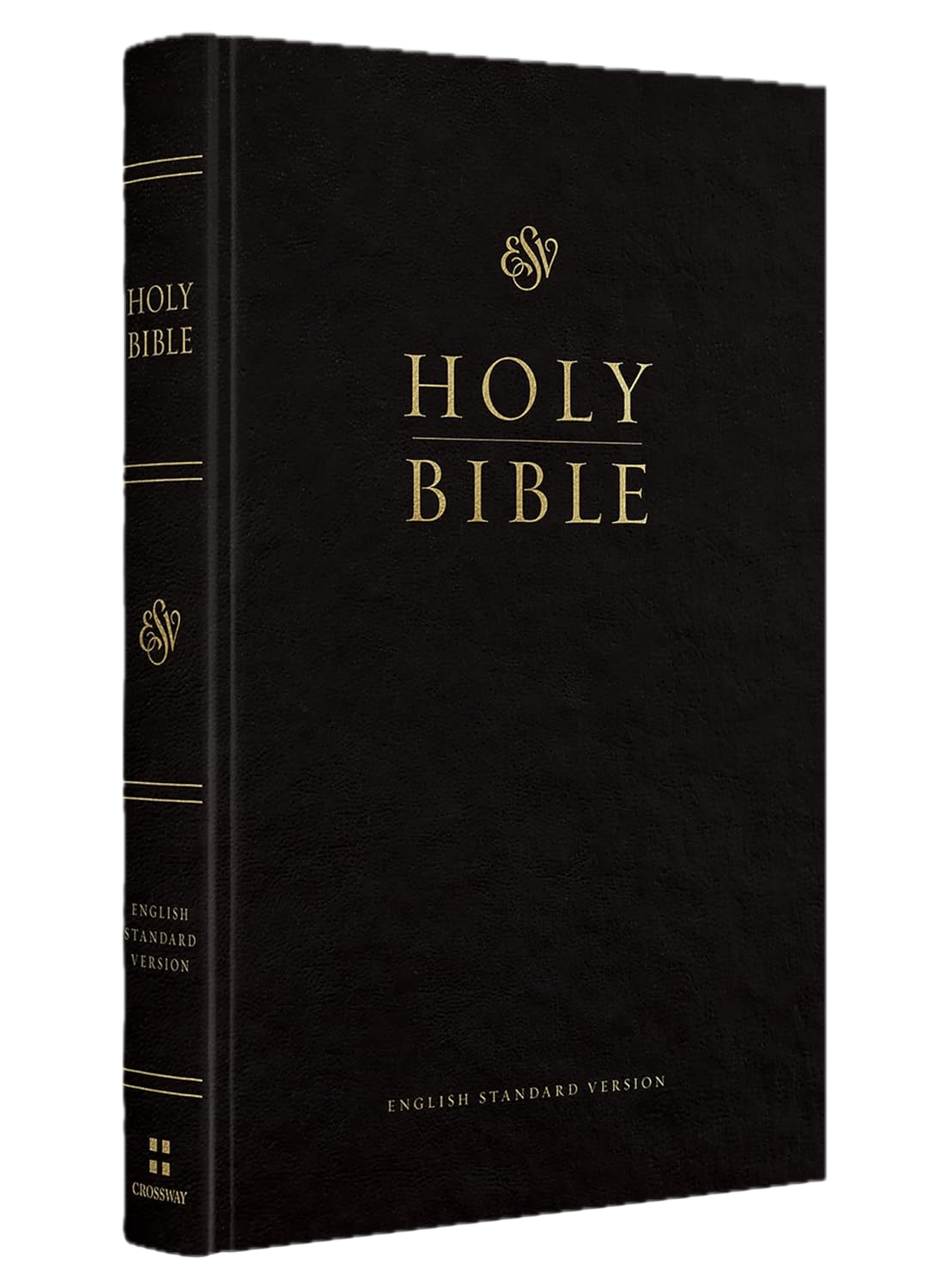
The Holy Bible: English Standard Version. Wheaton: Crossway, 2007.

Shakespeare never merely allegorizes biblical figures or passages, but, occasionally, a passage from the Bible and a passage from Shakespeare seem to deeply related. This passage from Job seems to have been transmuted into one of Lear's more famous scenes, if not to any specific speech.

Here's Job 23:5-8:
Behold, like wild donkeys in the desert
the poor go out to their toil, seeking game;
the wasteland yields food for their children.
They gather their fodder in the field,
and they glean the vineyard of the wicked man.
They lie all night naked, without clothing,
and have no covering in the cold.
They are wet with the rain of the mountains
and cling to the rock for lack of shelter.
And here's part of Lear III.iv that seems to point toward that.
Why, thou wert better in thy grave than to answer with thy uncovered body this extremity of the skies. Is man no more than this? Consider him well. Thou owest the worm no silk, the beast no hide, the sheep no wool, the cat no perfume. Ha! here's three on's are sophisticated! Thou art the thing itself: unaccommodated man is no more but such a poor bare, forked animal as thou art. Off, off, you lendings! Come, unbutton here.
It's impossible to calculate the exact degree to which Shakespeare was indebted to the Bible (if "indebted" is even the right term), but it's clear that he had imbibed vast portions of the Bible over a vast range of time.  If you read enough of both of them, you start to get a sense of how much reading either gives you more of the other.

Click below to purchase a Bible from amazon.com
(and to support Bardfilm as you do so).

Saturday, August 30, 2008

Quick Link: Anthony Hopkins as Lear

Ryan, Dermot.  "Hollywood Heavyweights Fly in for a Reel Taste of Shakespeare." Herald.ie. 1 July 2008.
I've been at the State Fair all day, which hasn't left much time for posting. However, I remembered this article on a forthcoming film version of Lear. Although I loved Sir Ian McKellen's Lear, I think Anthony Hopkins will do marvelously well, thanks!

Friday, August 29, 2008

Brief Lear Reference in Season One of Slings and Arrows

“A Mirror up to Nature.” Deleted Scene. By Susan Coyne. Dir. Peter Wellington. Perf. Martha Burns, Paul Gross, Don McKellar, Mark McKinney, Oliver Dennis, Susan Coyne, Stephen Ouimette, Catherine Fitch, Rachel McAdams, and Luke Kirby. Slings and Arrows. Season 1, episode 5. Movie Central: Canada. 1 December 2003. DVD. Acorn Media, 2006-2007.

You know that I can't say enough good things about Slings and Arrows. This clip takes a lighthearted look (you didn't think it was possible, did you?) at the "Blow, winds, and crack your cheeks" speech from III.ii. 

The character playing the character playing Hamlet has been refusing to use the exact words of the speeches, preferring, instead, to paraphrase the lines until he's able to internalize him. In this scene, deleted from the broadcast but included on the DVD, he finally starts using Shakespeare's words. Later in the scene, in something of an epiphany, he break out in Lear—showing that he's actually perfectly capable of using the language. Check it out:

Do you wonder what the guy in the car is doing, phoning someone after witnessing that performance? Well, get the series and watch it! Enjoy!

Links: Wikipedia Entry on the Series.

Click below to purchase the show from amazon.com
(and to support Bardfilm as you do so).

Thursday, August 28, 2008

King Lear as Marketing Device?

“Showpiece: Wanton.” Straighty 180. 27 August 2008.

One of the most devastating speeches in Lear is Gloucester's to Edgar at IV.i.28-39:
As flies to wanton boys are we to the gods.
They kill us for their sport.
You wouldn't think that those lines would easily lend themselves to commodification. But the people of Straighty 180 alter these lines slightly and use them to market . . . marketing itself. Or, at least, to market themselves. See the startling, distrubing ad below:


[Like] flies to wanton [girls] are we to the gods.
They kill us for their sport.

Links: Straighty 180.

Wednesday, August 27, 2008

"Good nuncle, in, and ask thy daughters' blessing": Brian Blessed as King Lear

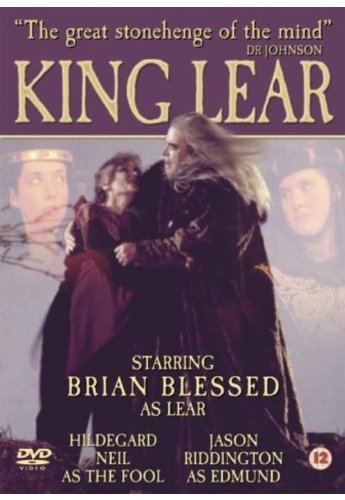
King Lear. Dir. Brian Blessed. Perf. Brian Blessed, Hildegard Neil, Jason Riddington, and Phillippa Peak. 1999. DVD. Storm Bird, 2006.

Note: "Good nuncle, in, and ask thy daughters' blessing" is a line delivered by the Fool in King Lear (III.i.12-13).

Today is the first day of class, and I'm feeling a bit like Lear in the storm. I thought it would be wise, therefore, to take a look at one version of that scene on the blasted heath.

When they asked who could play Lear, one of the producers' nephews answered, "Good nuncle, in, and ask for Brian Blessed."

Blessed plays Lear and directs the play. He makes an interesting decision about the storm scene. Like Welles' Macbeth, Blessed's Lear has some soliloquies in voiceover. Observe:


I'm not entirely sure I like it . . . but it is interesting. And Brian Blessed has a marvelous presence.

Links: The Film at IMDB.

Click below to purchase the film from amazon.com
(and to support Bardfilm as you do so).

Tuesday, August 26, 2008

A Regan to Chill the Bone

King Lear. Dir. Michael Elliott. Perf. Laurence Olivier, Colin Blakely, John Hurt, Diana Rigg, and Leo McKern. 1983. DVD. Kultur Video, 2000.

One of the many, many-and-manifold reasons the Olivier Lear is so astounding is Diana Rigg. She can give a single look that embodies violence, death, and destruction. And she can do it right after a look that expresses the deepest empathy.

The clip below is from the end of Act III. That point in the play gives us one of the many, many-and-manifold decisions that a director must make that can change the timbre of the entire play. In blinding Gloucester, Cornwall has been injured; he asks Regan to help him. Take a look at how this Regan helps her husband:


Links: The film at IMDB.

Click below to purchase the film from amazon.com
(and to support Bardfilm as you do so).

Monday, August 25, 2008

Lear Week Begins . . . with East Hastings: The Musical!

“Vex Not His Ghost.” By Susan Coyne. Dir. Peter Wellington. Perf. Martha Burns, Paul Gross, Don McKellar, Mark McKinney, Oliver Dennis, Susan Coyne, Stephen Ouimette, Catherine Fitch, and William Hutt. Slings and Arrows. Season 3, episode 2. Movie Central: Canada. 31 July 2006. DVD. Acorn Media, 2006-2007.

I know you've been looking forward to Lear Week at Bardfilm. We all have. Well, I have. And one reason is that I get to return to talking about Slings and Arrows.

Slings and Arrows is one of the three most brilliant television programs of the past ten years. And I think I would say that even if it weren't Shakespeare-related. (But it is, and that give it additional interest). The three seasons of the show take us through the lives of the actors, directors, administrators, and audiences of a Shakespeare festival in Canada. It's a dark comedy, and it's almost unbearably funny, witty, cheeky, touching, and true.

Each season gives us a different Shakespeare play to contemplate: Season One involves Hamlet, Season Two deals with Macbeth, and Season Three concentrates on Lear. 

And on East Hastings: The Musical.

As it deals with King Lear, it shows us how the frustrations of Lear spill over into the lives of the actors. William Hutt plays the actor who plays Lear, and his character (characters?) desperately tries to be in control of every aspect of the play, his life, the other actors' lives, and the world. Like Lear, however, he finds he is unable to do so.

Here's a clip that gives us an overview of Lear's plot—as well as the plot of the big new musical also being staged at the festival that season. The director, Geoffrey Tennant, whom you'll see first, has been bursting into unexplained tears throughout the season. He does so at the beginning of the clip, leaving the William Hutt character in charge of giving a synopsis of the play.


Links: Episode List at IMDB.

Click below to purchase the film from amazon.com
(and to support Bardfilm as you do so).

Sunday, August 24, 2008

As the Olympic Games Close, a Hamlet Derivative Set in Ancient China Comes to Mind

The Legend of the Black Scorpion. [a.k.a. The Banquet (Ye Yan)]. Dir. Feng Xiaogang. Perf. Zhang Ziyi, Daniel Wu, Zhou Xun, Ge You, Ma Jingwu. 2006. DVD. Dragon Dynasty, 2008.

The Legend of the Black Scorpion was mentioned earlier—and even earlier—in this Microblog's history, but I think it might be the ideal film to watch on the iTouch. It's subtitled, so I can watch it even when earphones would be too obvious—like during faculty meetings.   Just kidding!  Ha, ha!  For the most part!

It's beautifully filmed, demonstrating the clarity of the iTouch. And it's Hamlet-related—but with some very interesting plot variations. It's the Goldberg Variations of Hamlet, in fact, constantly taking us in new and exciting direcitons but never losing the beauty of the original.

Unless I'm convinced otherwise, I'll start that film when I have time.

(I'm operating under the assumption that the "One touch of nature" comment was not a suggestion to watch a version of Troilus and Cressida first.)

Tomorrow, Lear Week at Bardfilm begins!

Links: Previous Post One. Previous Post Two.

Click below to purchase the film from amazon.com
(and to support Bardfilm as you do so).

Saturday, August 23, 2008

Stop the Presses! (I've always wanted to say that).

The iTouch.

Hold everything!

I've received a lovely, lovely birthday gift. Yes, an iTouch. I'm amazed. It's astonishing. I've had an iPod for five years, and it revolutionized the way I listen to music. Now the iTouch is poised to do the same to the way I watch videos, browse the internet, send e-mail, check the weather, get directions, keep up with podcasts, and so on, and so on, and so on.

What shall I watch first?

That's where you come in! I have a few ideas of what Shakespeare-related film I should watch first on my new iTouch, but I'm open to suggestions. Should it be the Branagh Hamlet, testing the battery strength to the fullest? Or should it be something lighter and shorter, like the 1929 Taming of the Shrew?

Post your suggestions in the comments below!

And, again, thank you.

Click below to purchase an iTouch from amazon.com
(and to support Bardfilm as you do so).

Friday, August 22, 2008

Hamlet 2 Opens Today.

Hamlet 2. Dir. Andrew Fleming. Screenplay by Pam Brady and Andrew Fleming. Perf. Steve Coogan, Catherine Keener, David Arquette, and Elisabeth Shue. Focus, 22 August 2008.
Holden, Stephen. “The Rest was Silence, but Then Came the Sequel.” New York Times 22 August 2008.

The New York Times has a review of Hamlet 2 this morning (the film opens today—in only one theatre in our area). It’s not a great review, but it’s not a complete pan, either. When things are less busy, I hope to see it. As soon as I do, I’ll post an evaluation of the film.

Links: Trailer. Official site. Previous Post One. Previous Post Two. Previous Post Three.

Click below to purchase the film from amazon.com
(and to support Bardfilm as you do so).
Bardfilm is normally written as one word, though it can also be found under a search for "Bard Film Blog." Bardfilm is a Shakespeare blog (admittedly, one of many Shakespeare blogs), and it is dedicated to commentary on films (Shakespeare movies, The Shakespeare Movie, Shakespeare on television, Shakespeare at the cinema), plays, and other matter related to Shakespeare (allusions to Shakespeare in pop culture, quotes from Shakespeare in popular culture, quotations that come from Shakespeare, et cetera).

Unless otherwise indicated, quotations from Shakespeare's works are from the following edition:
Shakespeare, William. The Riverside Shakespeare. 2nd ed. Gen. ed. G. Blakemore Evans. Boston: Houghton Mifflin, 1997.
All material original to this blog is copyrighted: Copyright 2008-2039 (and into perpetuity thereafter) by Keith Jones.

The very instant that I saw you did / My heart fly to your service; there resides, / To make me slave to it; and, for your sake, / Am I this patient [b]log-man.

—The Tempest